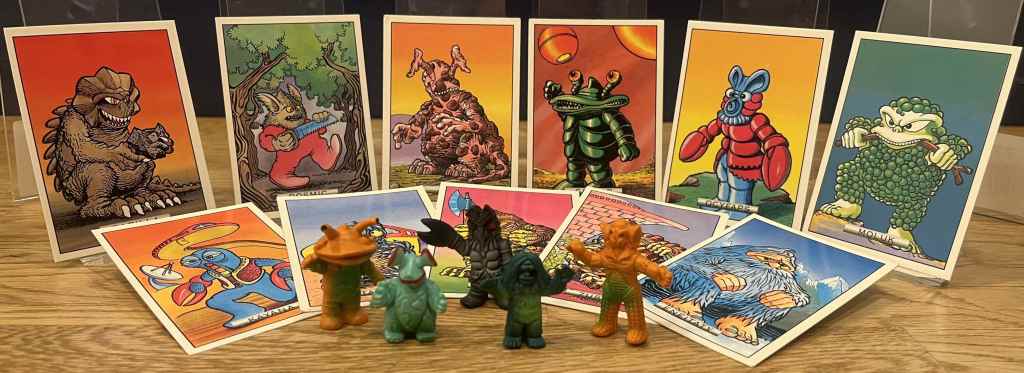
Here we take a trek into what is perhaps relatively unknown territory for many Godzilla and kaiju collectors – the lawless wastelands of 1980s and 1990s Italy and its prolific and inventive bootleggers. When collecting bootlegs, one occasionally finds illicit copying of intellectual property so blatant and shameless that you are tempted to stand and applaud the height of the NFG level (No F**ks Given). Among the bootleg kaiju produced in Europe, the gold medal in that category goes to the Italian ‘Astro Monsters’ line. While the Spanish often changed just enough to keep themselves safe from straightforward prosecution (even though such laws were rarely enforced there), at least one Italian company decided in the early 1990s to approach bootlegging head on, and throw caution and risk management to the wind.
Around 1992 (many examples of packaging have this date) a company naming themselves as ‘SL’ decided to quietly ‘borrow’ from the booming Japanese keshi market, and add to the Exogini and ‘Monsters in my Pocket’ craze in Europe, and produced screamingly obvious copies of Japanese kaiju keshi in orange rubber with green highlights, green rubber with red highlights or black rubber with white highlights, and market these as ‘Astro Monsters’. ‘SL’ is identified as Service Line on the back of the packaging of the figures and cards – a company from Modena, otherwise known for producing licensed sticker albums and collectible sets in the early 1990s – similar to Panini, but on a much smaller scale.
Each figure produced was about 40mm. tall and so closely followed the Japanese models that they are frequently mistaken for them. The packaging of these figures announces that there were “26 characters, 14 adventures” and a “fascinating game”. I do not have a full set of loose figures or cards, and thus reproduce only examples here.
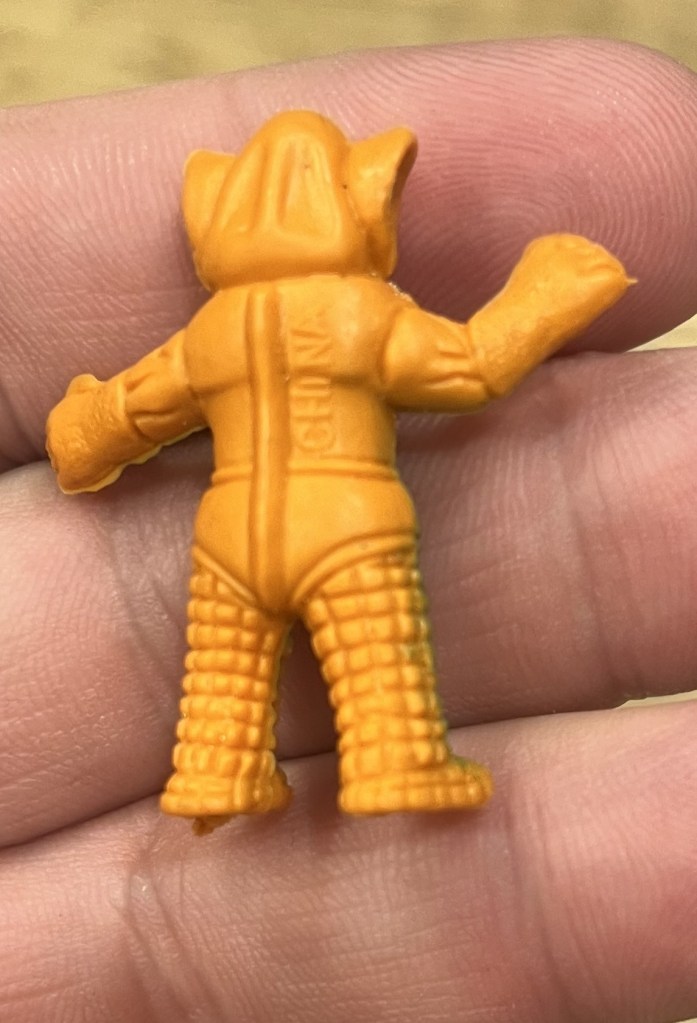
Each figure has “CHINA” marked faintly on its back, and were presumably made there for Service Line to distribute in Europe. These were sold in rectangular plastic packets either from counter-top boxes or wall-hung cards (see image below), with each packet containing a single rubber figure and a collector’s card. The cards divide into two types: characters and adventures, and were clearly intended for use in a game – however, I do not know of any surviving rules for the game. If any reader has these among their collections, I would be really grateful if they allowed me to reproduce them here.
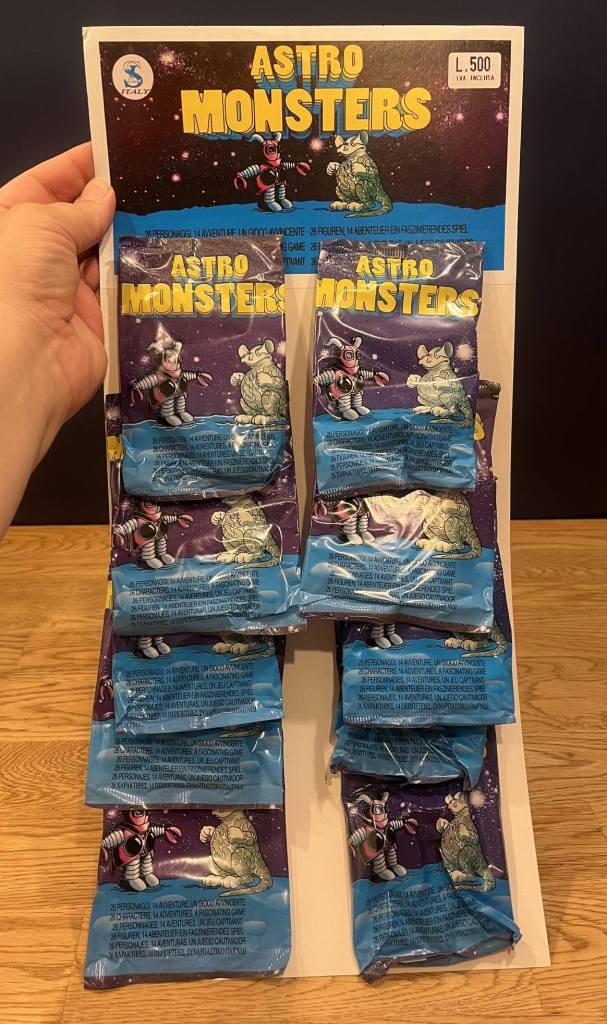
(The back of this display card is blank)
While these figures do not seem to have been sold much outside of Italy (and are usually priced in Lire when they do survive: see the image of the display shop card here), the ambitions of Service Line appear to have been far greater, and all surviving packaging and cards were printed in parallel Italian, English, French , Spanish, German and Greek.
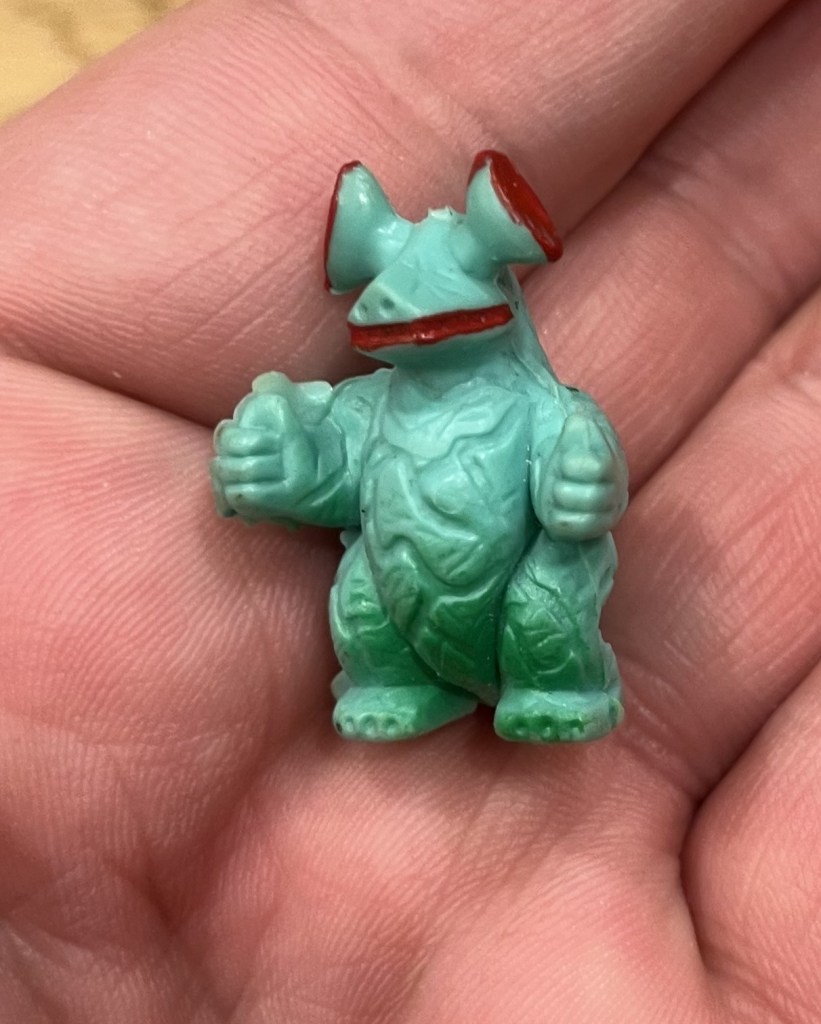
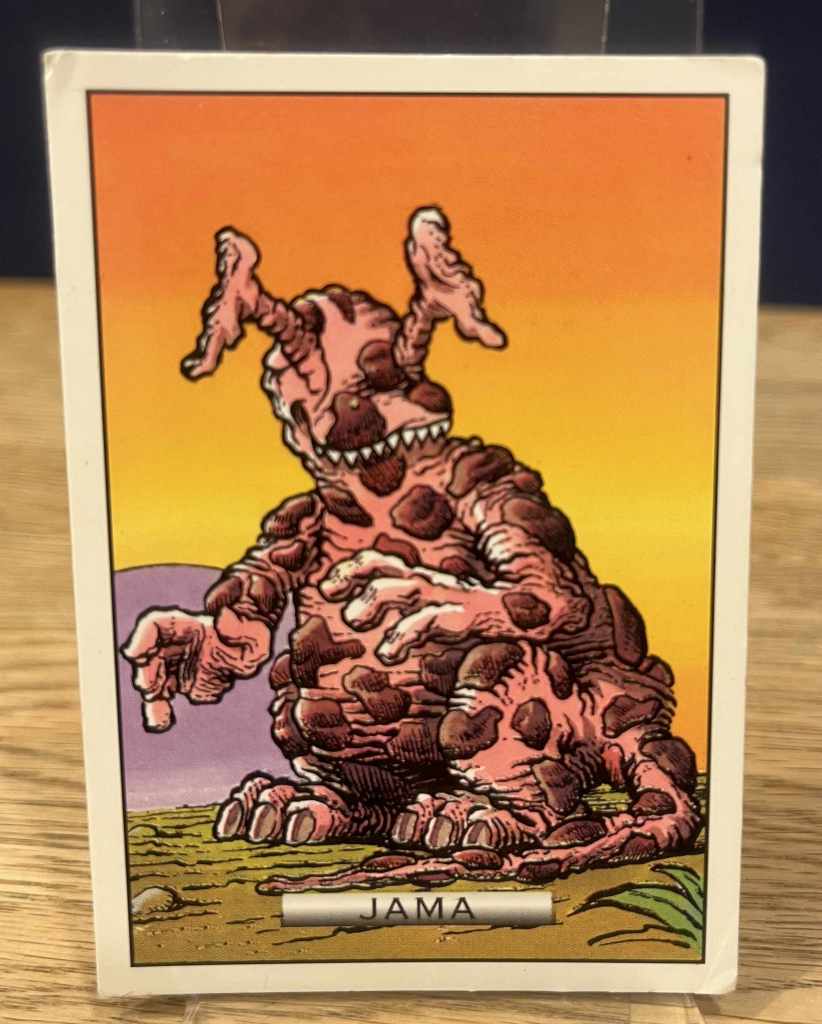
While the illicit copying of the form of the keshi-like figures was blatant, it was when Service Line came to produce the cards that they wildly deviated from their Japanese models. They cast off any pre-existing names and back stories, and created a wealth of new information about these toys, alongside cartoony images of these kaiju that also deviated from the Japanese models and the actual figures produced for Service Line. On top of that, a few of the representations of the kaiju on the ‘adventure cards’ also deviate from the pictures on the character cards, and there is some further variation in the representations of these characters between different ‘adventure cards’– a case in point is Jama / Eleking (see below), who appears in a very traditional form in the rubber figure and on one ‘adventure card’, but then in a different colour on another ‘adventure card’, and a significantly different form on his actual character card. The differences between the rubber figures produced and the drawn images of them are so great, that I suspect that either the mini-figure production people in SL had fallen out with the card-artists at the time and were not speaking (I’m joking), or more reasonably, that SL commissioned the figures from a Chinese company long before they began to work on the cards and the game. The fact that they just don’t seem to care that the kaiju on the cards usually looked very different from the rubber figures they accompanied is a new low, or a new high depending how you look at it, in the bootleggers’ art.
Thankfully, the text on the back of the cards reproduced descriptions for all members of the four groups of kaiju, so we have at least descriptions for those I have not been able to trace. In addition, the English of the cards is occasionally a bit clumsy, and perhaps a native French, Greek or German reader might let me know if those languages are equally badly represented here. The names rarely have any connection to the names given to these Kaiju in the Ultraman series, and their back stories and attributes were clearly invented on the spot. I know of the following (I divide them here into the four groups as they are found on the back of the cards)
⁂
“The Aratinga Empire”
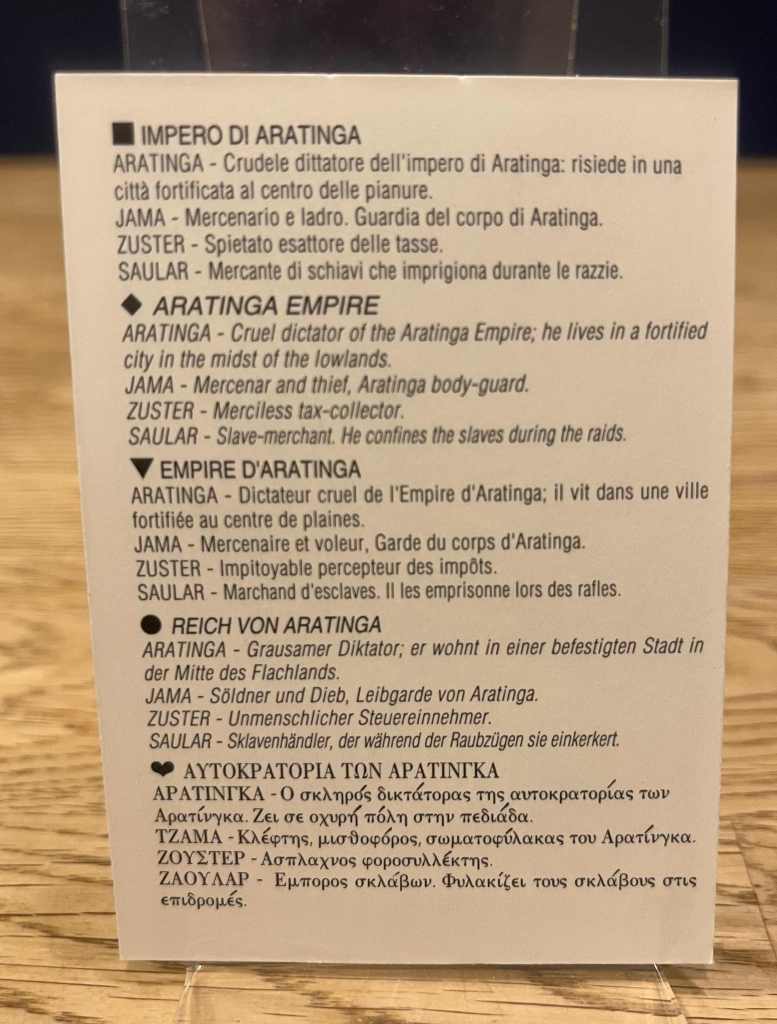
(The back of the Aratinga cards)
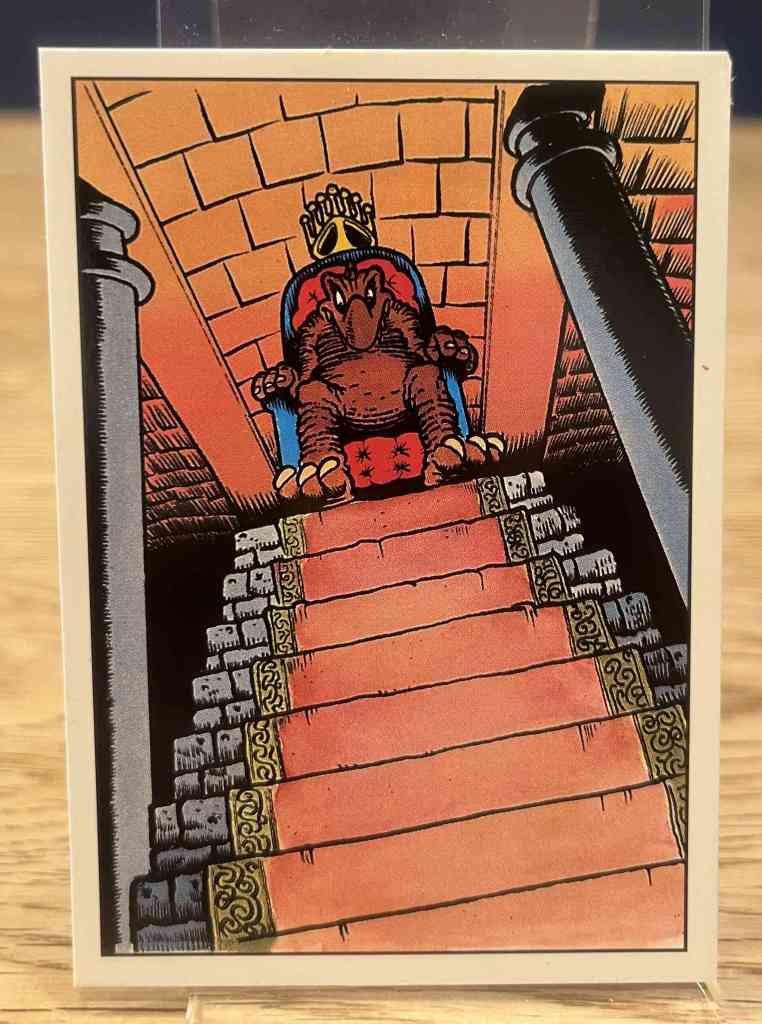
1. Aratinga: I do not have a loose figure or card for this one (and am certainly not opening my sealed 10 packets on their display card hunting for one), but he appears enthroned on an ‘adventure card’ and so that is reproduced here; he is described on the cards as a “cruel dictator … [who] lives in a fortified city in the midst of the lowlands”
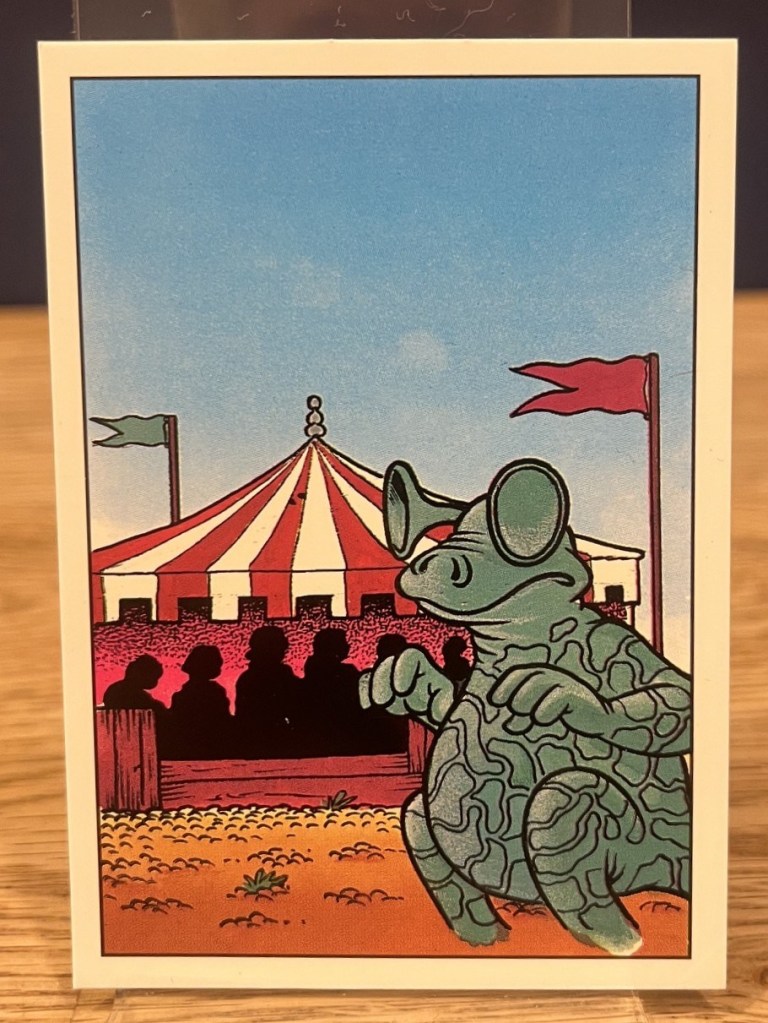
(The second image here from an eBay listing)
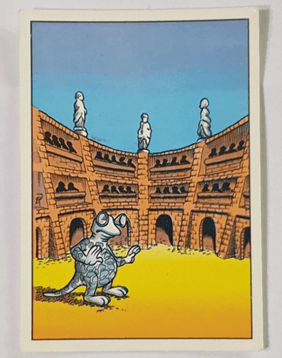
2. Jama: a copy of Eleking, who by the time the character card was designed seems to have caught a nasty case of mange; he is described as a “Mercenar [sic] and thief, Aratinga body-guard”;
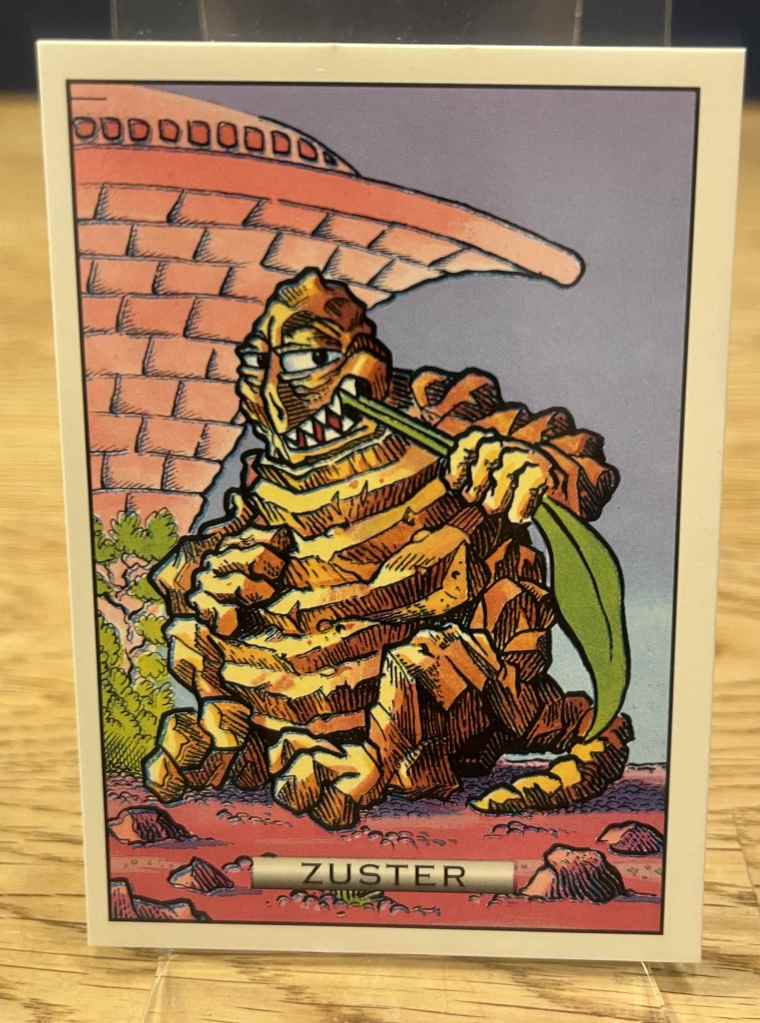
3. Zuster, probably a copy of Red King, and with a knowing and cheeky smile and chewing on a leaf in the card art, and for whom I have a card but not a figure; who is described as the “Merciless tax-collector”.
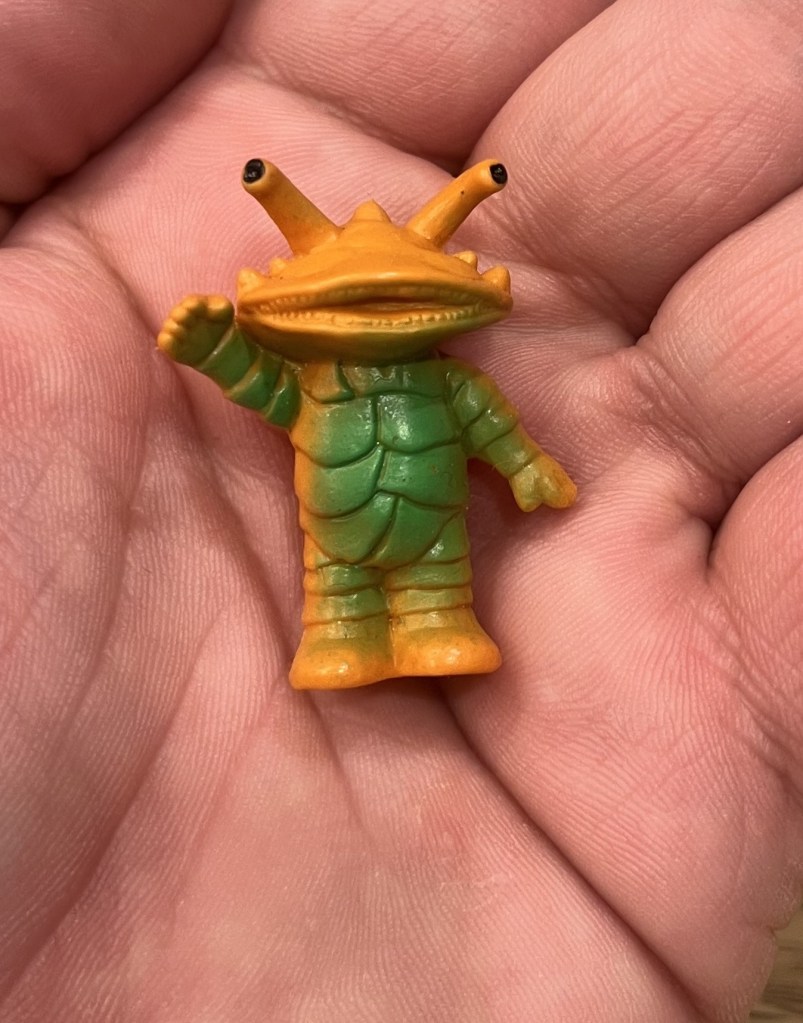
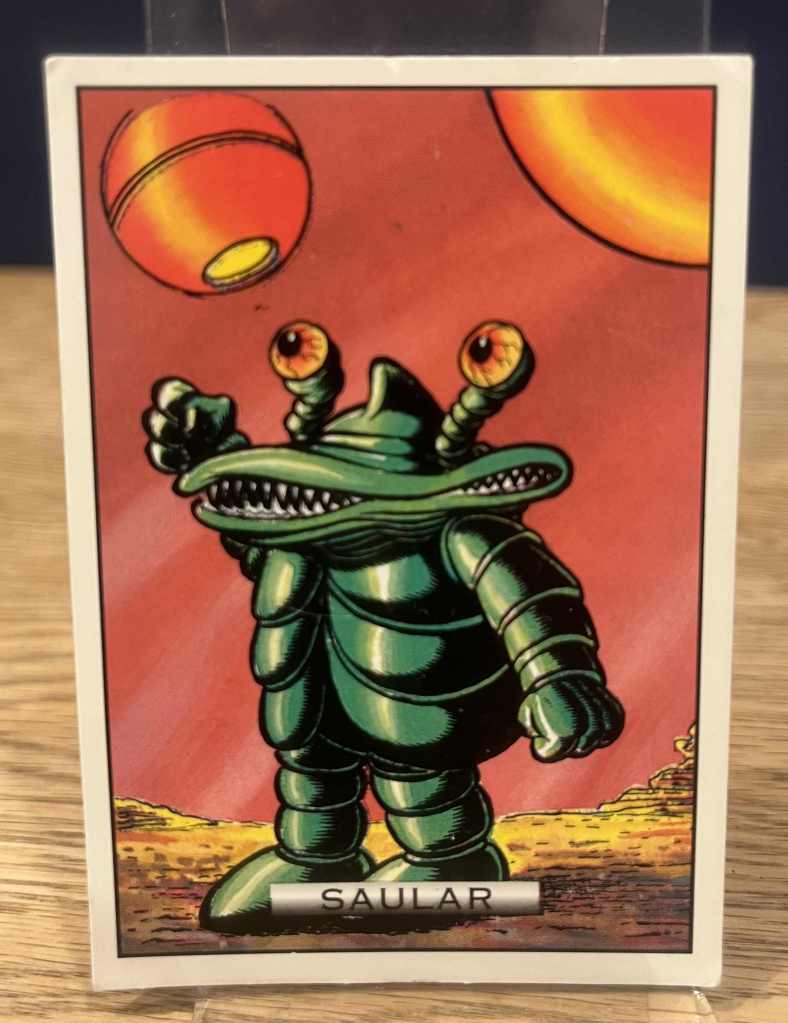
4. And Saular, a copy of Kanegon, with really ‘morning after the night before’ bloodshot eyes in the card art; described as “Slave-merchant. He confines the slaves during the raids”.
⁂
The “Monsters”
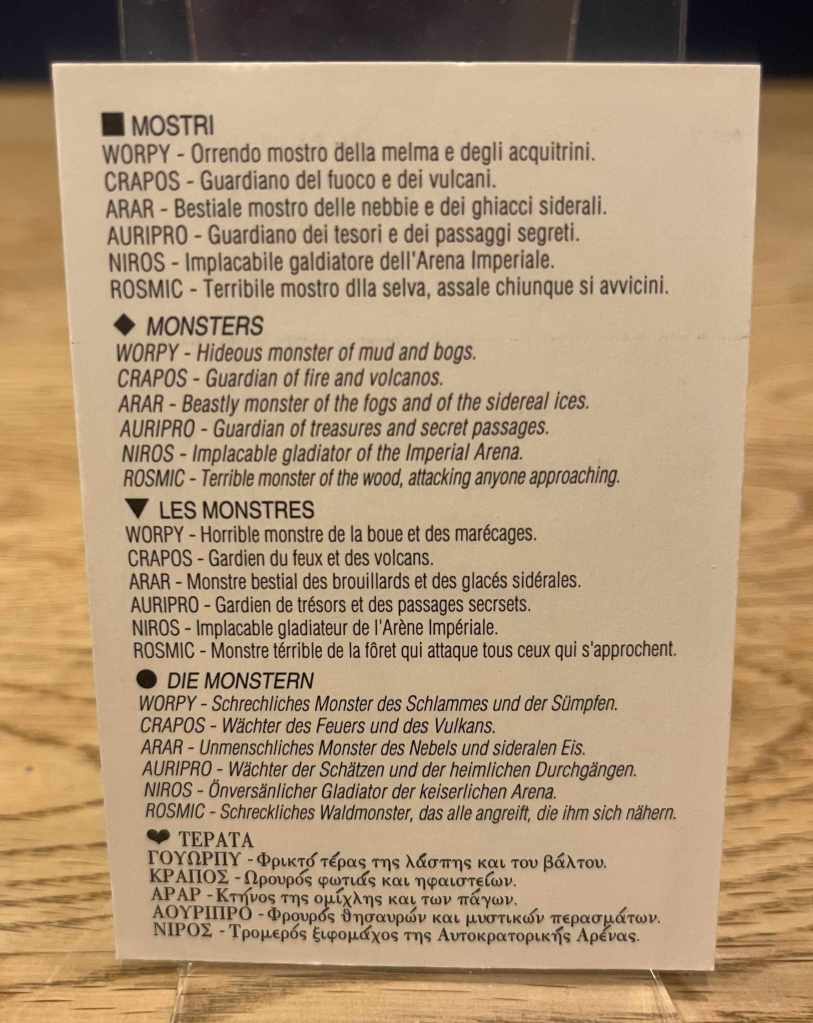
(The back of the Monsters cards)
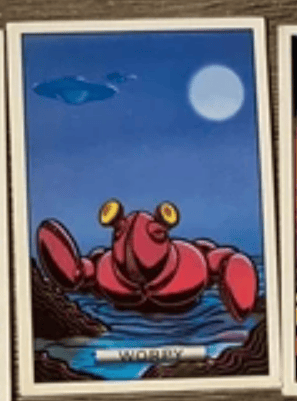
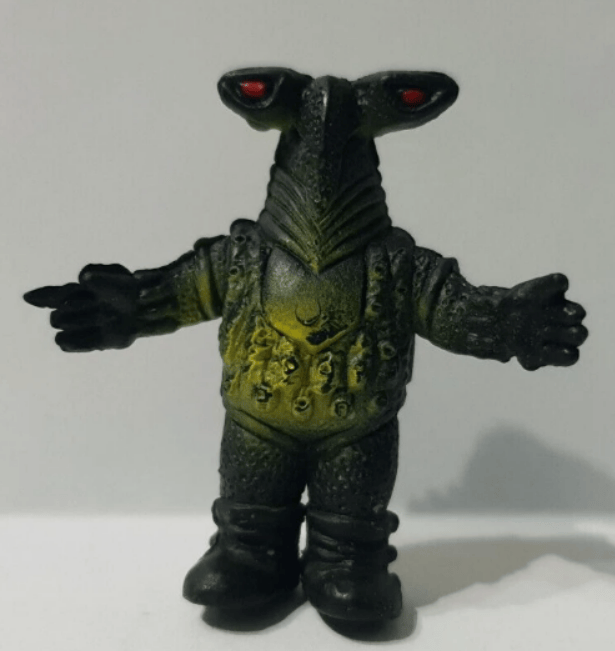
(from eBay listings, and hence images of less than perfect quality)
a. Worpy: I do not have a loose figure or card for this one, but he does appear on an ‘adventure card’ and a low-quality image of his character card has come to light in an online sales post, allowing the identification of his figure in online sales listings – he is a copy of Pegassa; and is described as a “Hideous monster of mud and bogs”;
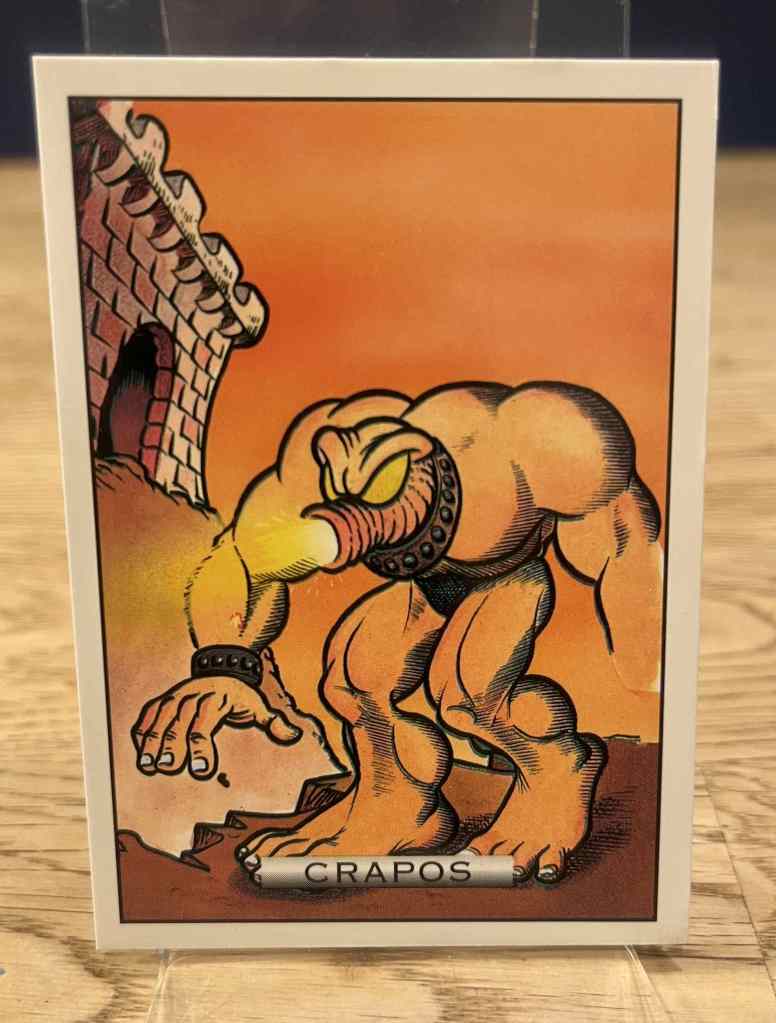
b. Crapos: (a distinctly unfortunate name when attempting to market these toys to English-speaking children), I have only the card of this one, and do not know from the card art what kaiju this is a copy of; he is described as “Guardian of fire and volcanos”;
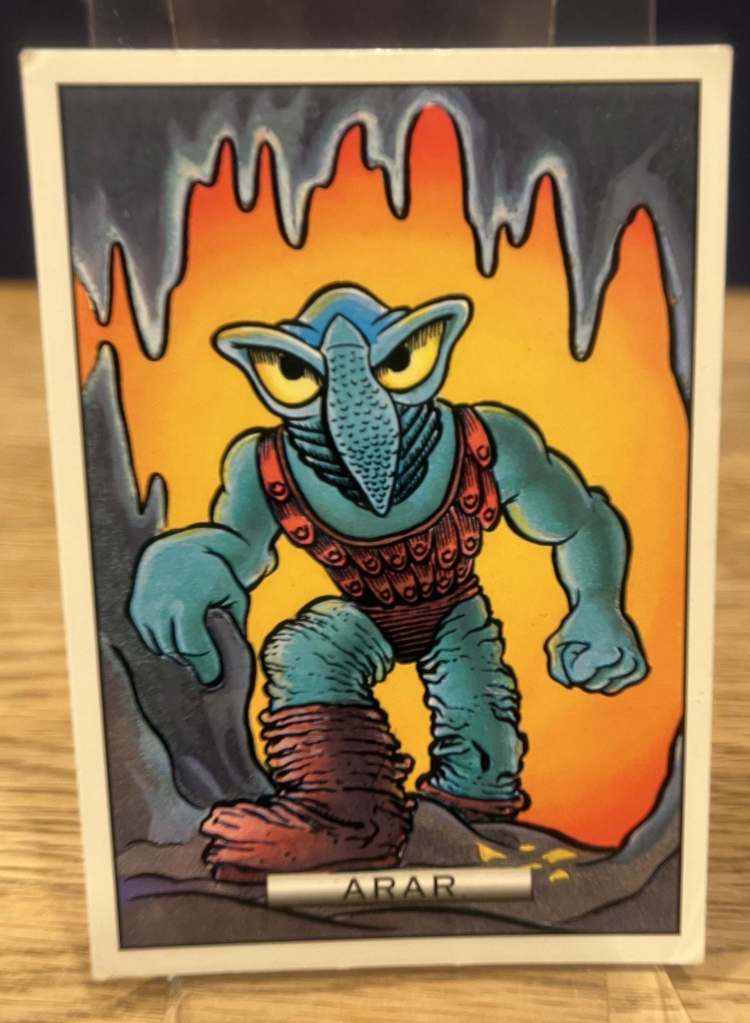
c. Arar, probably a copy of Mogera, and I own only a card for this figure; he is described as a “Beastly monster of the fogs and the sidereal ices” (I’m not sure what the text is aiming at here, as sidereal refers to measurements of time or motion based on the fixed stars rather than the Sun – so space ice?);
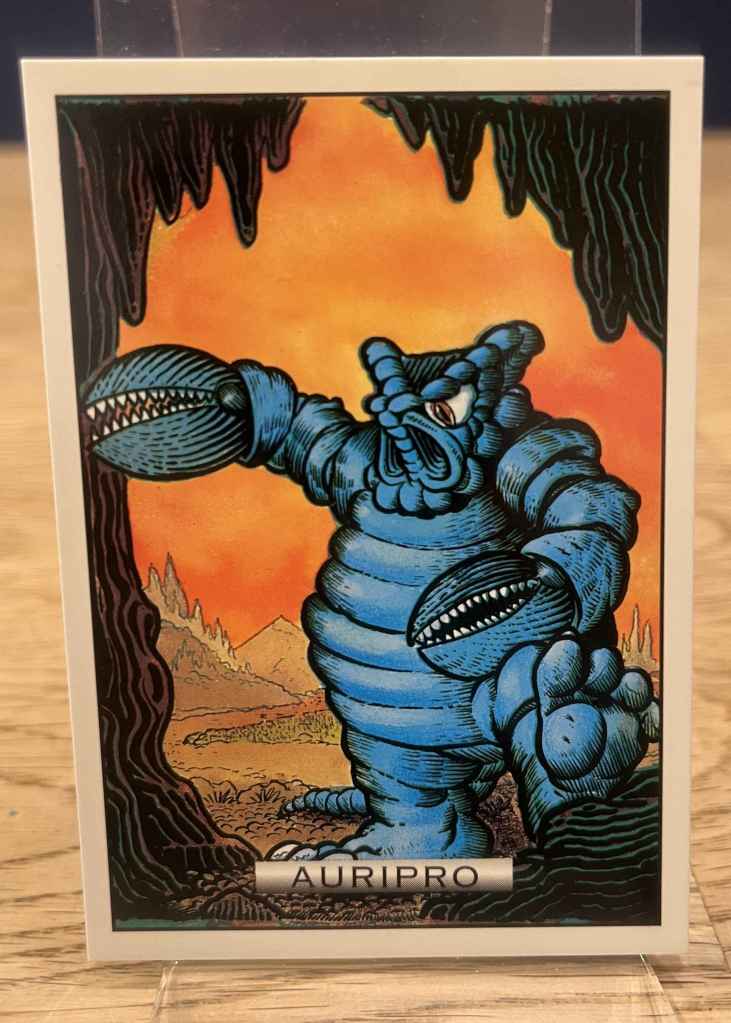
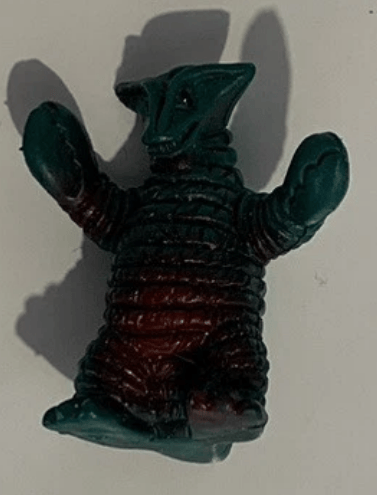
(second image here from an eBay listing)
d. Auripro, a copy of Sadolar, and I own only a card for this figure, with eBay supplying an image of the figure; he is described as a “Guardian of secret treasures and passages”;

e. Niros: I do not have a loose figure or card for this one; he is described as an “Implacable gladiator of the Imperial arena”;
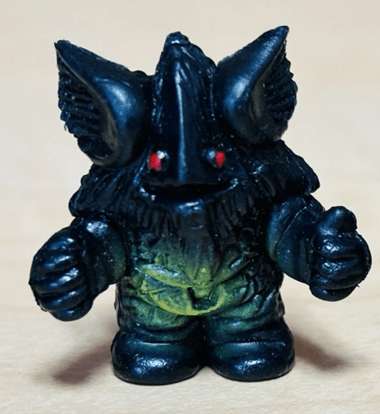
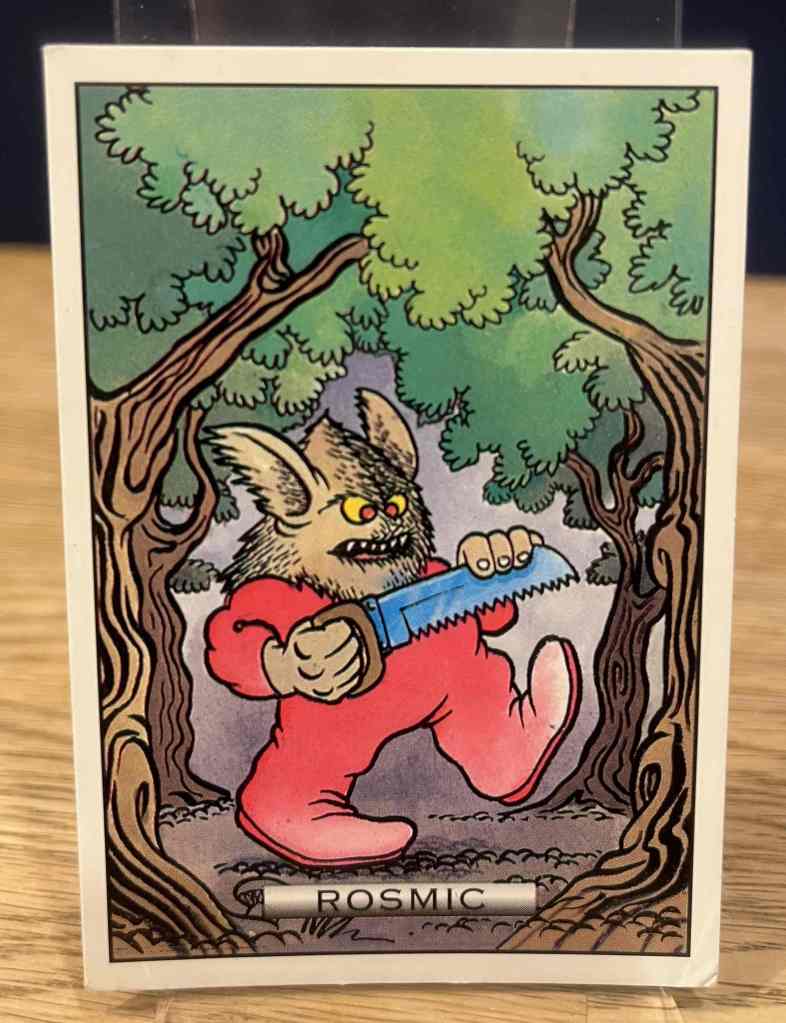
(The first image here from an eBay listing)
f. and Rosmic: a copy of Icarus, who wears a pink onesie and carries a saw in the card art, I have only a card for this one; he is described as a “Terrible monster of the wood, attacking anyone approaching”.
⁂
The “Turu Horde”
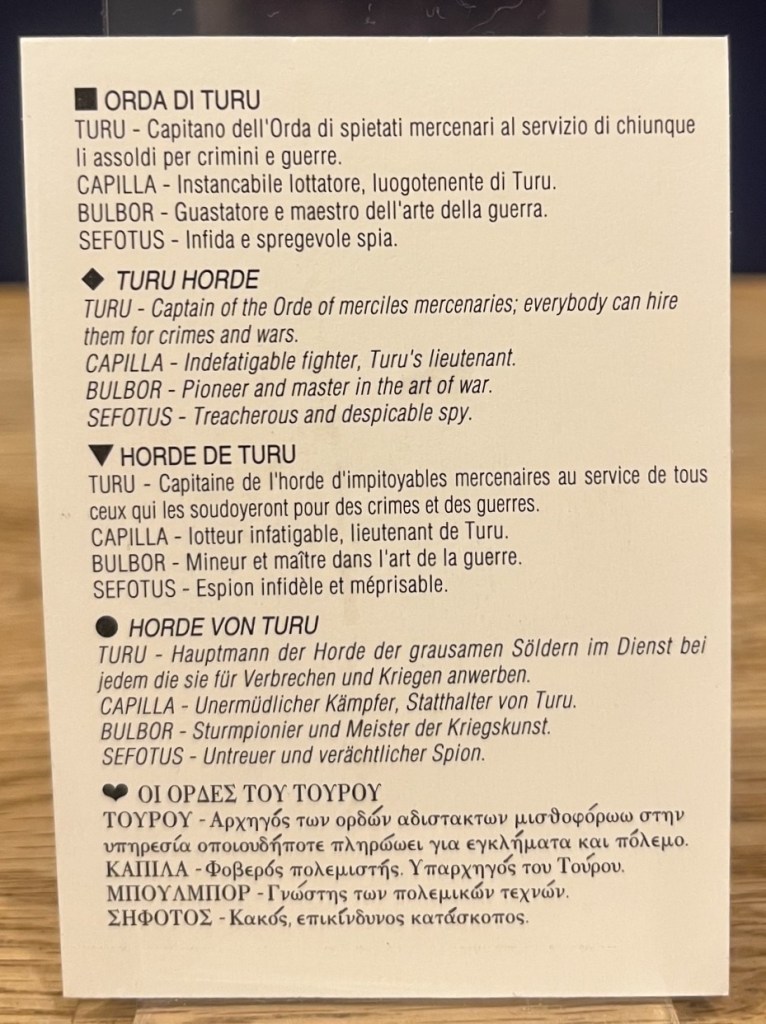
(The back of the Turu Horde cards)
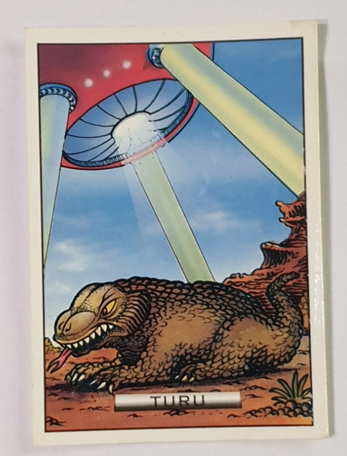
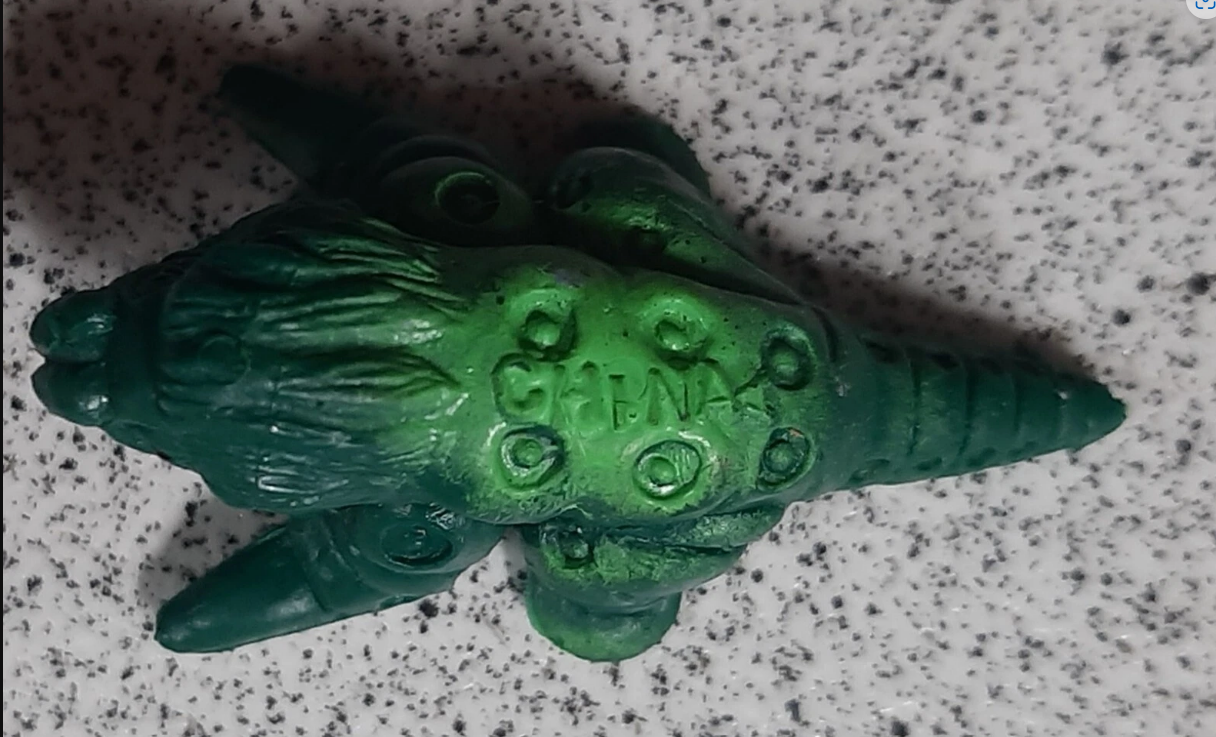
(Both images from eBay listings; see the update at the foot of this list for another better image of the figure)
A. Turu: I do not have a loose figure or card for this one (images here taken from eBay listings); he is described as the “Captain of the [h]Orde of merciles [sic] mercenaries; everybody can hire them for crimes and wars”;
(second image here from an eBay listing)
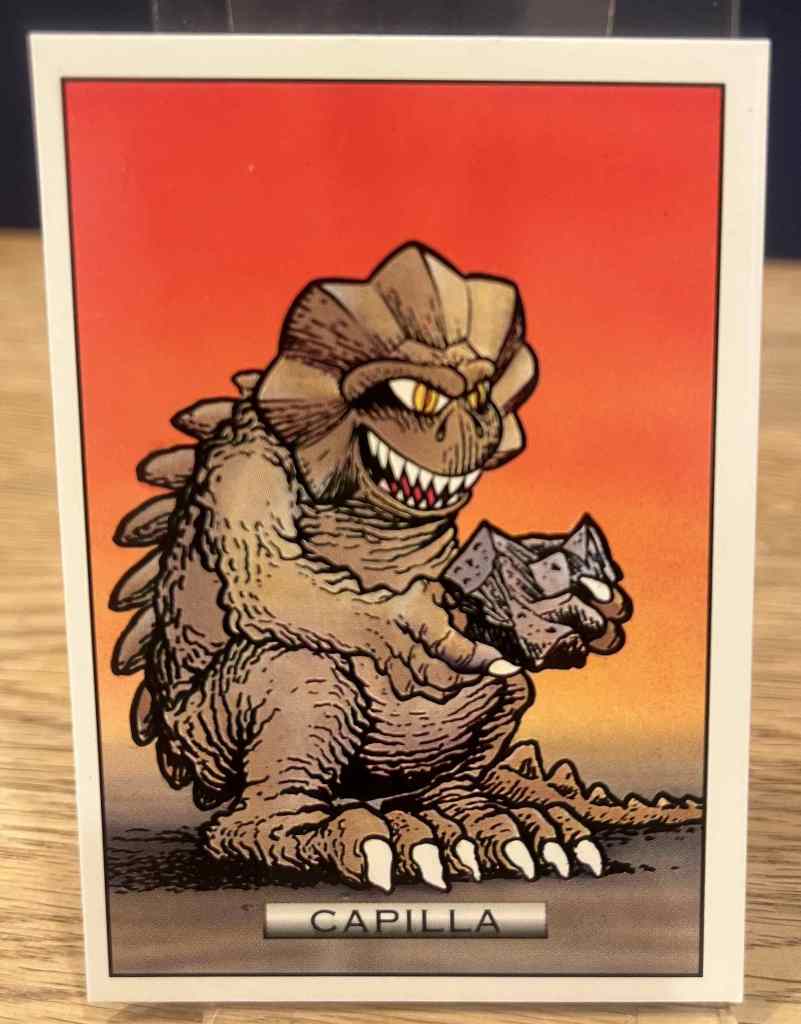
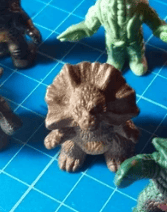
B. Capilla, a copy of Jirass, and for whom I have only a card (but an eBay listing supplies a poor quality image of his figure); he is described as an “Indefatigable fighter, Turu’s lieutenant”;

C. Bulbor: I do not have a loose figure or card for this one; he is described as a “Pioneer and master in the art of war”;

D. Sefotus: I do not have a loose figure or card for this one; he is described as a “Treacherous and despicable spy”.
⁂
The “Ocyfaps Kingdom”
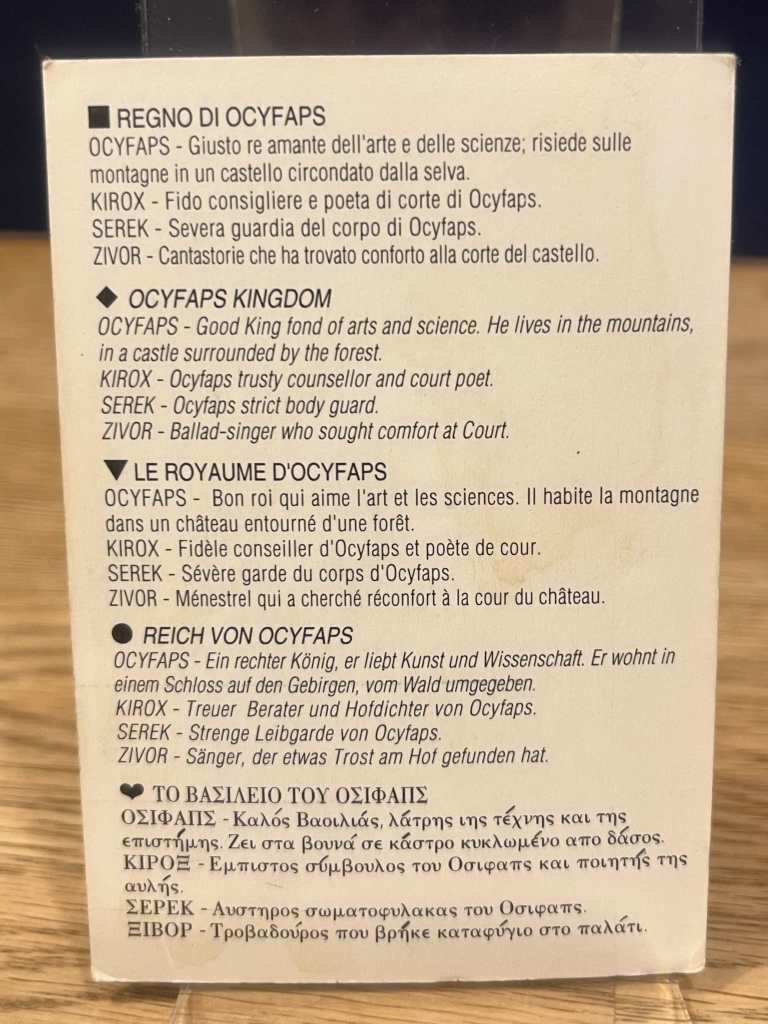
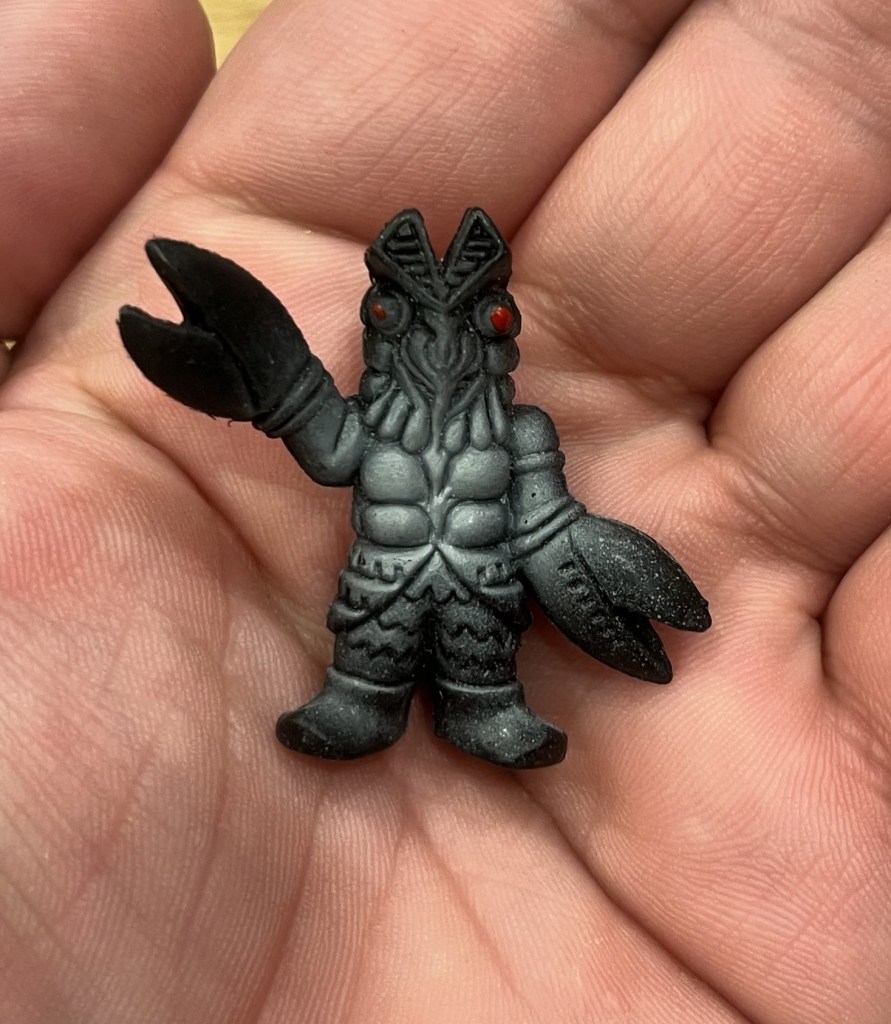
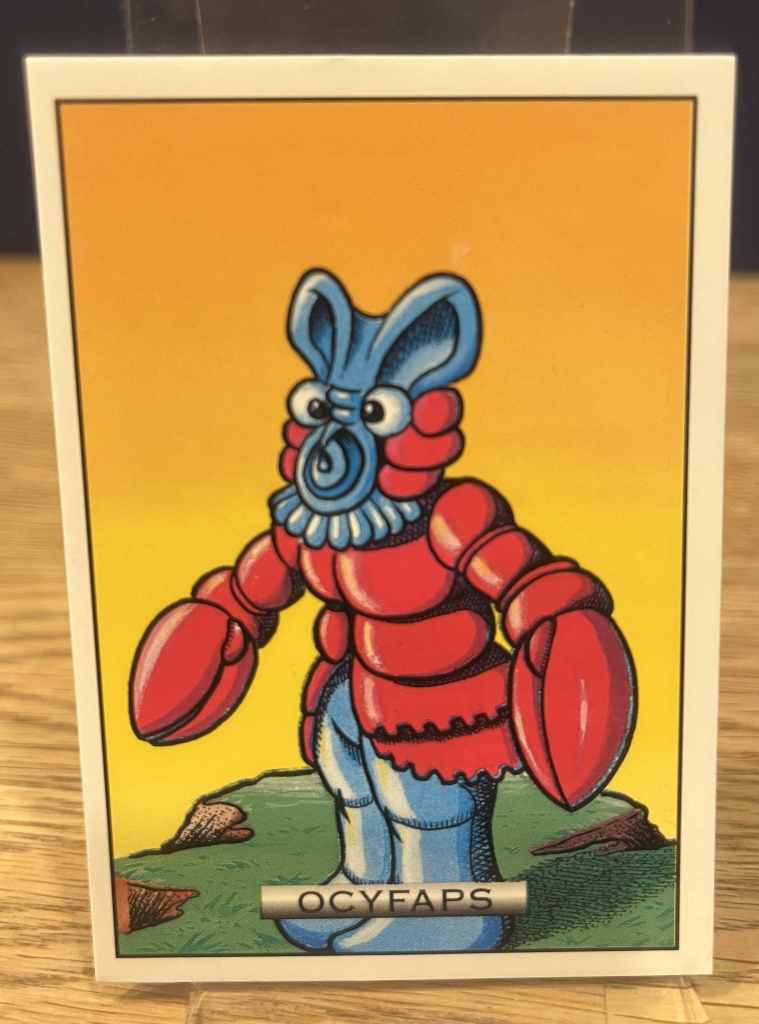
i. Ocyfaps, a copy of Baltan, for whom I have both the card and a figure; he is described as a “Good king fond of the arts and science. He lives in the mountains, in a castle surrounded by the forest”;
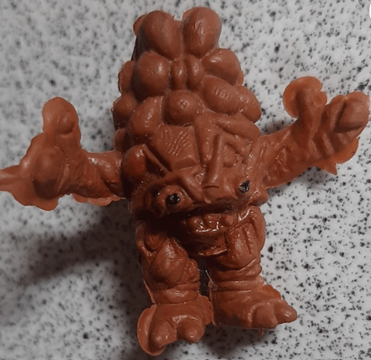
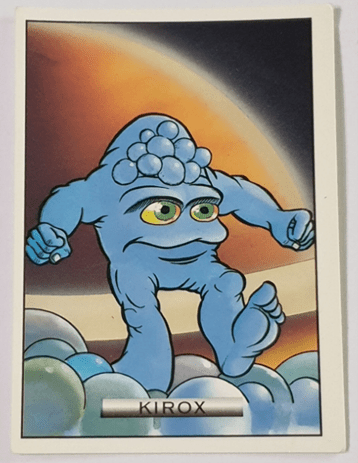
ii. Kirox: I do not have a loose figure or card for this one (images above from eBay listings); he is described as “Ocyfaps trusty counsellor and court poet”;
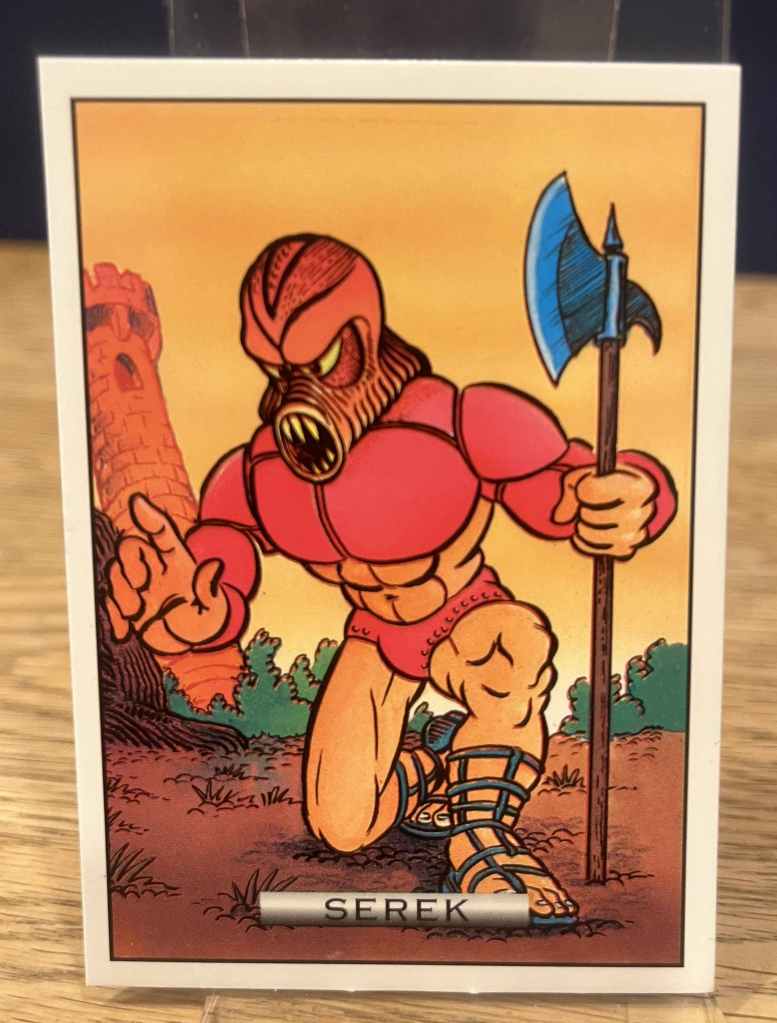
iii. Serek: I have only the card of this one, and do not know from the card art what kaiju this is a copy of; he is described as “Ocyfaps strict body guard”;
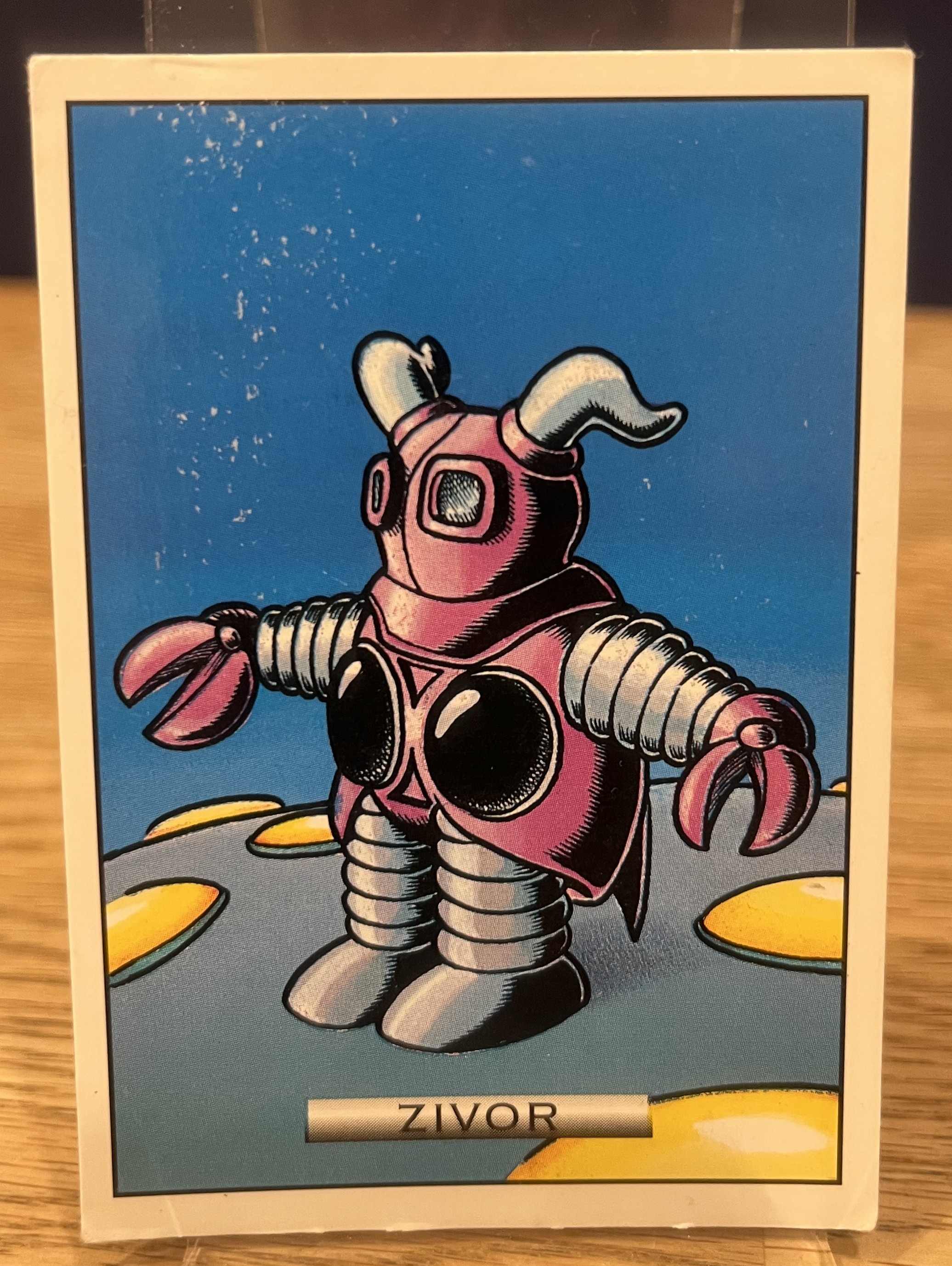
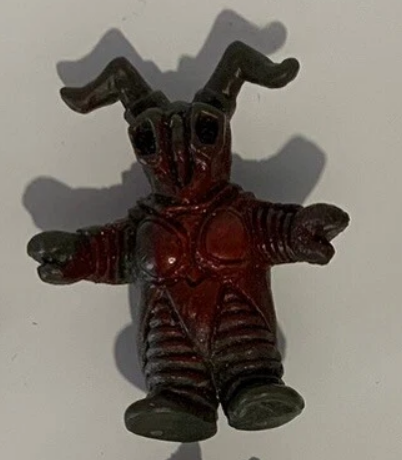
iv. Zivor: a copy of Zetton, I have only the card of this one (but eBay has supplied an image of the figure); he is described as “a “Ballad singer who sought comfort at Court”.
⁂
“The Wises”
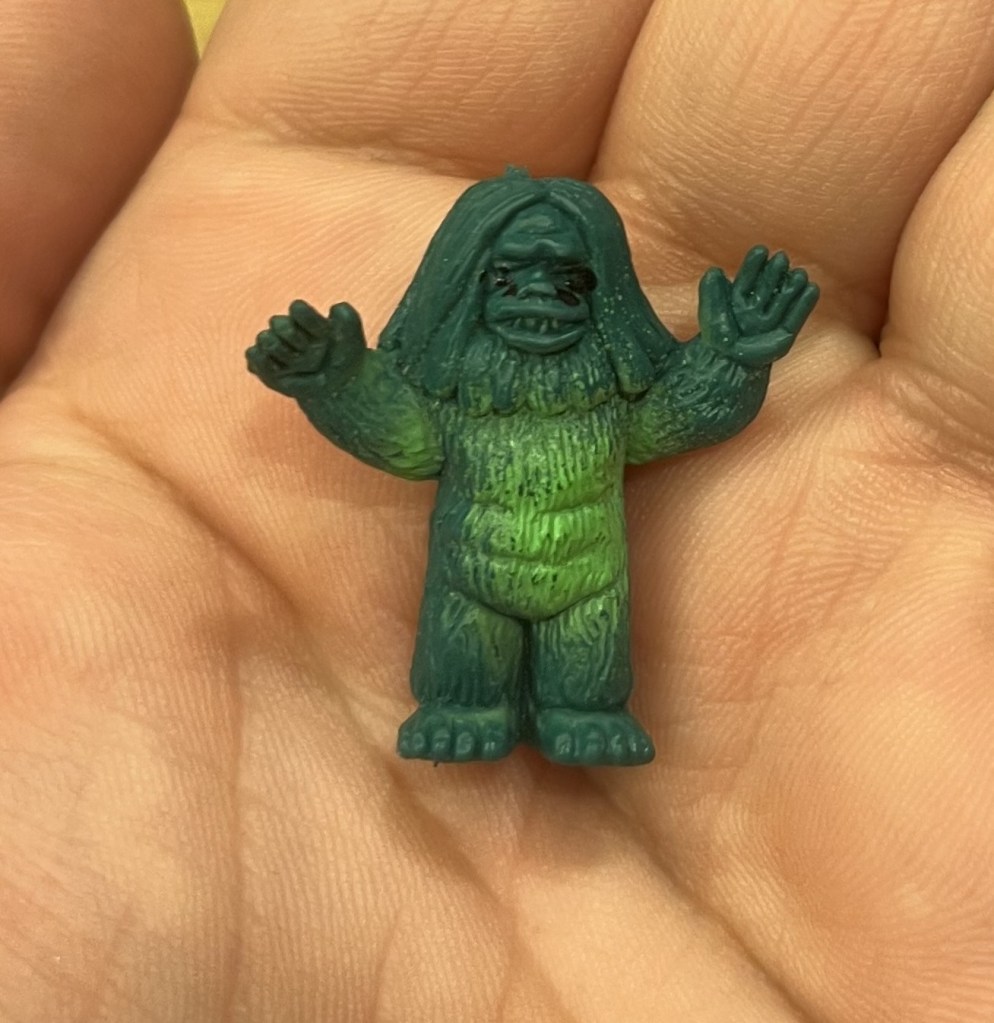
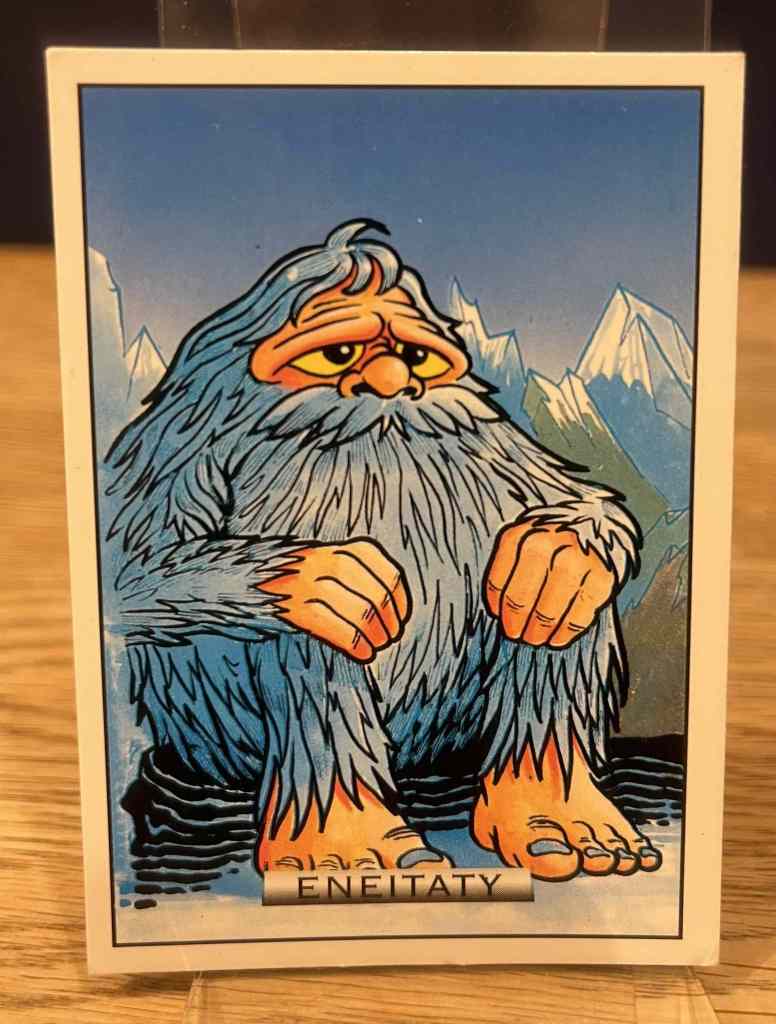
I. Eneitaty: the figure a copy of Goron – if I have corrected linked these, then I have both a figure and a card; he is described as the “Supreme Priest of the Great Council” who lives “with the other Wises within the fog and the sidereal ices of the Inaccessible Place”

II: Triko Glos: I do not have a loose figure or card for this one; he is described as a “Space Government Officer”;
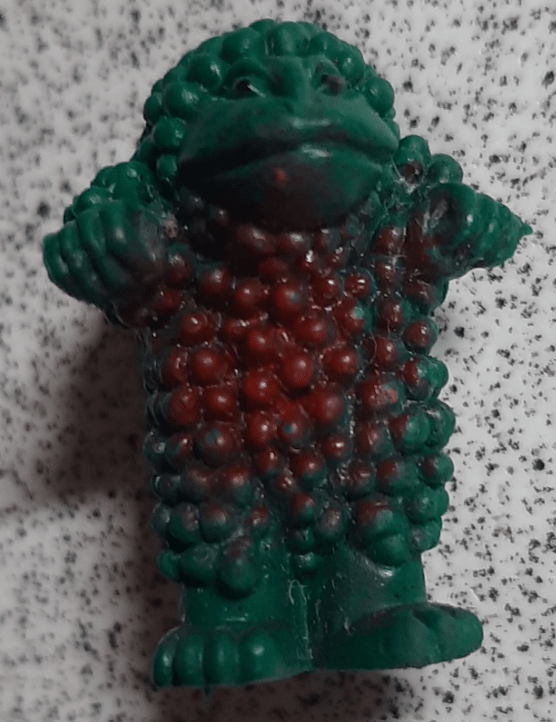
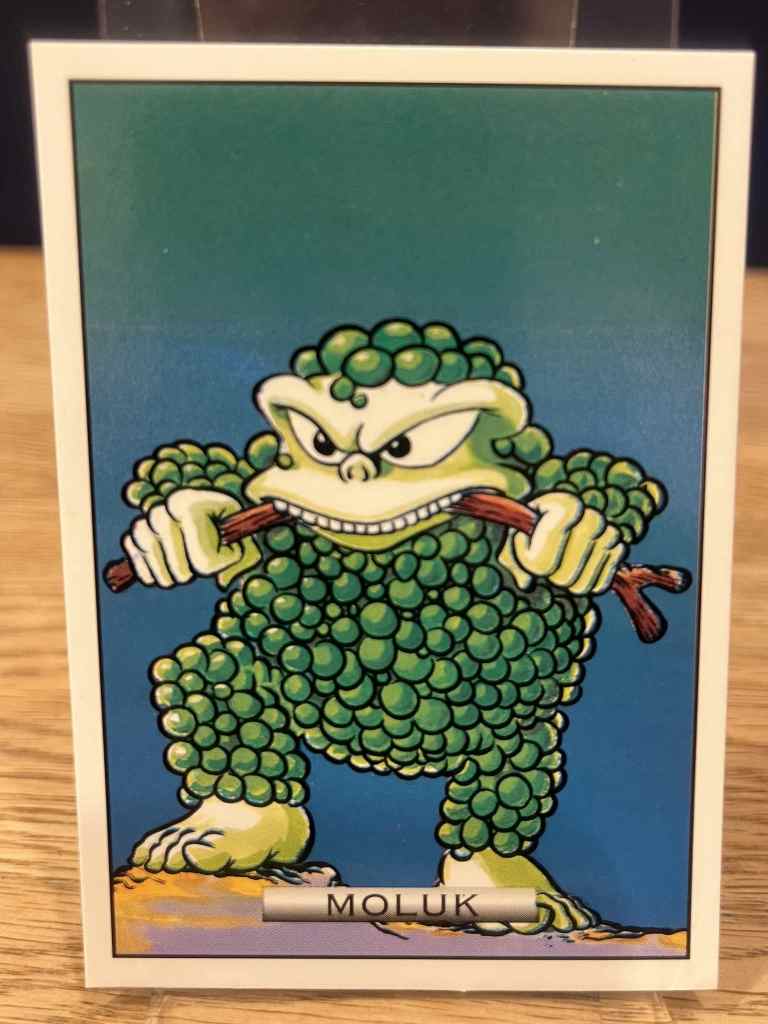
(First image here from an eBay listing)
III: Moluk, probably a copy of Garamon, for whom I have only a card; he is described as “the Shaman of conflicts and peace”;

IV. And Balor: I do not have a loose figure or card for this one; he is described as a “Magician and master of the magic art and deception”.
⁂
The “Kayana Convoy”
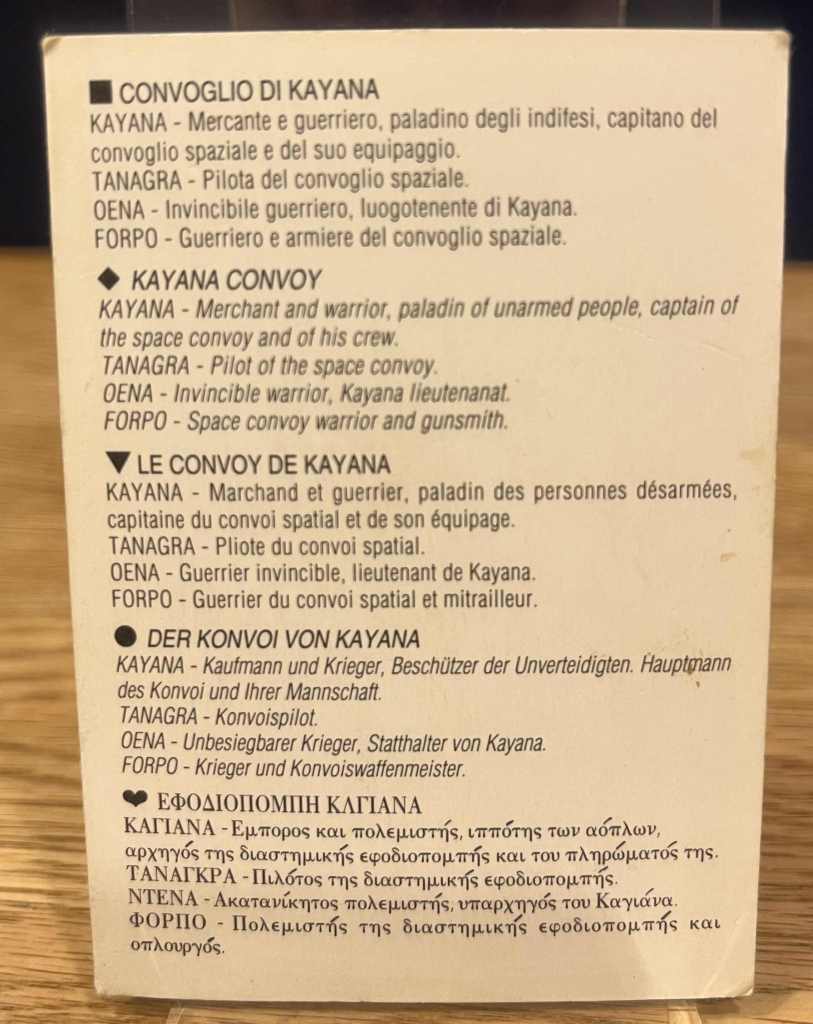
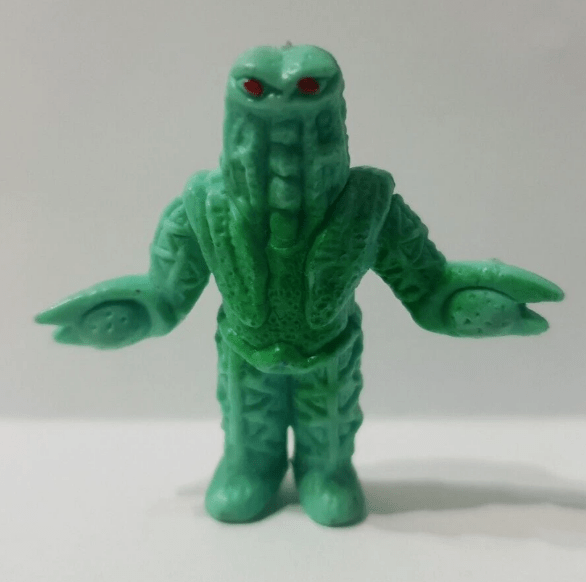
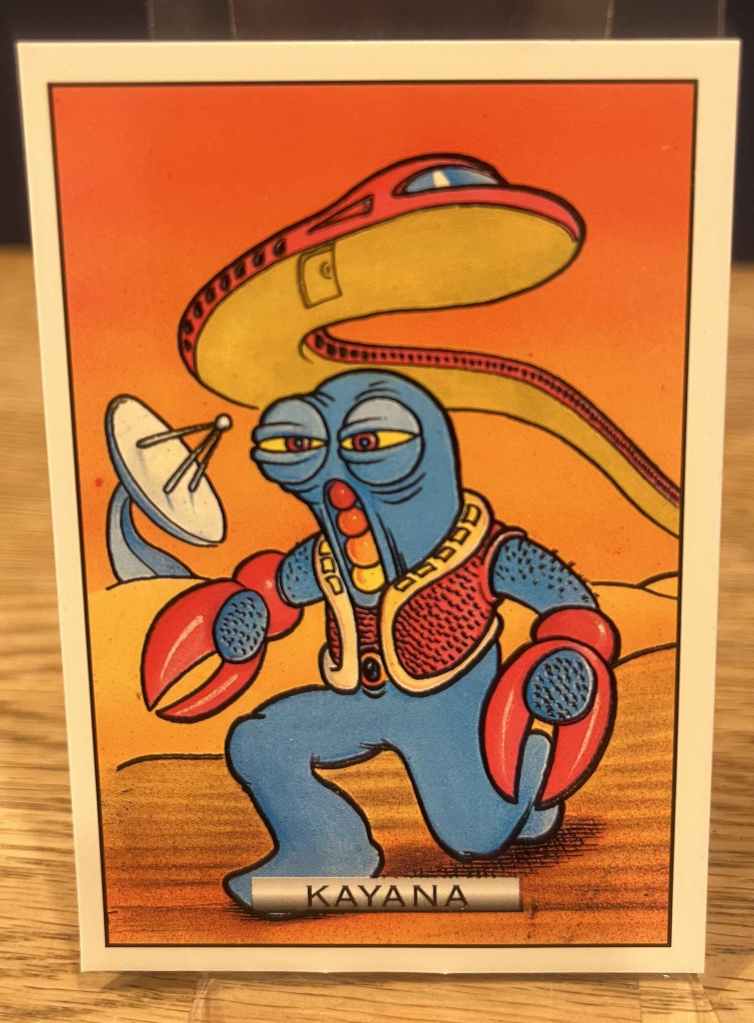
(First image here from an eBay listing)
aa. Kayana, a copy of Godola, I have only a card of this one; he is described as a “Merchant and warrior, paladin of unarmed people, captain of the space convoy and his crew”;
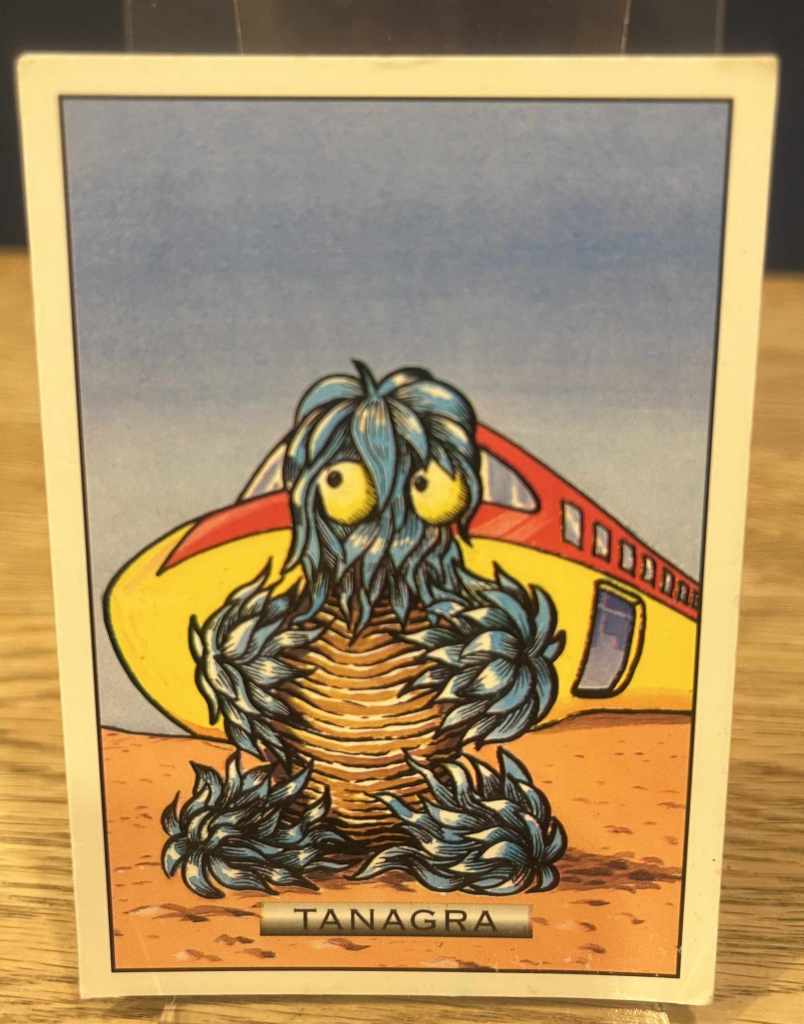
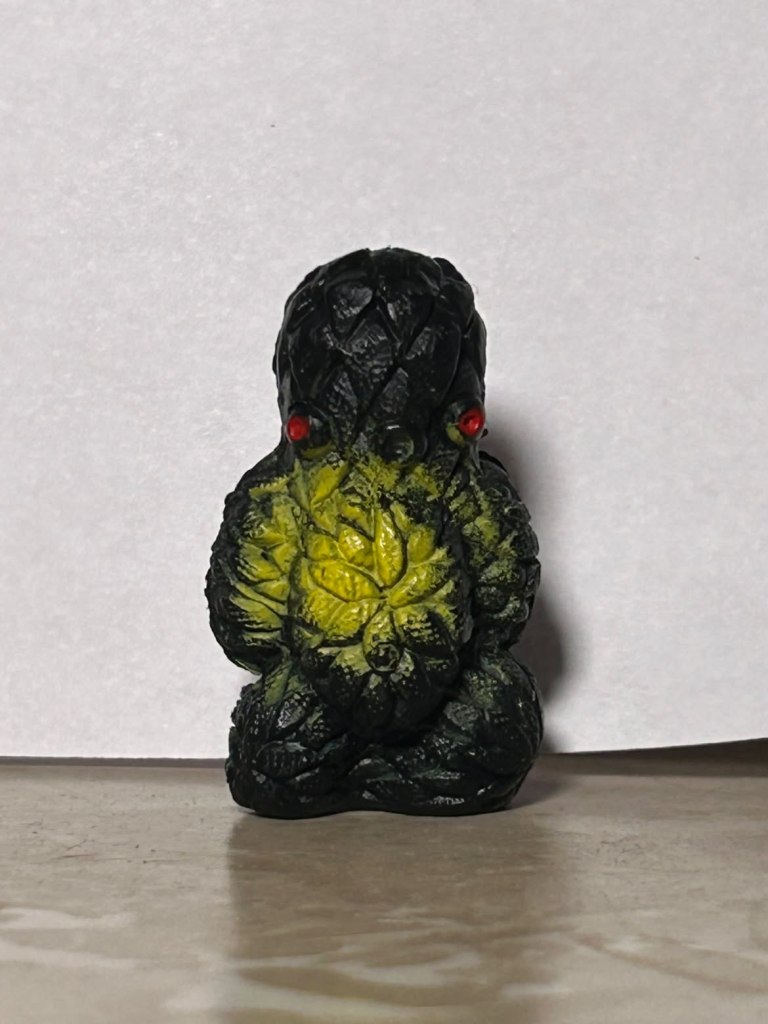
bb. Tanagra; thanks to the kindness of a collector named ‘KOLLEkToRniUs’ on Instagram, I have an image of the figure (their image reproduced above with their permission), and I know that this creature is based on the kaiju Petero from Ultraseven; he is described here as a “Pilot of the space convoy”;
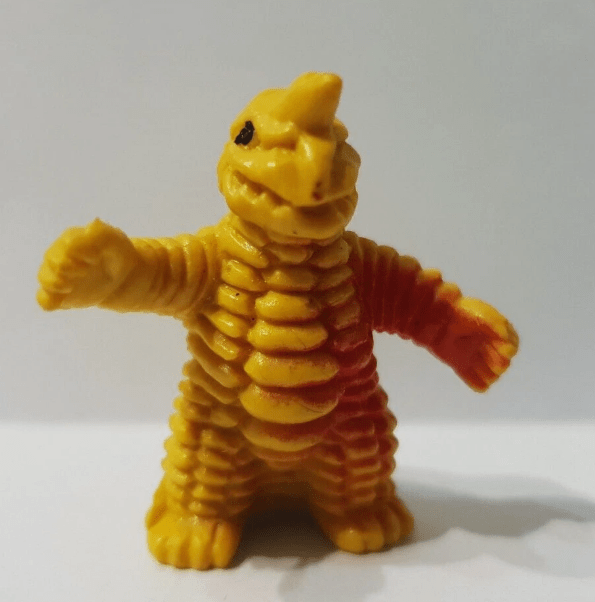
(The first picture here from an eBay listing)
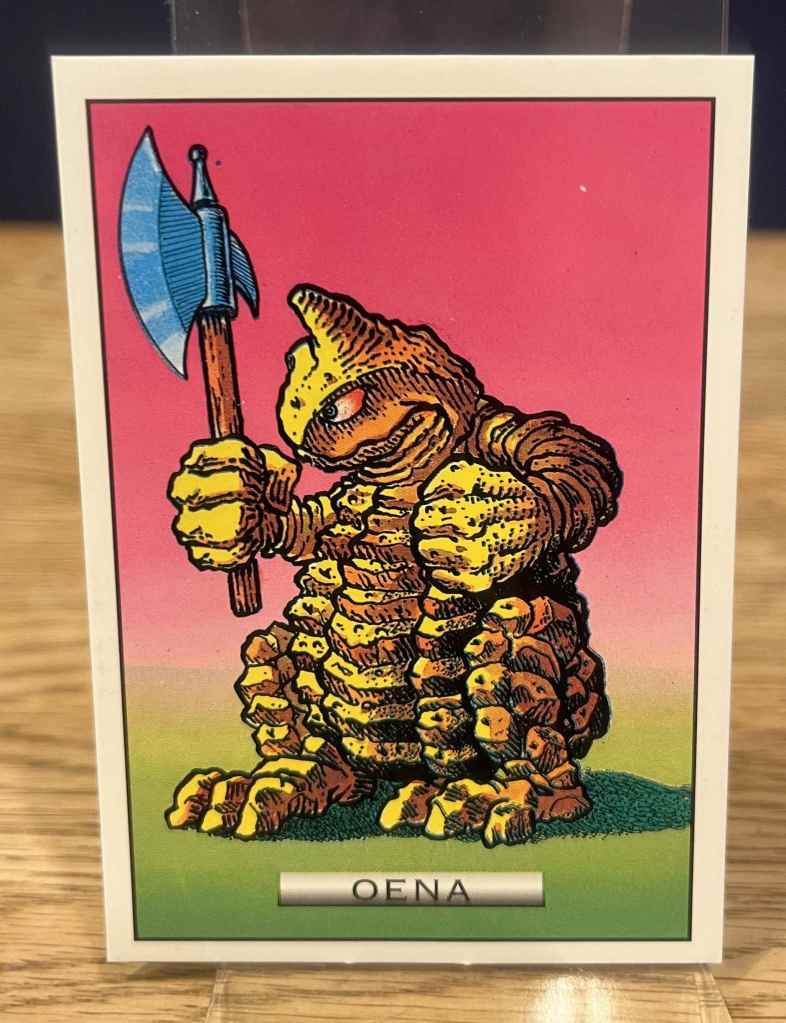
cc. Oena, probably a copy of Aboras, and I have only a card of this one; he is described as an “Invicible [sic] warrior, Kayana lieutenant”;
(The first picture here from an eBay listing)
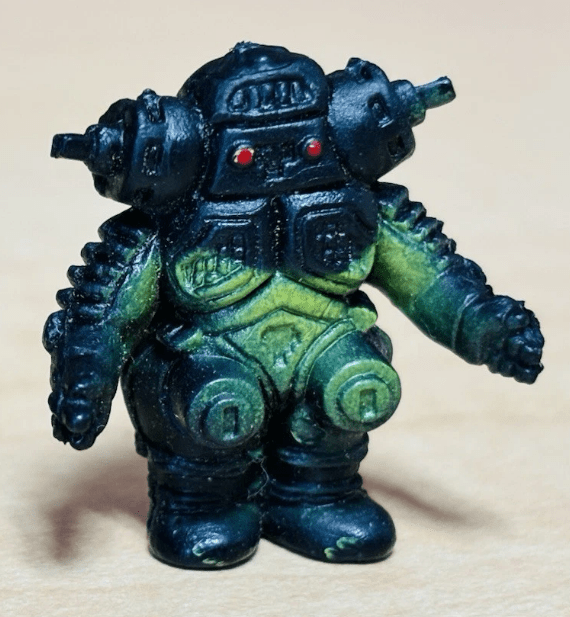
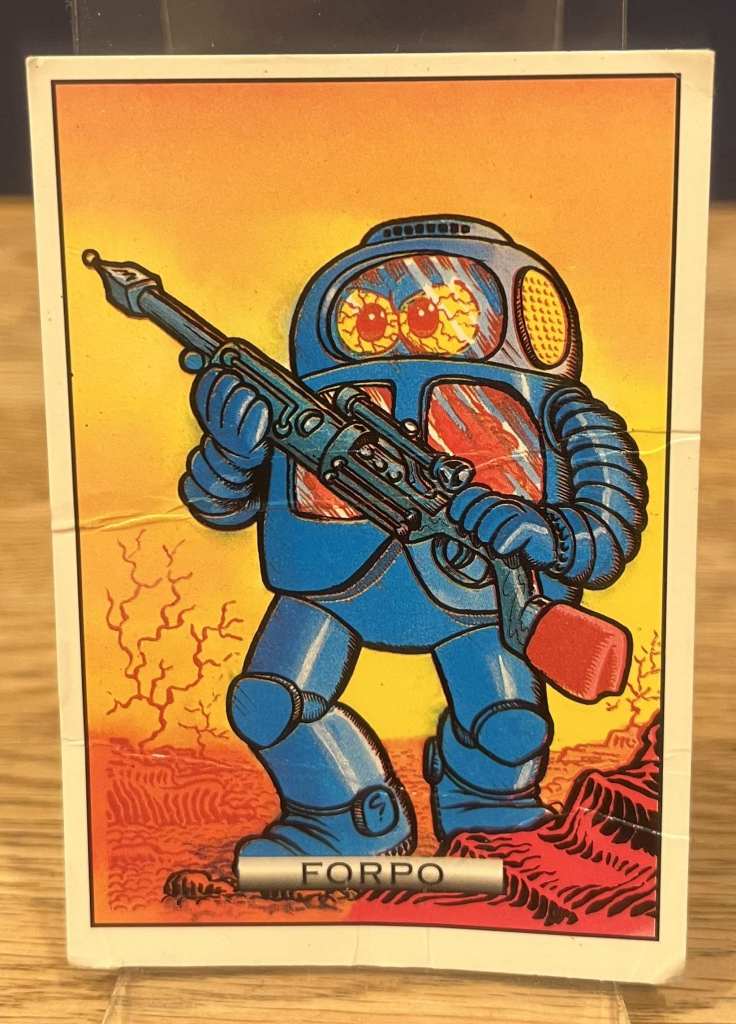
dd. And Forpo, probably a copy of King Joe, I have only a card of this one; he is described as “Space convoy warrior and gunsmith”.
⁂
As yet unlocated:
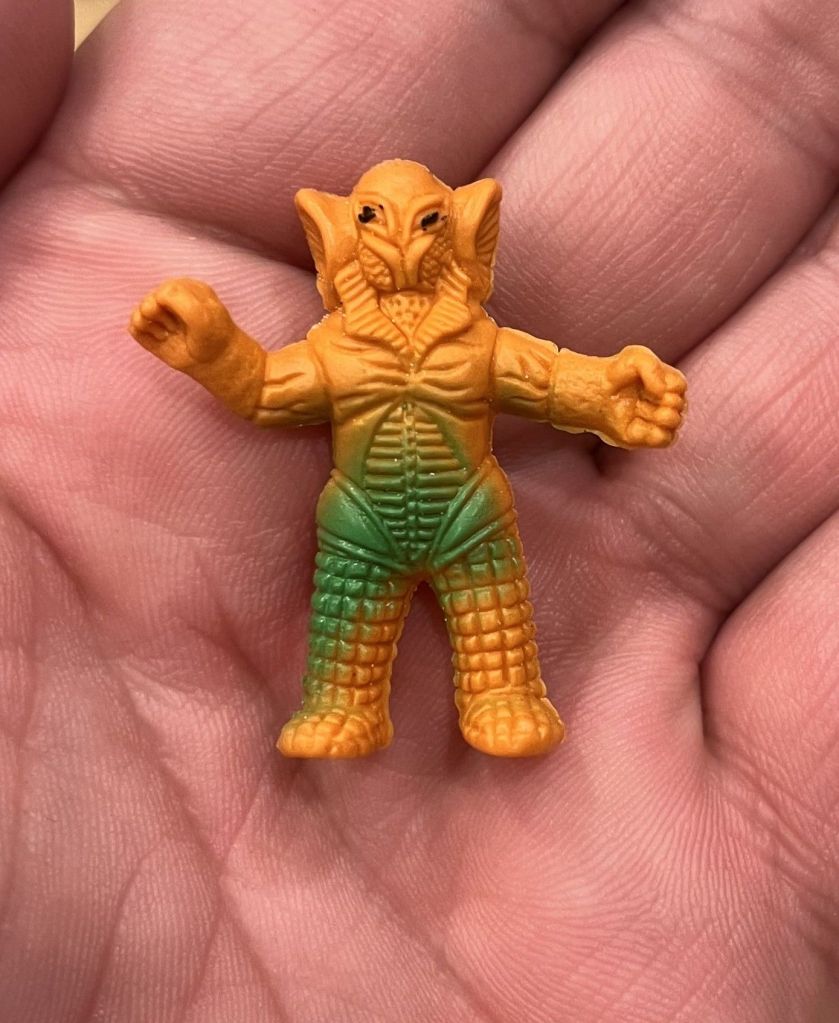
This does, however, leave a figure that is obviously a copy of Mephilas, but without the corresponding card I cannot yet connect this to any named ‘Astro Monster’.
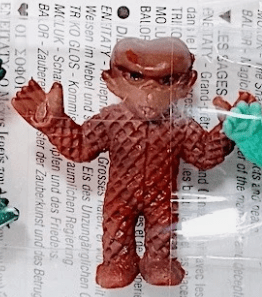
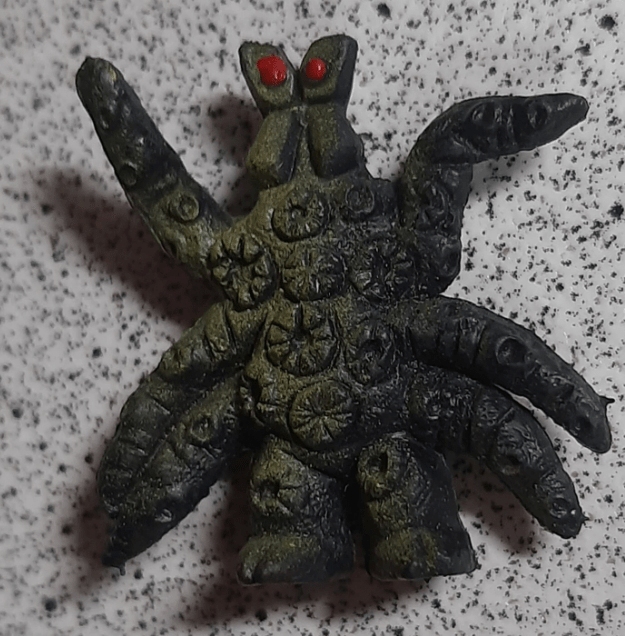
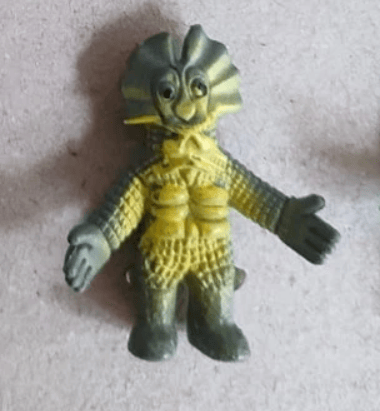
(Bootlegs of Guyros and Alien Prote and another; all these images from eBay listings)
[UPDATE: 6 August 2026: a few more have turned up in an Instagram post by a user there named ‘toycrypt‘ (see here for the post):
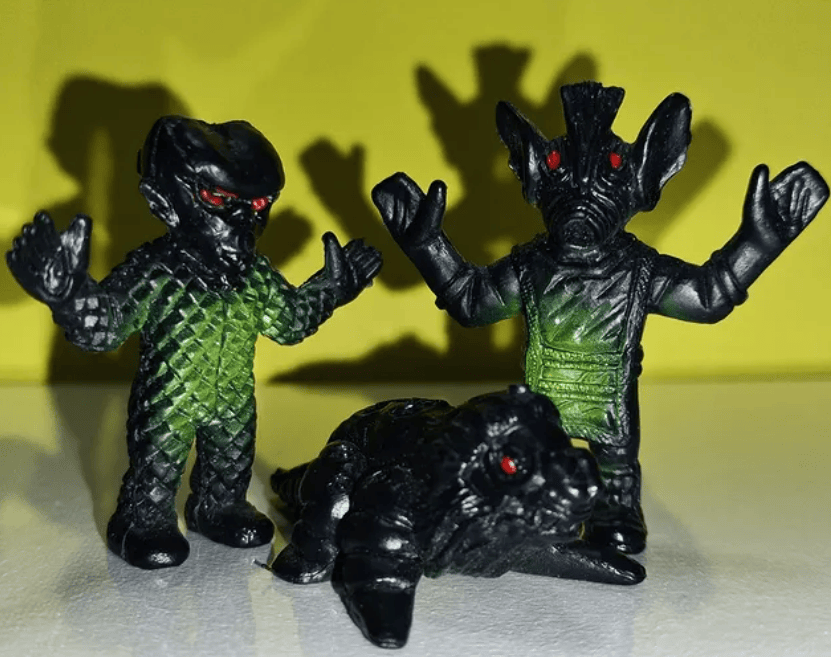
(Toycrypt’s image, showing a better image of quadrapedal Turu listed above, another of the same in my miscellaneous pile, and a copy of Alien Bado; image reproduced here with owner’s kind permission)
It might be useful to sum up here what is still unlocated or missing. I have or know of cards, but no figures for:
Zuster (a Red King copy);
Crapos;
Arar (a Mogera copy);
Serek;
and Tanagra.
In addition, I have neither character cards nor figures, or any knowledge of those, for:
Aratinga
Niros
Bulbor
Sefotus;
Triko Glos;
and Balor.
I clearly have some distance to go yet on this line.]
⁂⁂
Moving on to the adventure cards:
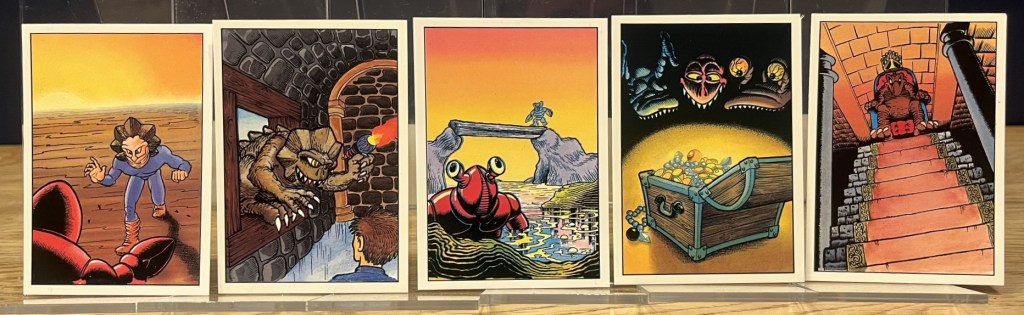
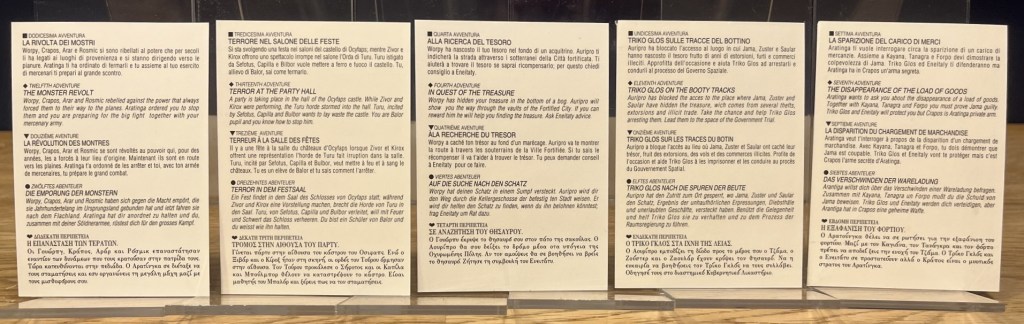
These take the form of:
“ARMED CHALLENGE AT THE TOURNAMENT”, “Hafter having conferred with Moluk you have joined the annual Tournament. You must defeat Niros and win competition to prove you are the best warrior. You can choose to fight for King Ocyfaps or Emperor Arantiga”
“TERROR AT THE PARTY HALL”, “A party is taking place in the hall of the Ocyfaps castle. While Zivor and Kirox were performing, the Turu horde stormed into the hall. Turu, incited by Sefotus, Capilla and Bulbor wants to lay waste the castle. You are Balor pupil and you know how to stop him”.
I have only a few of these at the moment, and so shall not tire the reader by trying to document them all here at this time. If some reader has a complete set, I would, of course, love to showcase them all here.
⁂⁂⁂
These were bootlegs in their rawest form – a snatch-and-grab of the design of the figures, with an elaborate creation of an alternate universe of character names and back-stories to domesticate these figures. For all their cartoony drawings the cards bring a fun and tongue-in-cheek element to the characters that seems entirely in keeping with the spirit of the Ultraman series, and all its numerous follow-ups. Perhaps what is most surprising here is that this was not produced in Mexico or Argentina, but on the European mainland, in early 1990s Italy.
- 'MUTTON DRESSED AS LAMB': Godzillas and kaiju that look vintage, but are not
- American made Pachi
- BOOTLEG DINOSAURS – a little off topic, but sometimes needed here
- BOOTLEG GODZILLAS
- Bootleg Tokusatsu from China and its immediate neighbours
- Bootleg Tokusatsu from the Americas
- BOOTLEG TOKUSATSU HEROES
- Central Europe – Godzillas and kaiju from behind the Iron Curtain
- Chinese-region bootleg Godzillas -the plastic tide from the East
- Chinese-region made Pachi
- European made Pachi
- European-made Godzillas
- PACHI
- Pachi kaiju
- Pachi kongs
- Pachi superheroes – Ultraman and similar
- The Americas – bootleg Godzillas from the New World

 Confessions of a Kaiju Hunter
Leave a comment