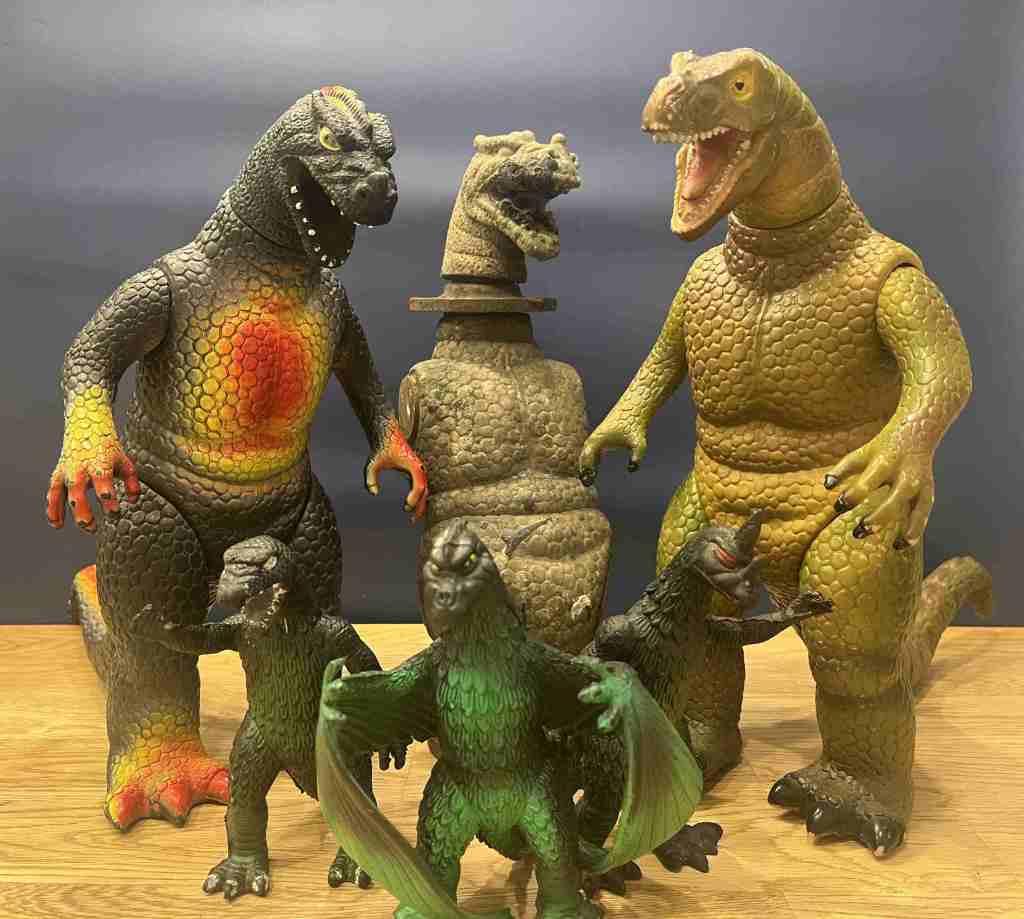
The company JHL are synonymous with European bootlegs of Godzilla, and yet very little is known about them. Like most toy bootleggers in Spain they operated out of Ibi in the south-eastern province of Alicante, and exploited the grey area between the existing Spanish legislation around bootlegging and the authorities lax enforcement of this for lower value items, producing cheap plastic toys, some rubber figures and other related plastic items such as school satchels in vinyl. These they sold from kiosks and inexpensive counter displays. I am not aware of any original packaging for such items, and there may well have been none. They appear to have been active mostly in the 1980s and 1990s, but I cannot, as yet, find any concrete information on the company – not even an explanation of what, if anything, the letters JHL stand for. To the best of my knowledge, no Spanish toy blogger has discussed the company in any detail, and while some excellent studies do exist of the Spanish toy market (such as Juan Hermida’s Plastic Toy Figures Made in Spain, 1948-1978, Adrea Press, 2013, available for fee online) and there are useful resources (such as the runs of the Spanish trade journal: Juguetes y Juegos de España, which started in 1962), but these either stop too early to be useful, or do not include articles or advertisements for JHL’s toys as they were illicit bootlegs.
There are occasional online reports that the company was a small firm, run as a personal project by a passionate fan of dinosaur toys and B-movie monsters, and this seems to fit. Perhaps our focus on the figure of Godzilla makes this company seem, from our perspective, to have been a bigger concern than it ever appeared in the wonderful toy-production chaos of Spain in the 1980s and 1990s, and after the retirement or death of the founder the company left little footprint apart from the memories of those who knew him or worked for him.
In their non-Godzilla and kaiju inspired lines, I know of an anatomically correct Iguanadon in solid plastic (with the company marks: “JHL / Made in / Spain” under its body), copied from Invicta Plastics 1980s model produced in collaboration with the Natural History Museum in London:
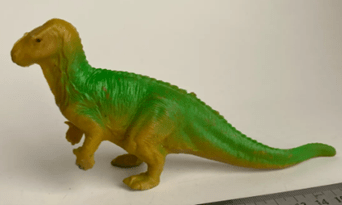
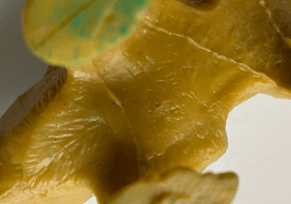
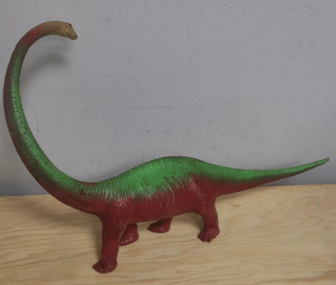
a sauropod (with the same JHL marks under its body), also copied from Invicta Plastics 1988 model of the same produced in collaboration with the Natural History Museum in London:
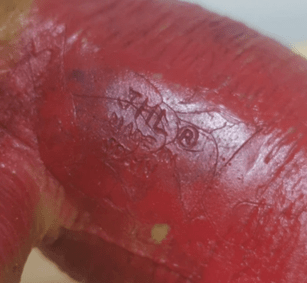
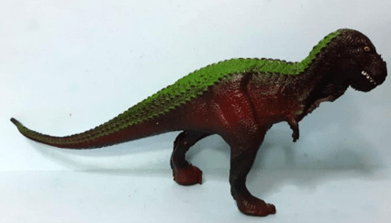
and a similarly made T-Rex, which probably has the same marks, and was copied from Invicta Plastics 1977 model, also produced in collaboration with the Natural History Museum in London:
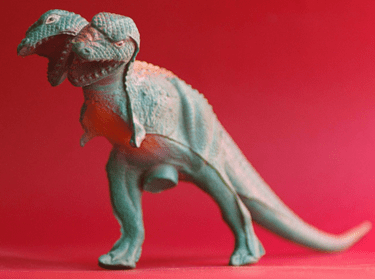
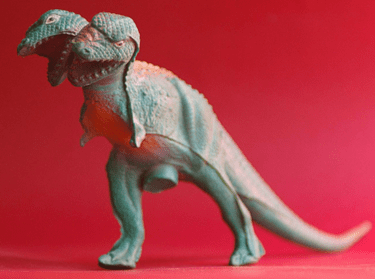
which appears later to have suffered from the peculiar Spanish obsession of giving everything two heads (see also below on this figure, and more on the double-headed Godzillas in another future blog):
There may well be more. These are fairly accurate bootlegs, copied to a relatively high degree from a model (apart from the last example, of course), but feel somewhat soulless and without much individual charm – quite unlike the rival toy-bootlegging firm Yolanda’s remarkably chubby Stegosaurus, which copies a common Chinese toy for its general form, but adds a charming half-smile and a whimsical look to that model:
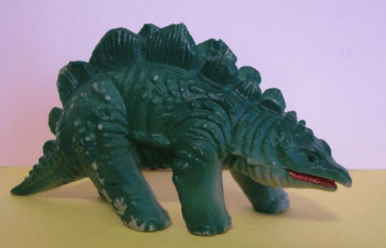
(All these images taken from sale listings on Todocollecion, apart from the two-headed T-Rex which comes from a Worthpoint post)
Incidentally, we might ask why the “Made in Spain” here is in English, not Spanish. None of these seem to have been actively marketed in the life of the company outside of the Iberian Peninsula, and I suspect English was used as it had been set by the model of Chinese toys manufactured for the West.
⁂⁂⁂
The JHL ‘Rodan’ bootleg, and its various evolutionary forms:
We are in quite different territory when we turn to the Godzilla and kaiju bootlegs produced by JHL, and here they contributed new designs and colour-schemes that make these stand out far above almost all other European bootleg toys in their charm and appeal. Spain was a hotbed for the reinvention and improvement of these toys (see also a future post on the wonderful Hermanos Pardines toys and related figures), with toy bootleggers perhaps in some form of ‘arms race’ – continually working on better and more eye-catching designs to sell their goods. These toy producers operated without access to mass-marketing, and probably had no more opportunity to catch the eye of their intended customer than with their items hung up in bags infront of a kiosk or laid out on a shop counter – thus, they pored their energies into the design and decoration of the toy itself.
These ‘Rodan’ bootlegs come in three basic types:
⁂ The winged ‘Rodan’
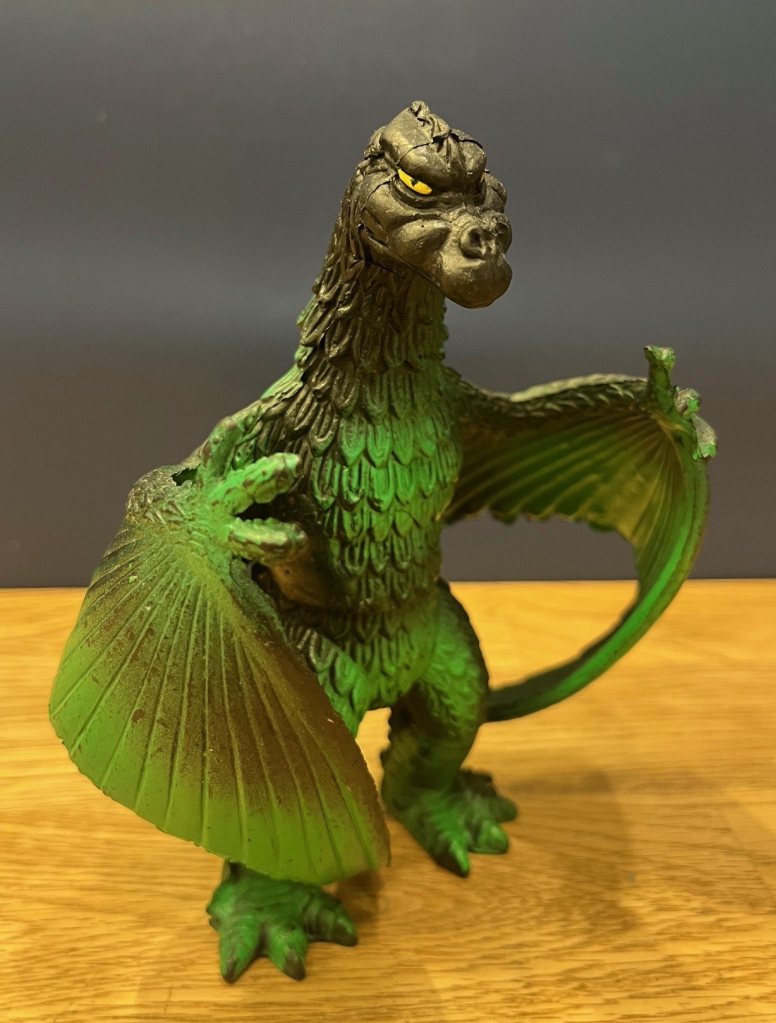
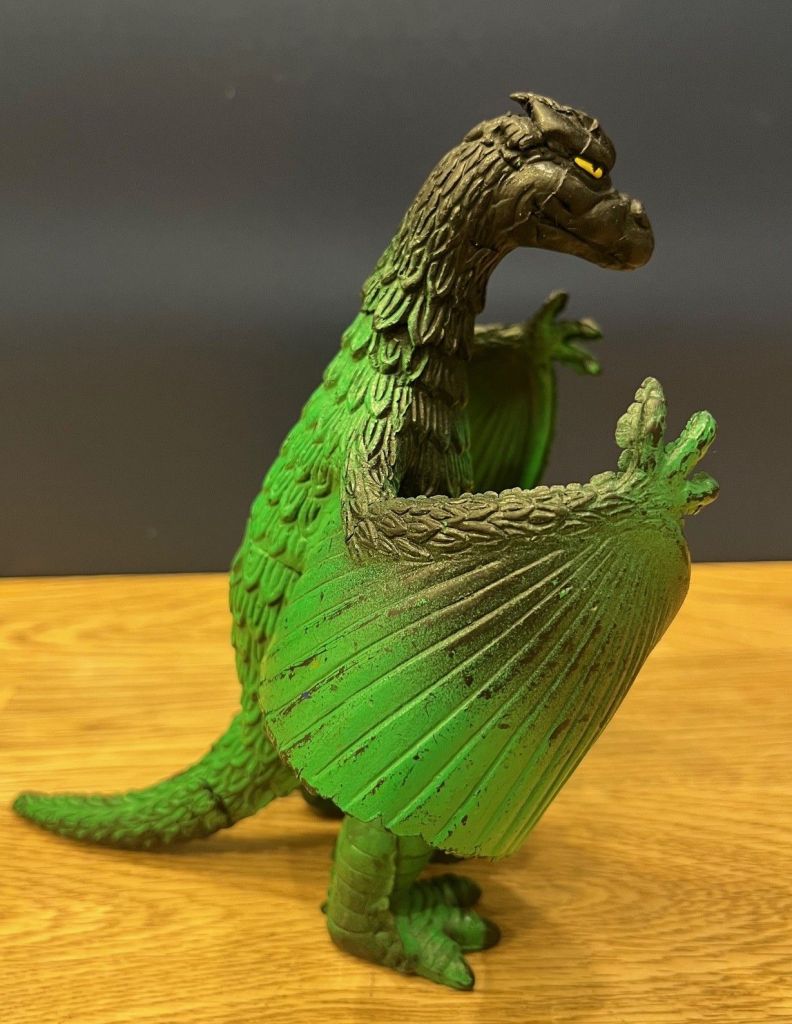
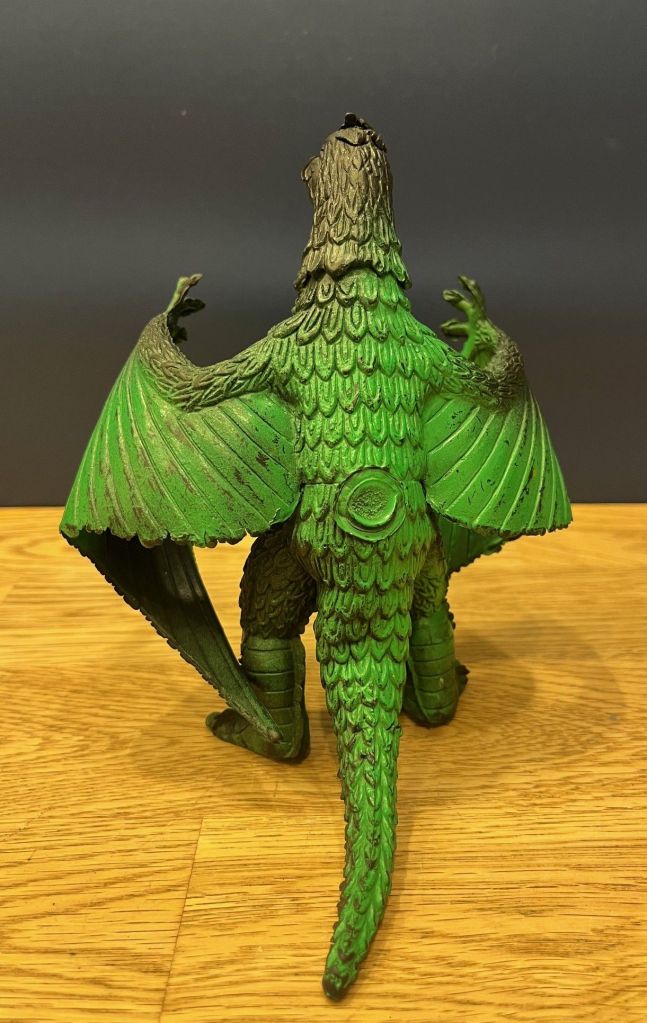
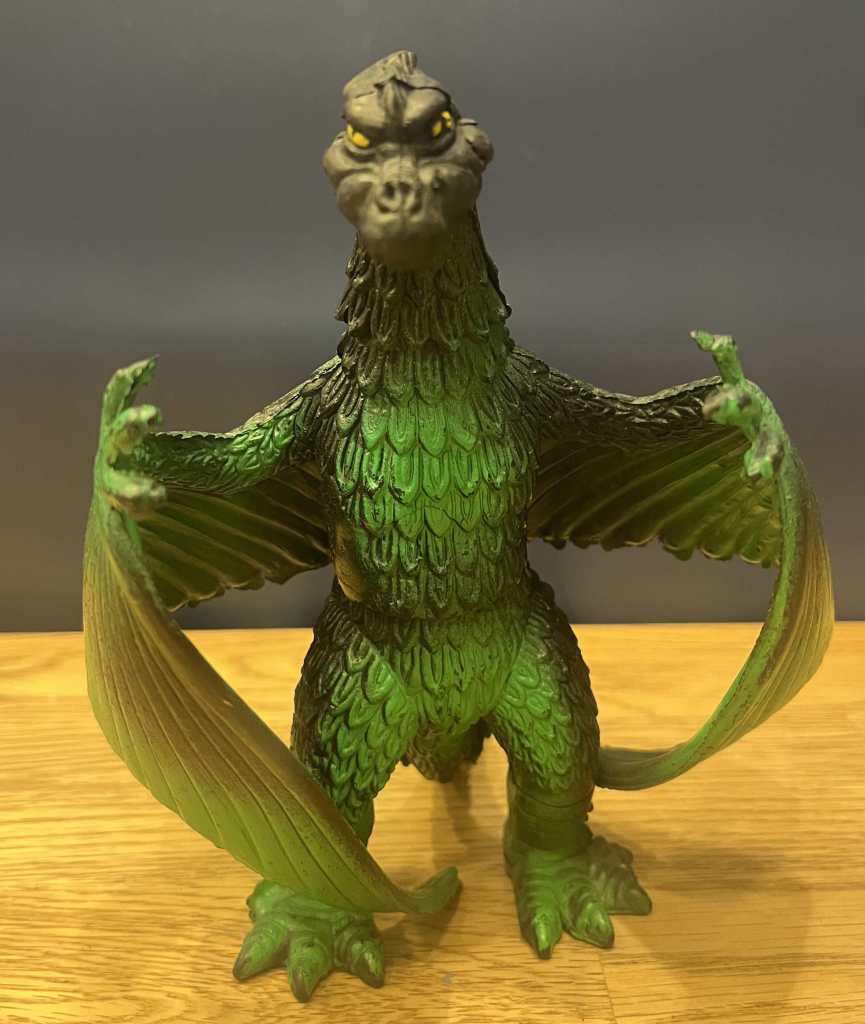
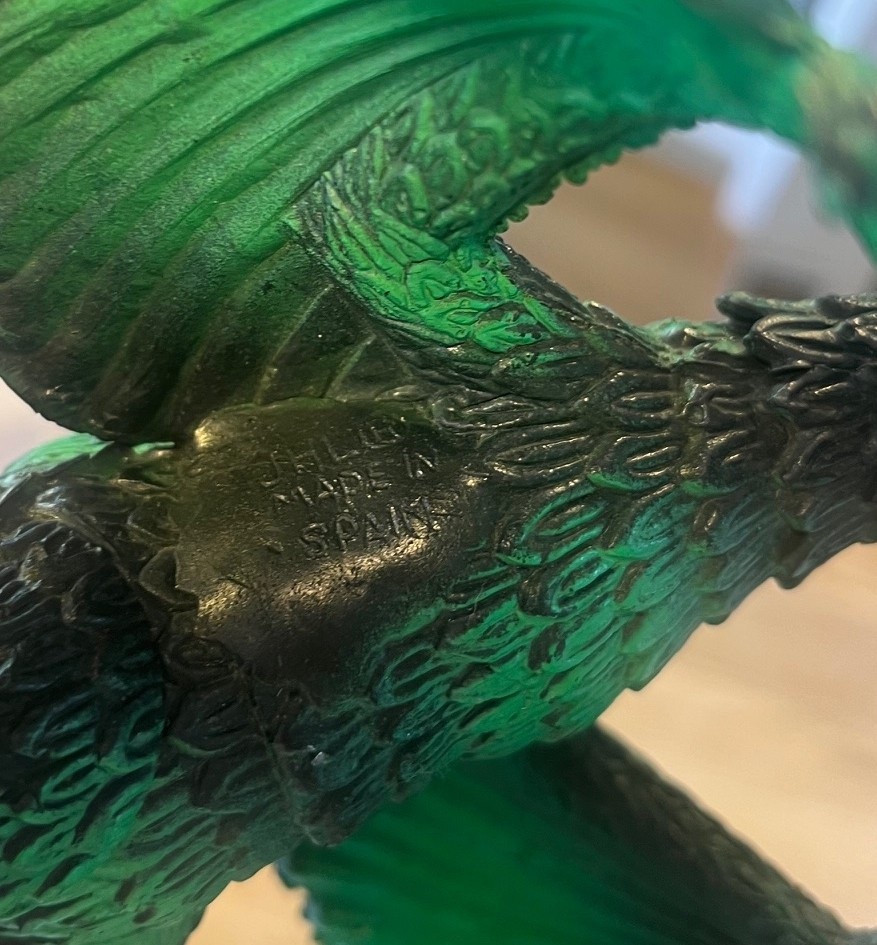
The first is the somewhat faithful copy of the Chinese-made ‘company x’ ‘Rodan’ figure (link), but whose wings usually curl inwards (rather than widely outstretched, like their model). This may have been a side-effect of the differing production process, but it does mean that these sit well on a shelf alongside other figures (without knocking over 5 others when slightly moved), and can be carried easily in the hand (the outstretched wings of the Chinese models are awkward, even spiky, to hold).
The head molds and differing mouth positions closely follow the various Chinese models. These were produced in solid rubber (unlike the hollow vinyl of the Chinese models), stand a little shorter than their models (at about 150mm. tall), and weigh about 200g. Lines around their necks and midriffs show that they were cast from articulated models, but they do not articulate themselves. They have circular injection mold marks in the middle of their backs, with these usually trimmed down and in some cases a “CE” copyright mark added in the same place. All those discussed here have large amounts of leftover rubber from the molding process at the lines of the joins of the mold. The painting seems to follow a rapidly applied ‘spray and pray’ method, focusing on getting swathes of eye-catching bold colours on the back, chest, groin, feet and hands. These were produced with the distinctive JHL marks on a flattened area under the right armpit, rather than the foot.
Several others can be viewed in both the facial sculpt here, and with a horn on their nose, in a Facebook post, here and here.
⁂ The horned ‘Rodan-Godzilla’ hybrid
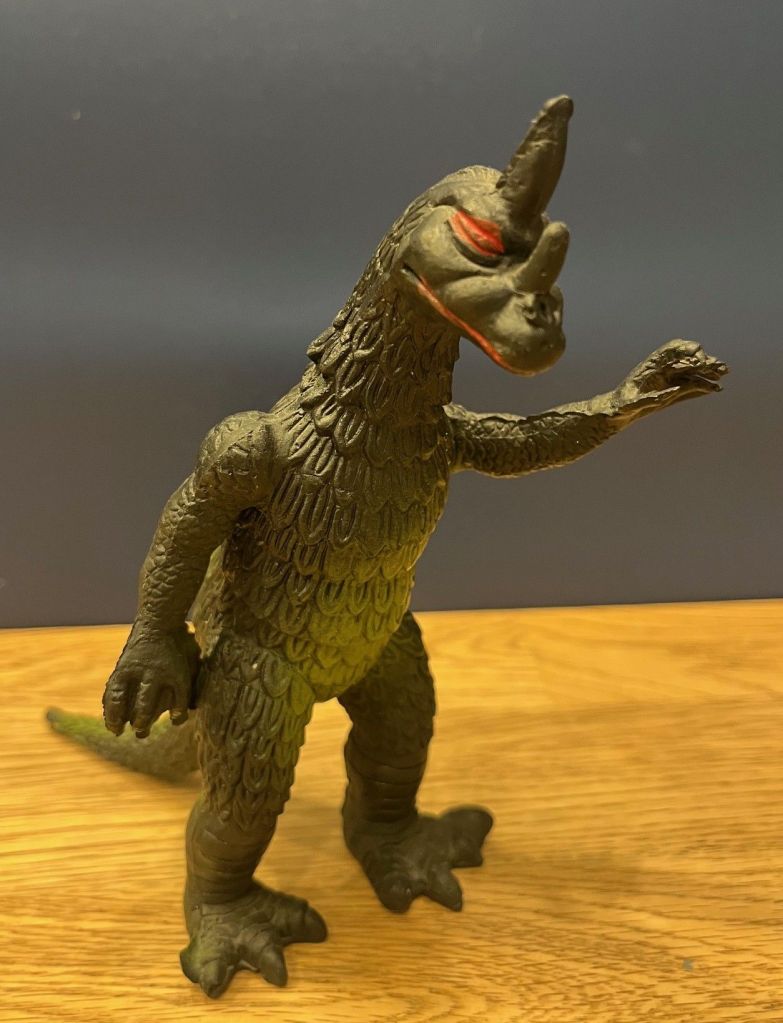
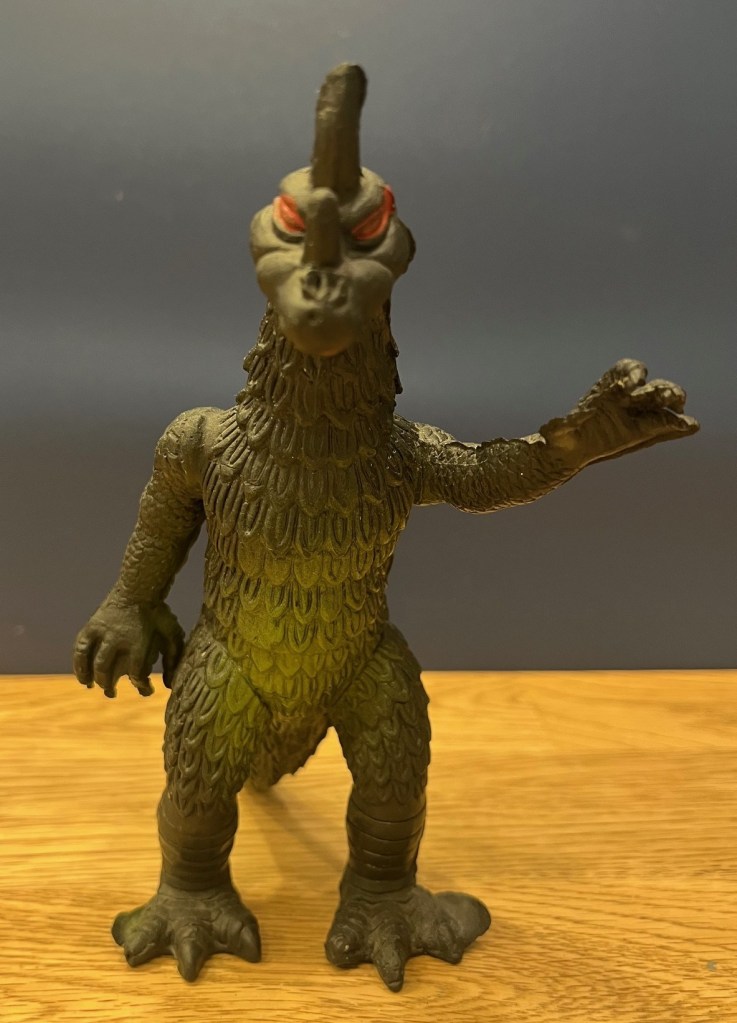
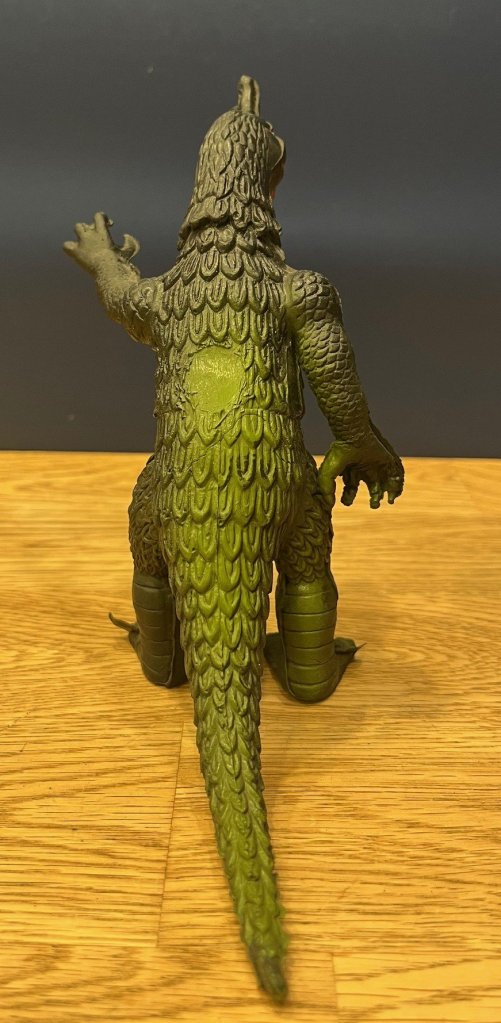
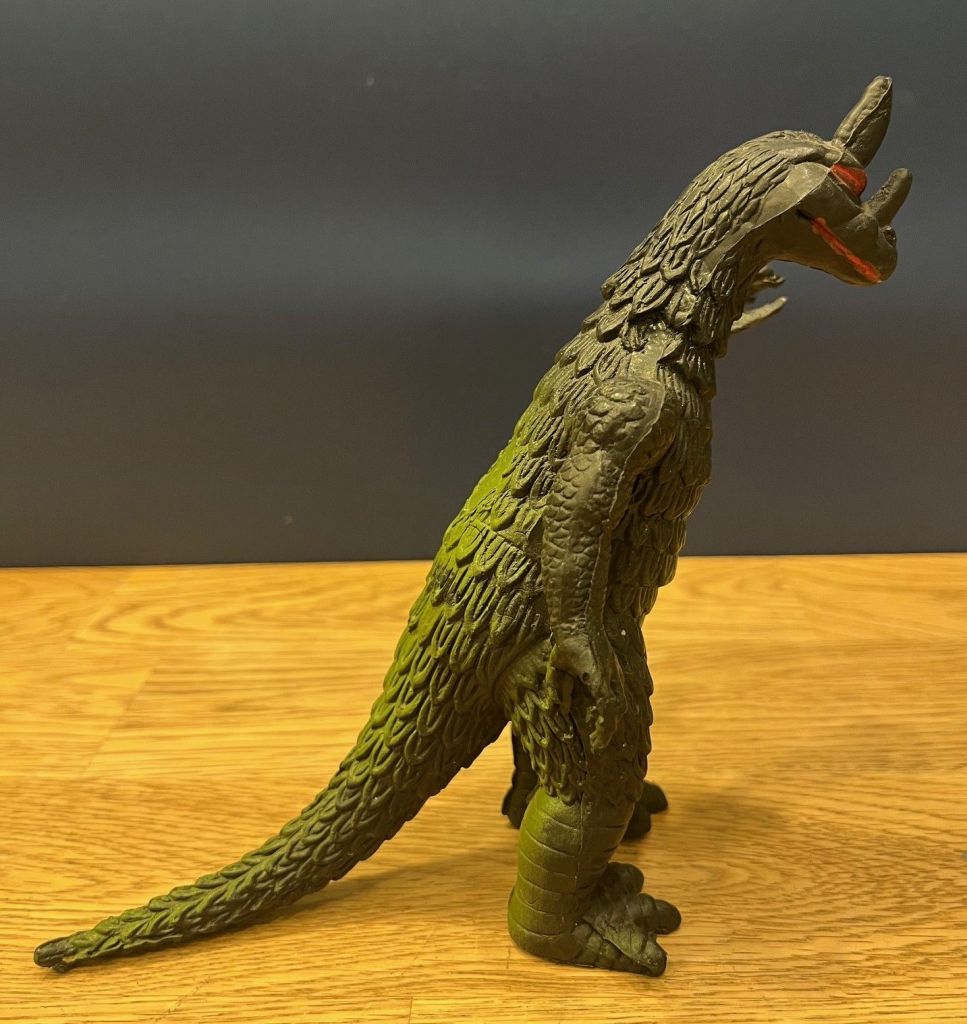
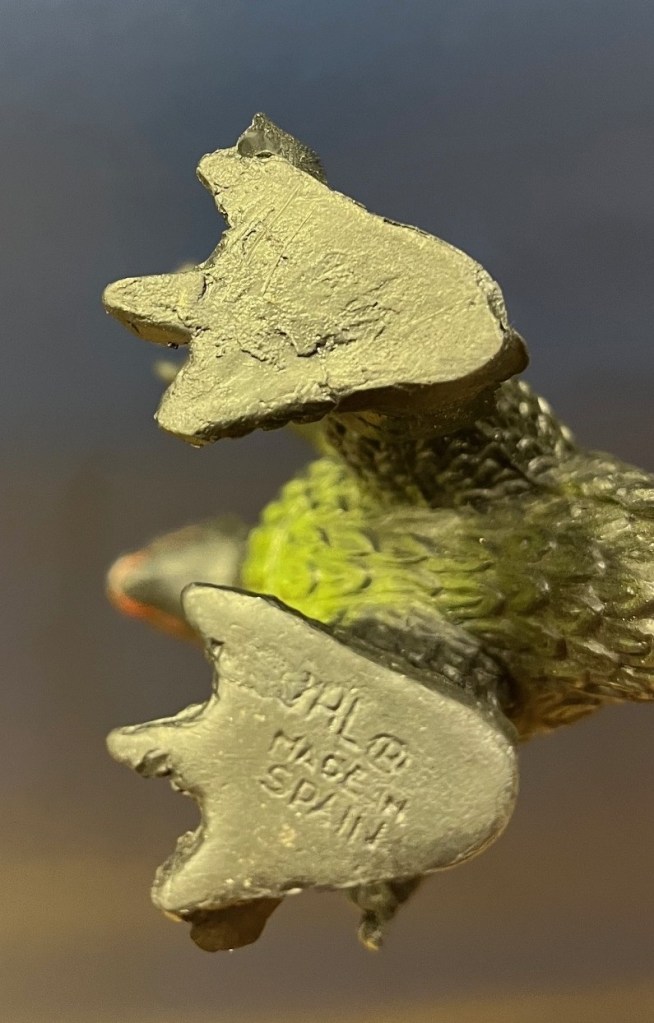
However, that design was soon adapted to form something new and uniquely Spanish. In this, while the body and head still closely followed the ‘Rodan’ model, the wings were done away with, and this so-called ‘Rodan’ began to morph into some sort of mini Godzilla. In the place of the wings were added arms that are identical to the anonymous Spanish copies of the Orion Godzilla clock and its Chinese copies (see my already posted blogpost on those). While those anonymous Spanish bootleg Godzilla has both arms raised, JHL sculpted only one in a raised position (the figure’s left), apparently waving at the viewer, while the other hangs down at the figure’s side. The figure has also been given a horn on top of its head with another smaller horn on its nose (one variant of the Chinese model also had a nose horn, but in a quite different form). These again were made in solid plastic, stand about 145mm. high and weigh about 170g.
⁂ The simple ‘Rodan-Godzilla’ hybrid
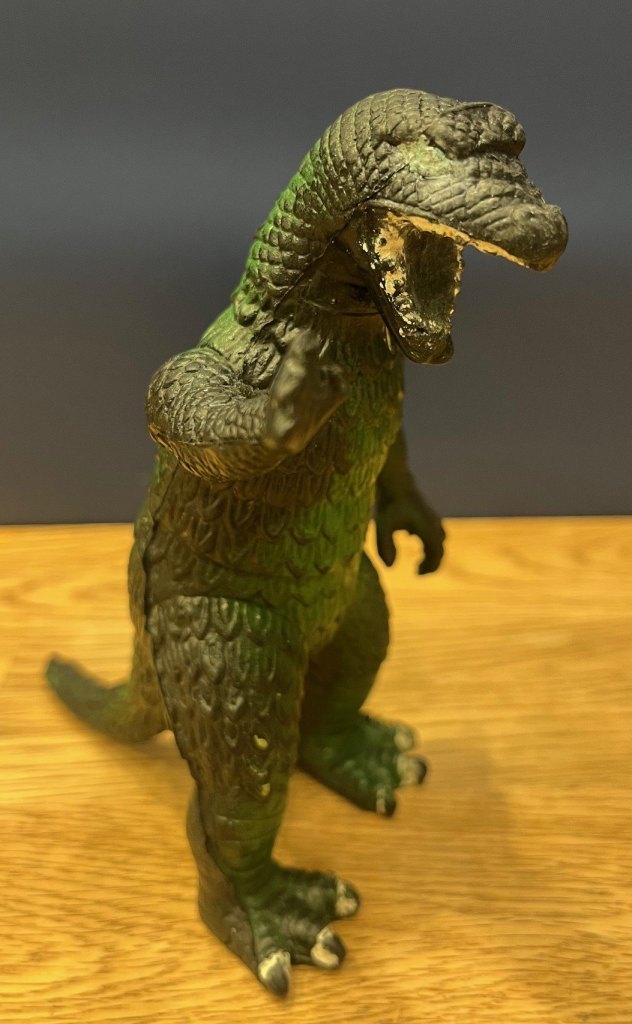
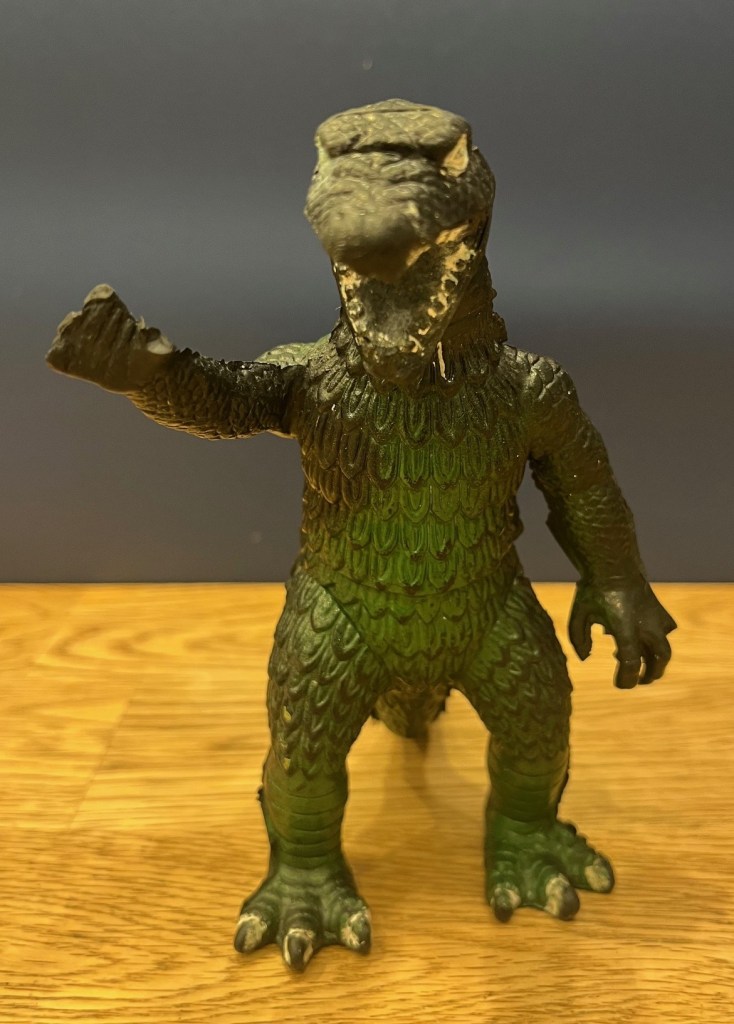
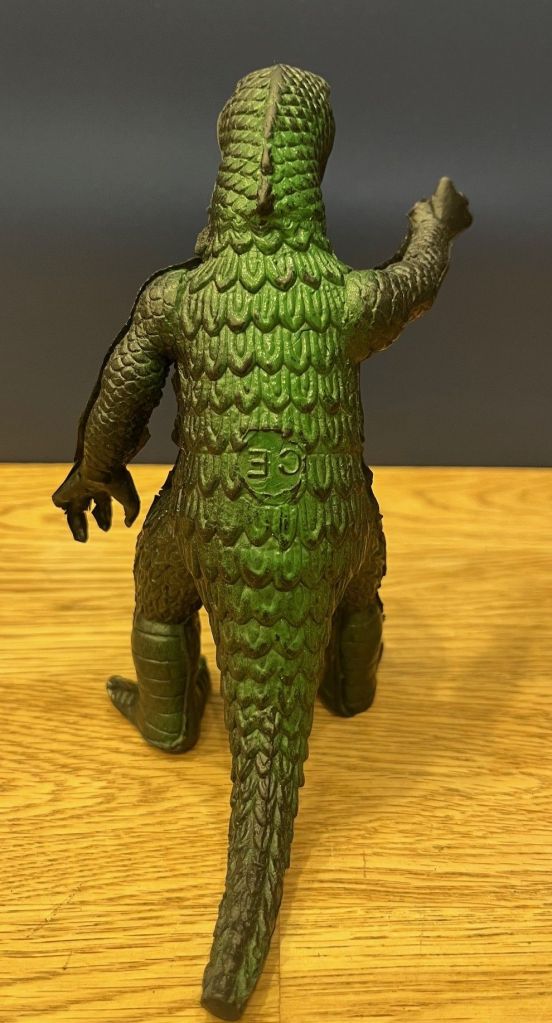
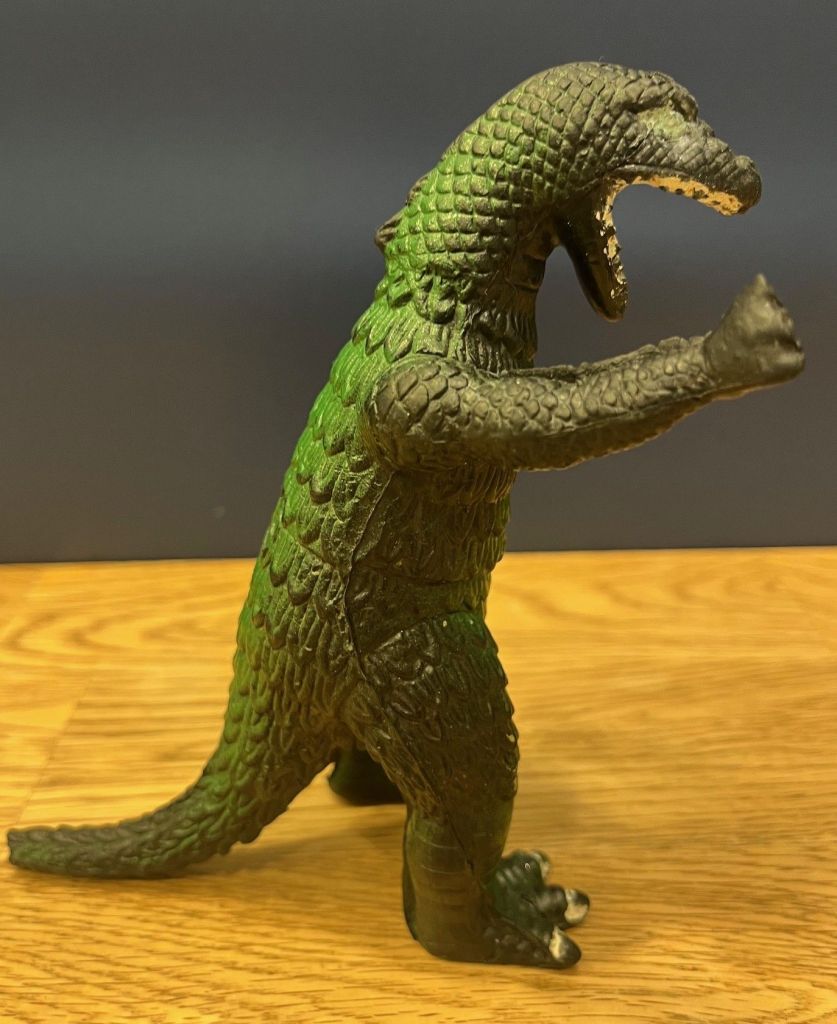
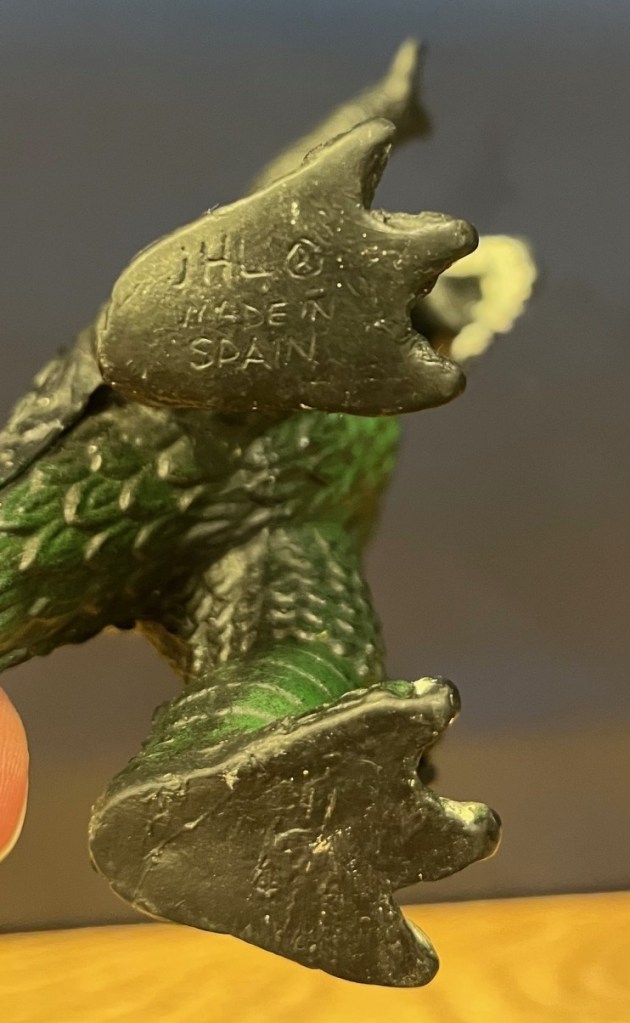
(I am afraid that while these are common, the only example I own has been rather aggressively ‘loved’ by its original owner, leading to some eye and teeth damage and the loss of a few fingers as well as the tip of his tail – personally, I think this adds to his charm, and it amuses me that the person responsible is probably now a 50 or 60 year old accountant, or similar – I do hope they see this)
The next stage took the borrowing from the anonymous Spanish bootleg to a new level, replacing the head of the ‘Rodan’ figure with that resculpted to look like the anonymous Godzilla bootleg, and creating an awkward point at the neck in which its reptilian scales had to be forced to meet a feathered neckline and body. The figure remained in the waving posture with one arm raised, but the design was flipped on its vertical axis so that the figure’s right arm was now raised. These are again in solid rubber, stand about 135mm. tall, and weigh about 160g.
Several others can be viewed in a Facebook post, here.
⁂ The double-headed winged ‘Rodan’
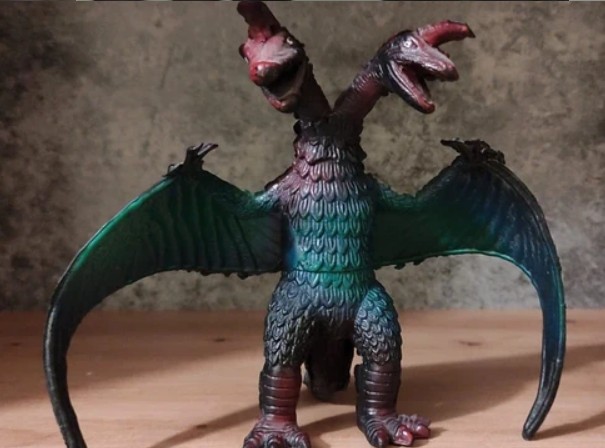
(This image from a Vinted listing)
There is also a double-headed version of the winged ‘Rodan’ figure, with the same body, but simplified facial sculpts. These are not rare, but, by chance,I have not obtained one of these, or seen one with my own eyes, and so I shall reserve comment on any details (such as feet marks) until I can inspect one directly.
Several others, as well as pictures of the JHL marks on their side under one wing, can be viewed in a Facebook post, here.
⁂ The double-headed T-Rex copied from Invicta Plastics model of 1977
(Image from a Worthpoint post)
This one was noted in passing above, when discussing JHL’s production of copies of realistic dinosaurs produced by Invicta Plastics for the Natural History Museum in London. However, it also deserves mention here, as while the body is that of JHL’s T-Rex, the twin heads are taken from the revised JHL ‘Rodan’ figure. In addition, it appears to be in solid rubber (not plastic as with JHL’s other realistic dinosaurs). I do not own one of these, and have not seen one in the flesh, and will add comment in detail when I do.
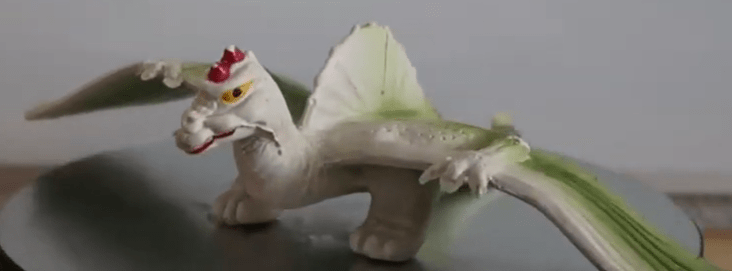
⁂ The very rare ‘Rodan-Dimetrodon’ hybrid
(This image taken from a Youtube video posted in 2021 showing an impressive private collection of JHL, Hermanos Pardines and other Spanish bootleg monster and dinosaur toys; image reproduced here with owner’s permission)
A final possible addition to this club comes in a combination of this ‘Rodan’ bootleg with a quadrupedal dinosaur figure with a raised spine-fin like a Dimetrodon. I have not seen one of these with my own eyes, and cannot verify if this was a JHL product or not, but the head is clearly drawn from the ‘Rodan’ figure, albeit somewhat more clumsily executed. I will add more details here when I finally lay my hands on one of these.
⁂⁂⁂
The JHL large size Godzilla bootleg – and its two forms:
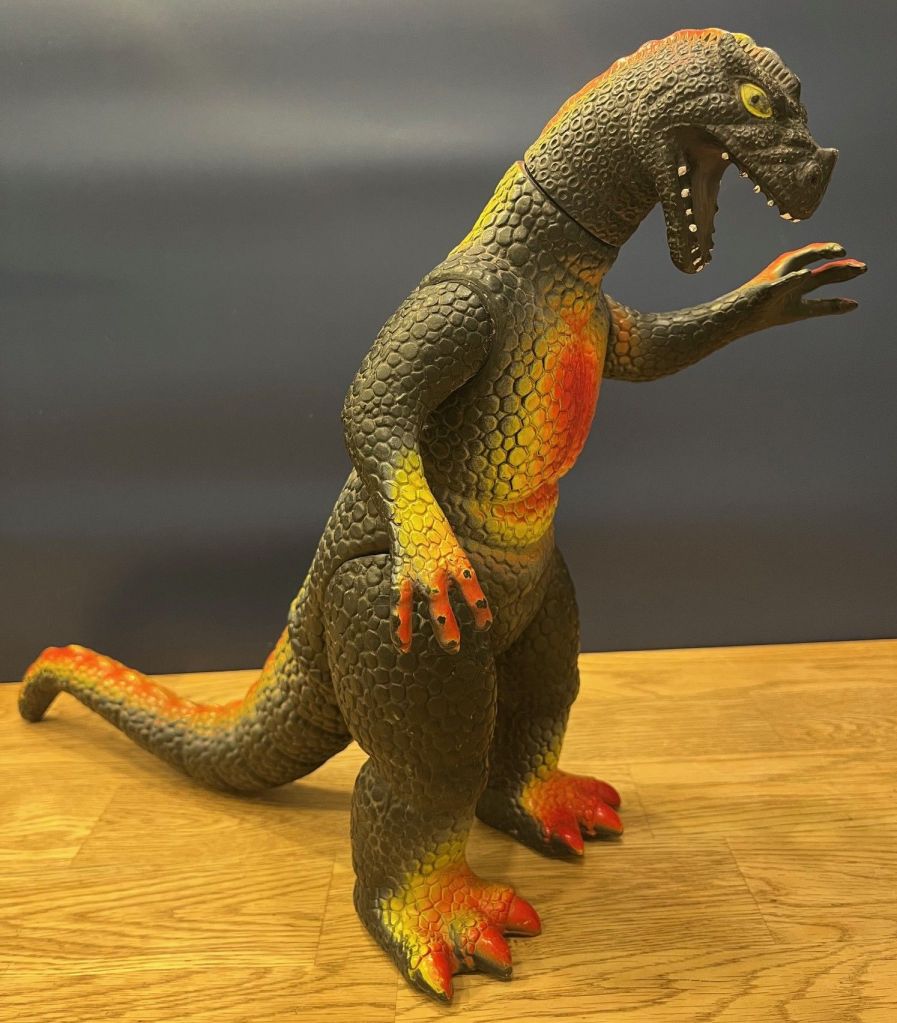
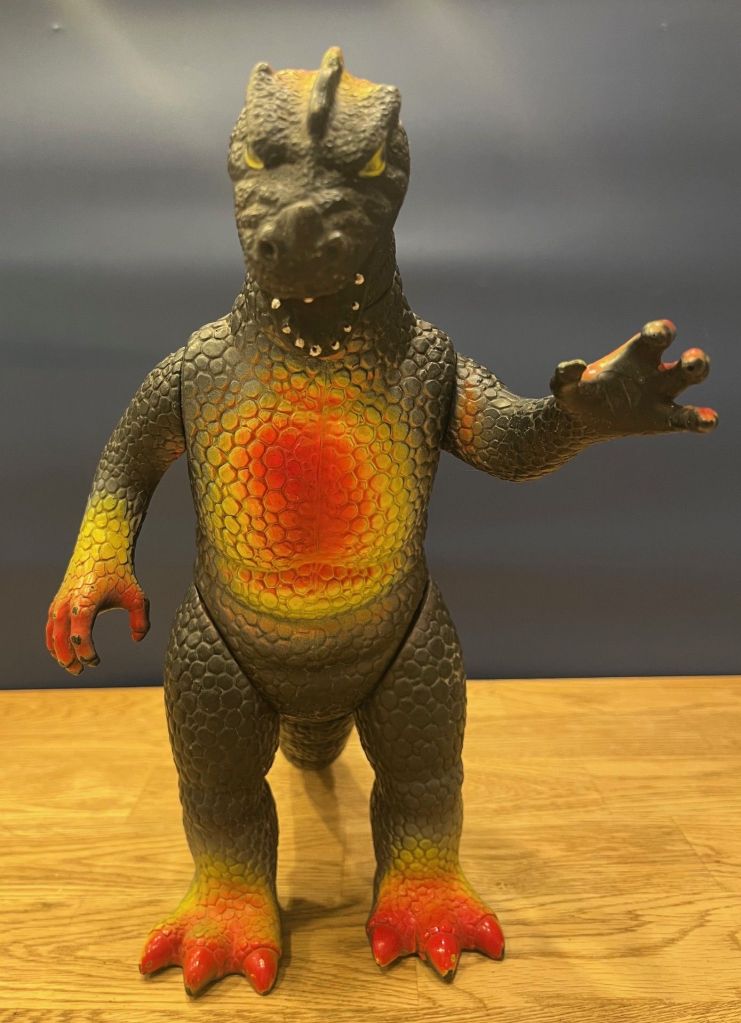
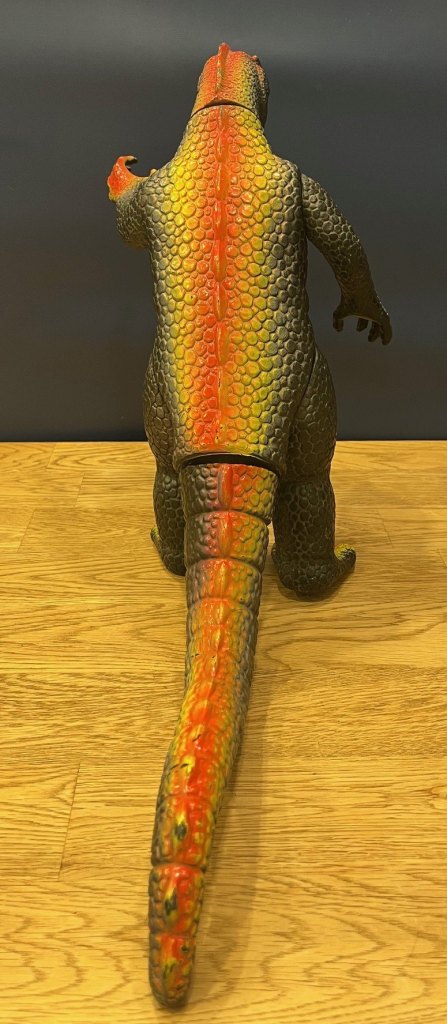
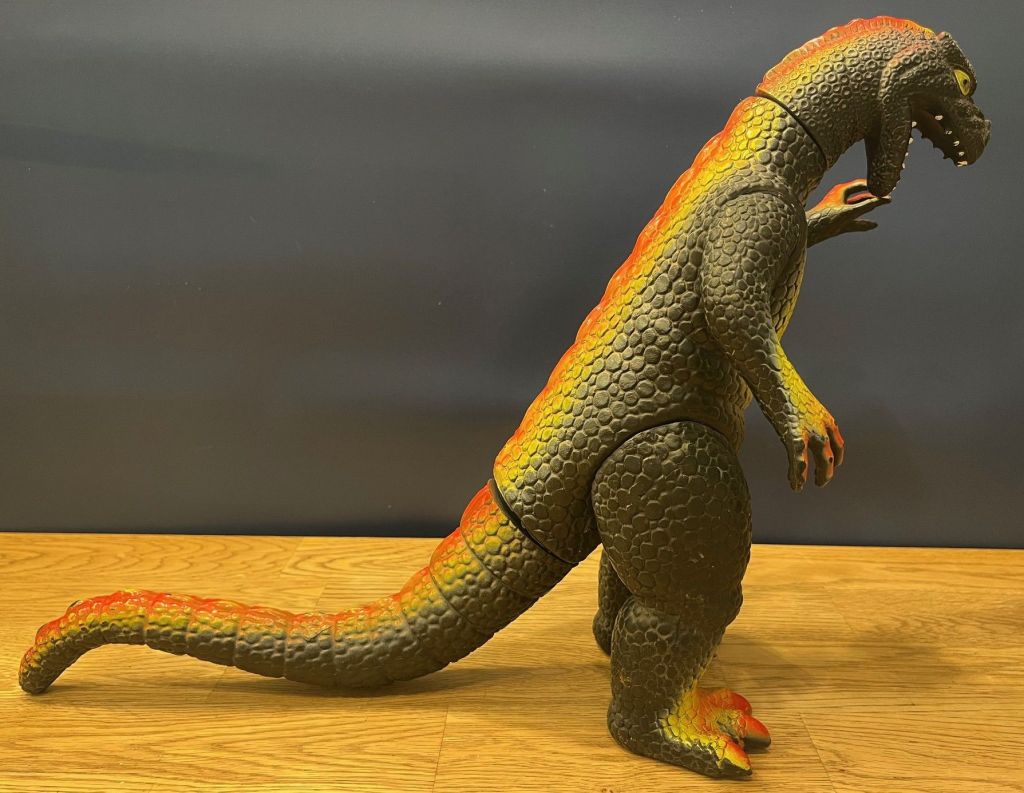
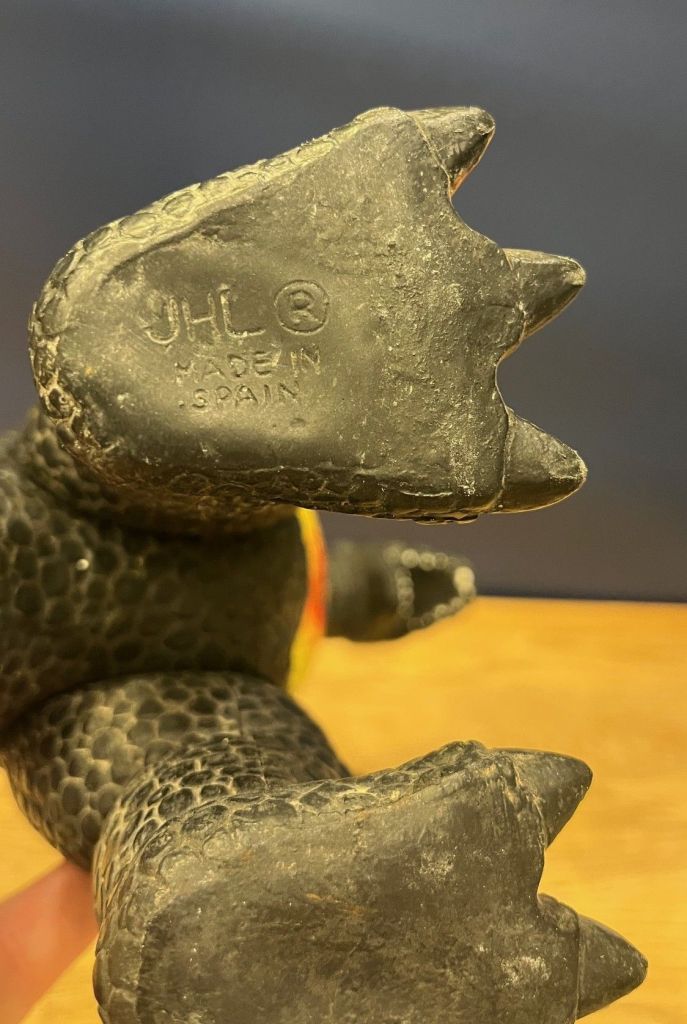
The second type are the large size Godzilla bootlegs, that precisely copy (i) the Dor Mei Godzilla bootlegs with the rounded-muzzle head-sculpt (on Dor Mei’s models see my post on Chinese bootleg Godzillas); and (ii) the same, but with a head cut-and-pasted from a well-known anonymous bootleg of the Dor Mei Godzilla (the ‘lunar-crater skin Godzilla’, my *Bootleg of Dor Mei model 1, see previously noted post). This was done apparently without noticing the incongruity of the two differing skin patterns where they meet. I know of no examples of mixed ‘Frankenstein’ models of these two Chinese bootlegs, and I assume this switch-out must have been a choice by JHL’s owner solely for the perceived appeal of the revised head sculpt.
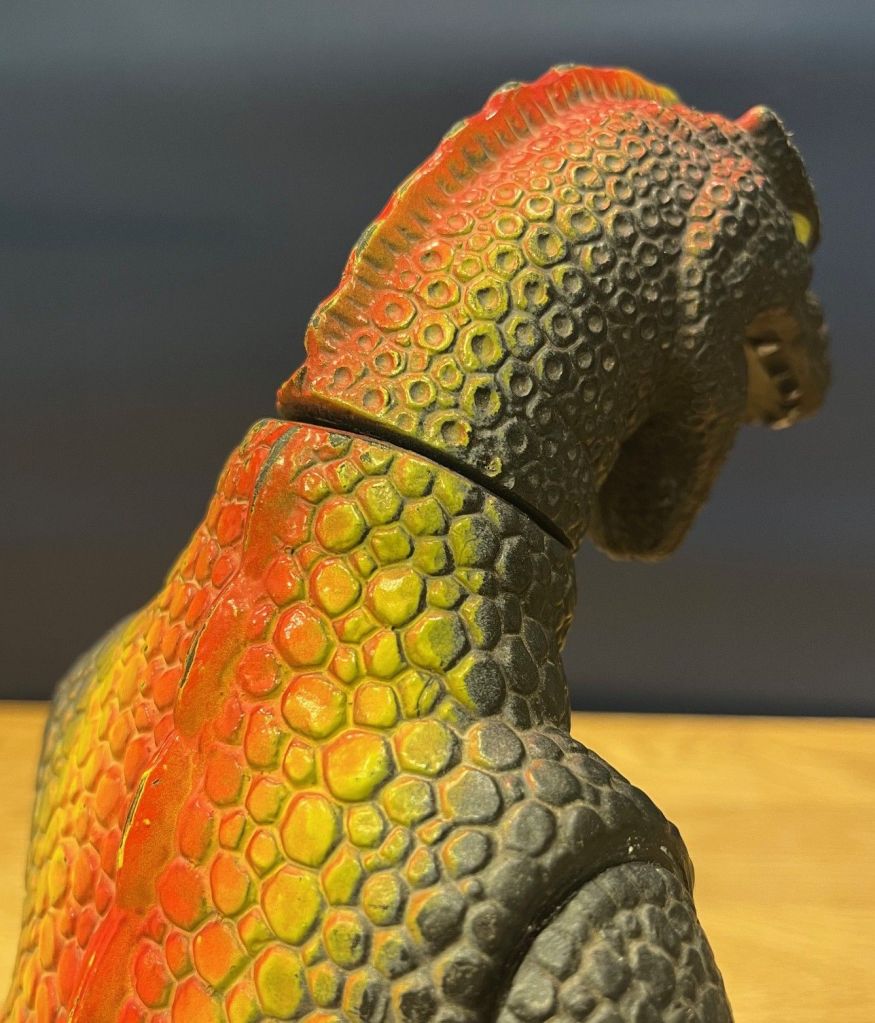
(Detail of the join of the body and the head to show the differing scale patterns)
These are remarkably faithful copies, so much so that they must have been carefully cast from Chinese toys.
In the images above I show type (ii) here, and here below are images of type (i) with its alternative head-sculpt:
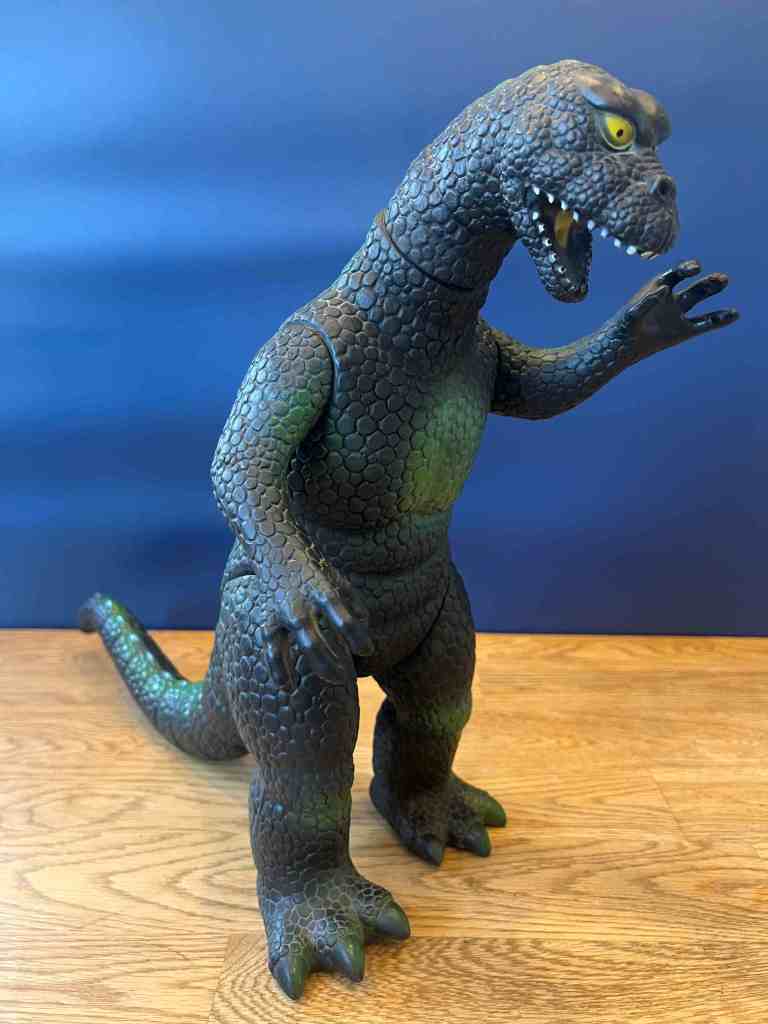
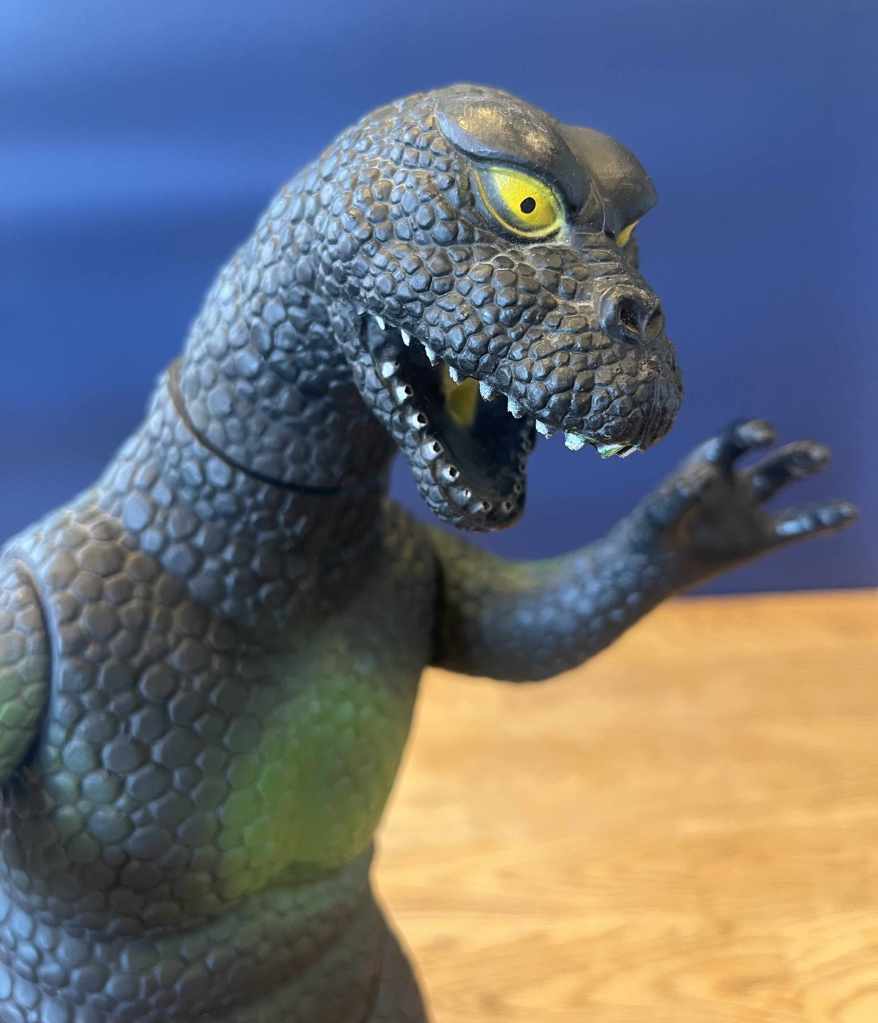
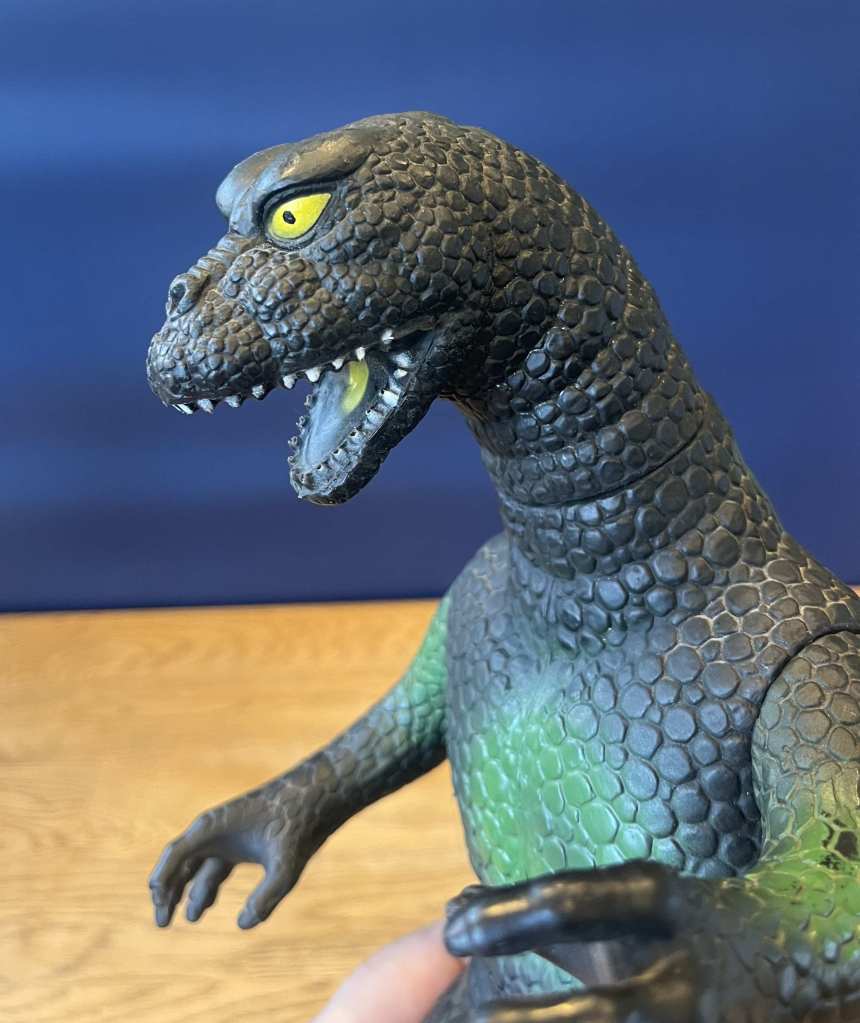
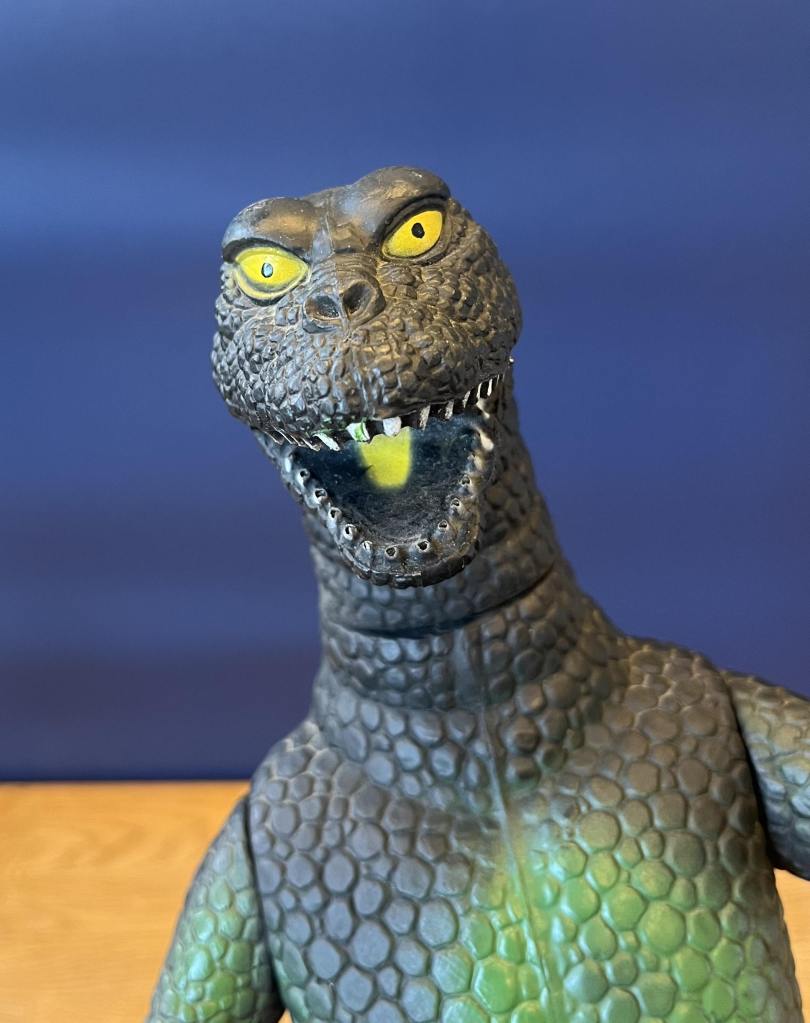
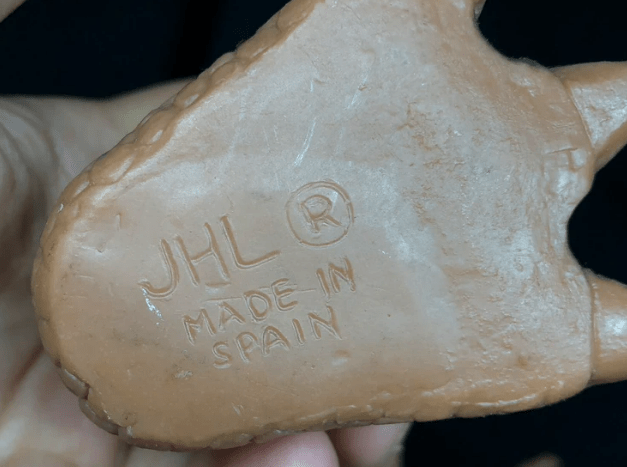
They are made in slightly thinner and more pliable vinyl than their Chinese peers, have closed throats, often clumsily painted teeth, and stand about 310mm. high and weigh about 460g. To the best of my knowledge, they are all marked on the soles of their feet with the JHL marks.
[UPDATE 5 June 2026: in another blog posted today on a brown variant of these bootleg Godzillas, I discuss the fact that they come in two sizes: one as reported here, and another about 20mm. taller. This is due to variant molds and is discussed fully in that later post]
What is most noticeable, however, is the wonderful ‘sunset’ colouration on most of these JHL bootlegs. The base vinyl is usually faded black, but can be dark blue or purple, and while they are highlighted like Chinese Godzilla bootlegs (down the spine and with a large circle in the middle of the chest), this is done is a two-tone process of an iridescent yellow or orange with a bright and shiny red or green overlaid at its centre. The earlier occasional splash of colour on the hands has now been extended to coat the hands and wrists almost giving them gloves, and the front of the feet follow this as well. I must confess I simply adore the colours used here, and just as pure Sofubi collectors go weak at the knees for a ‘Hawaiian spray’ so I find myself fumbling for my wallet every time I encounter one of these.
Type (ii) here almost always are found with this ‘sunset’ colouration, while a small percentage of type (i) exist with more muted colours.
(Images from a Vinted listing)
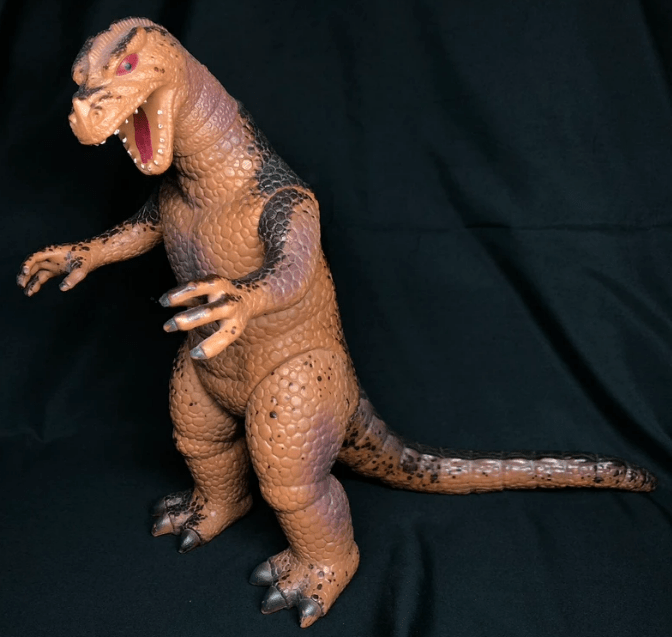
[Update of 17-27 May 2026: a Vinted listing has added a rare colour variant to this figure. The more common variants are the ‘sunset’ colouration on black or occasionally blue or purple vinyl, and a more subtle red highlighting of the same black or blue base vinyl following the Chinese models. However, there is also this rarer variant, produced in light brown vinyl, shaded in a black paint that appears to wear off easily (but has given the figure above rather fetching eyebrows).
I did tell myself I would not purchase this brown JHL Godzilla, and I did try to avoid giving in to that temptation – and many readers will know how that usually plays out – and I lasted almost a week, and for that show of will-power (albeit ultimately futile, but still) I am proud of myself. I will add better photographs when I have it in hand.
(Images from Todocollecion)
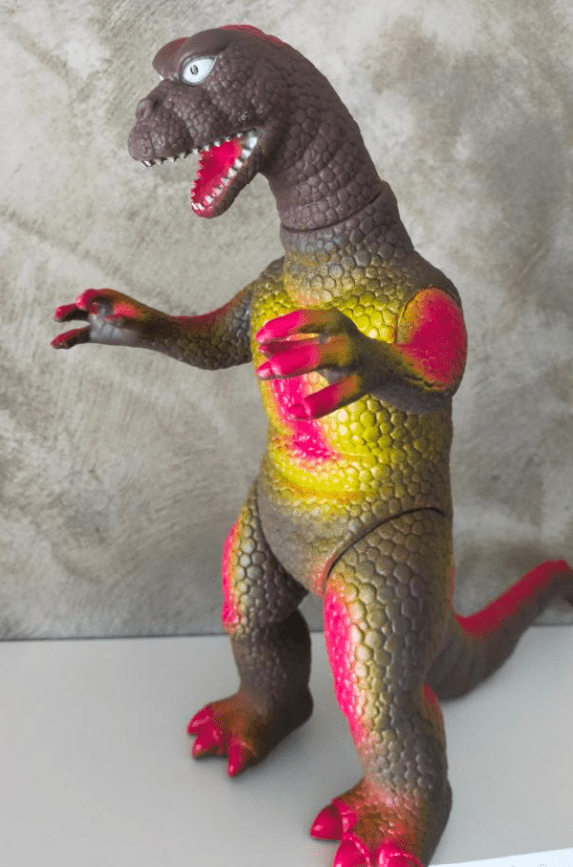
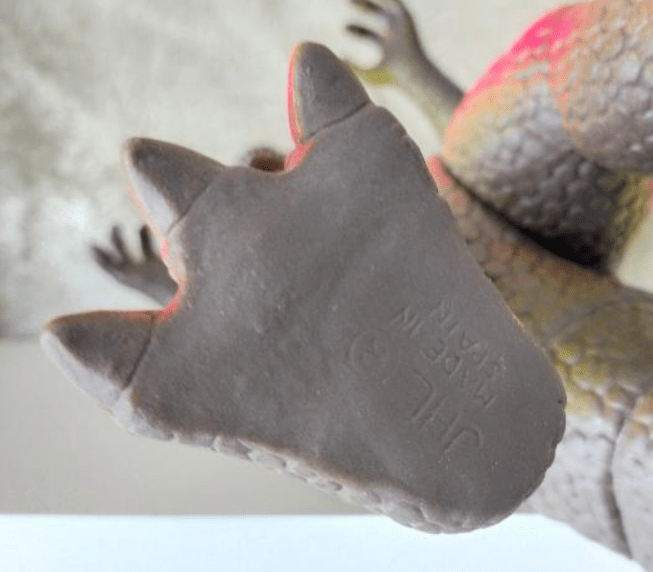
In addition, a survey of Todocollecion’s sold archive produces one more JHL Godzilla in grey vinyl that sold there in 2023. It has the alternative head sculpt to my new brown Godzilla and an entrancingly bright and bold colour spray much more like the ‘sunset’ colour scheme discussed above, but using pink instead of red paint. Perhaps readers with other non-standard coloured examples might get in touch and we could add them here.]
⁂ The remarkable survival of a set of metal production molds for this JHL Godzilla, type (ii)
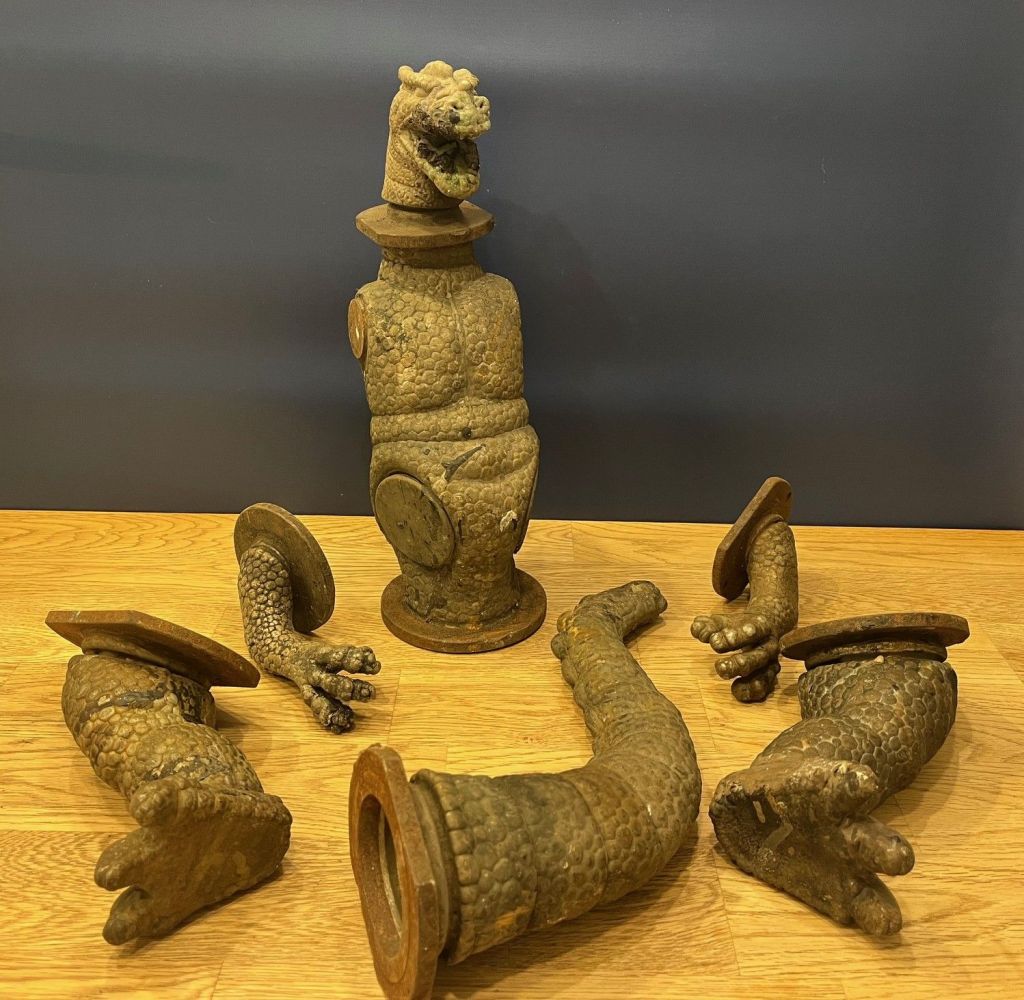
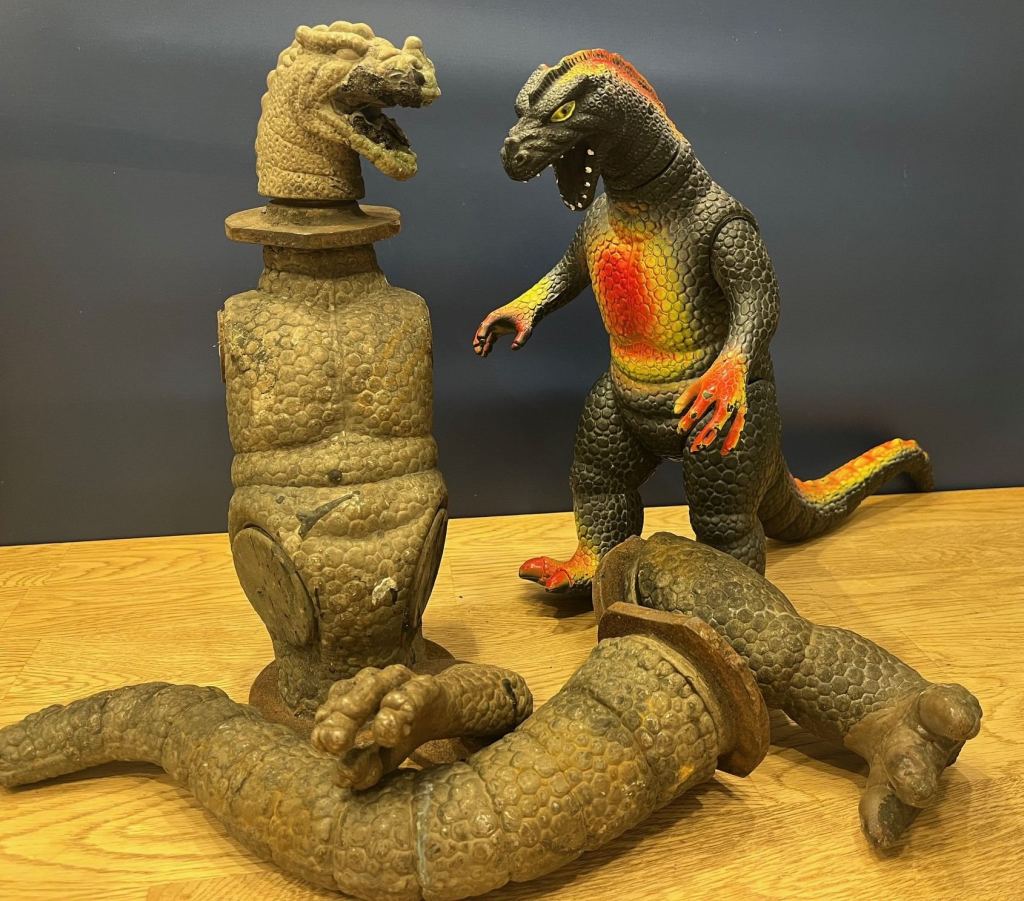
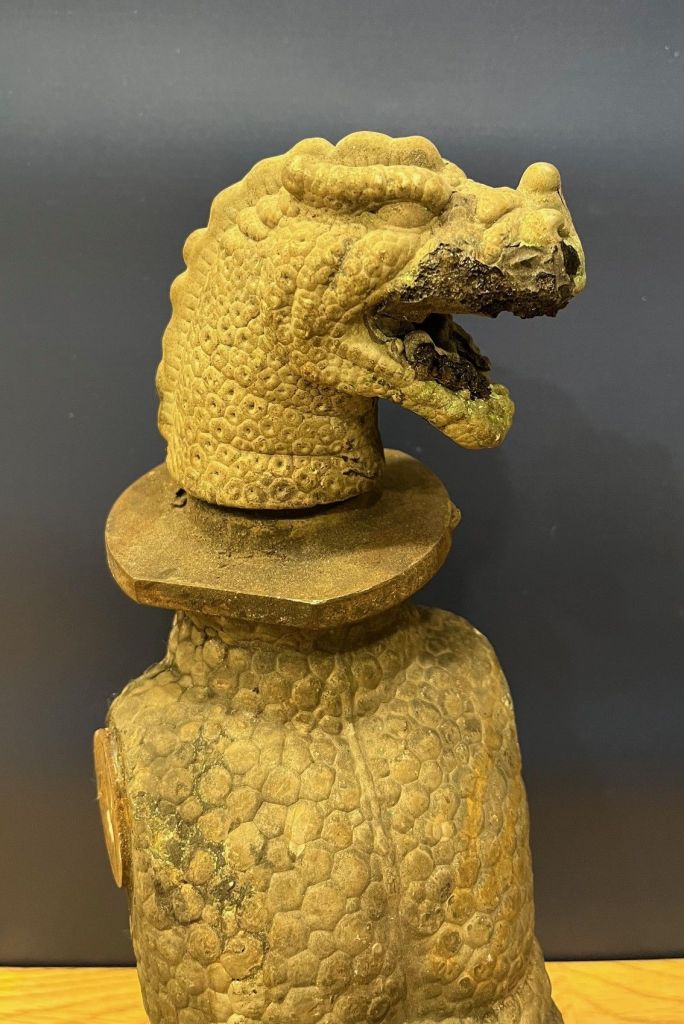
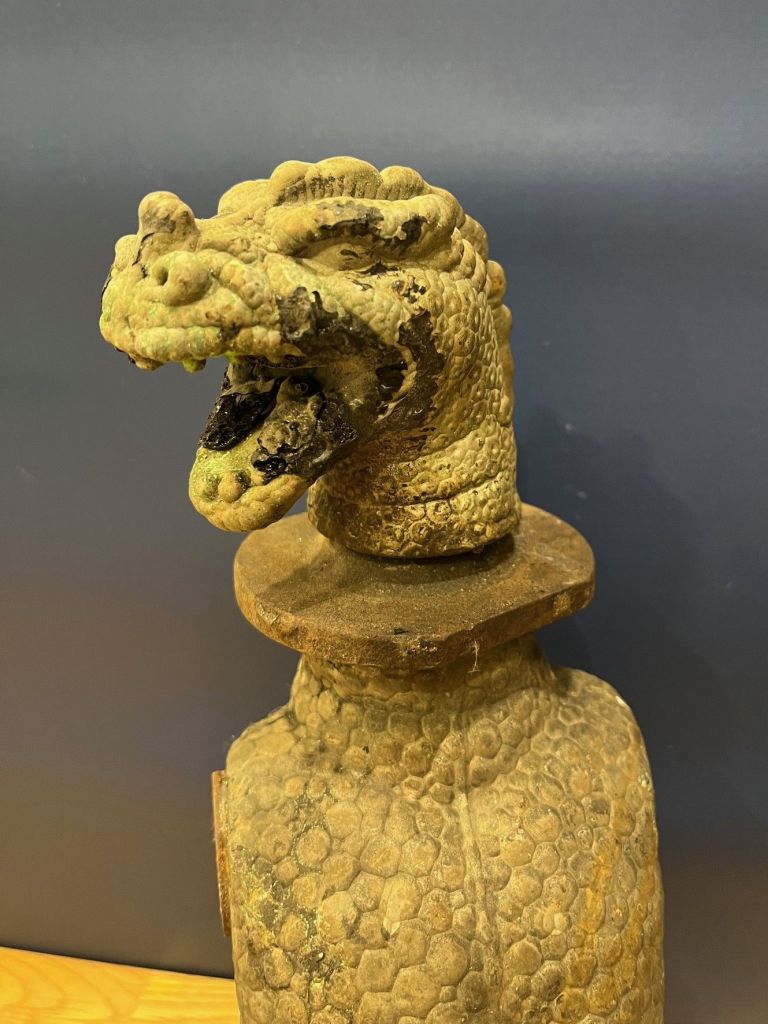
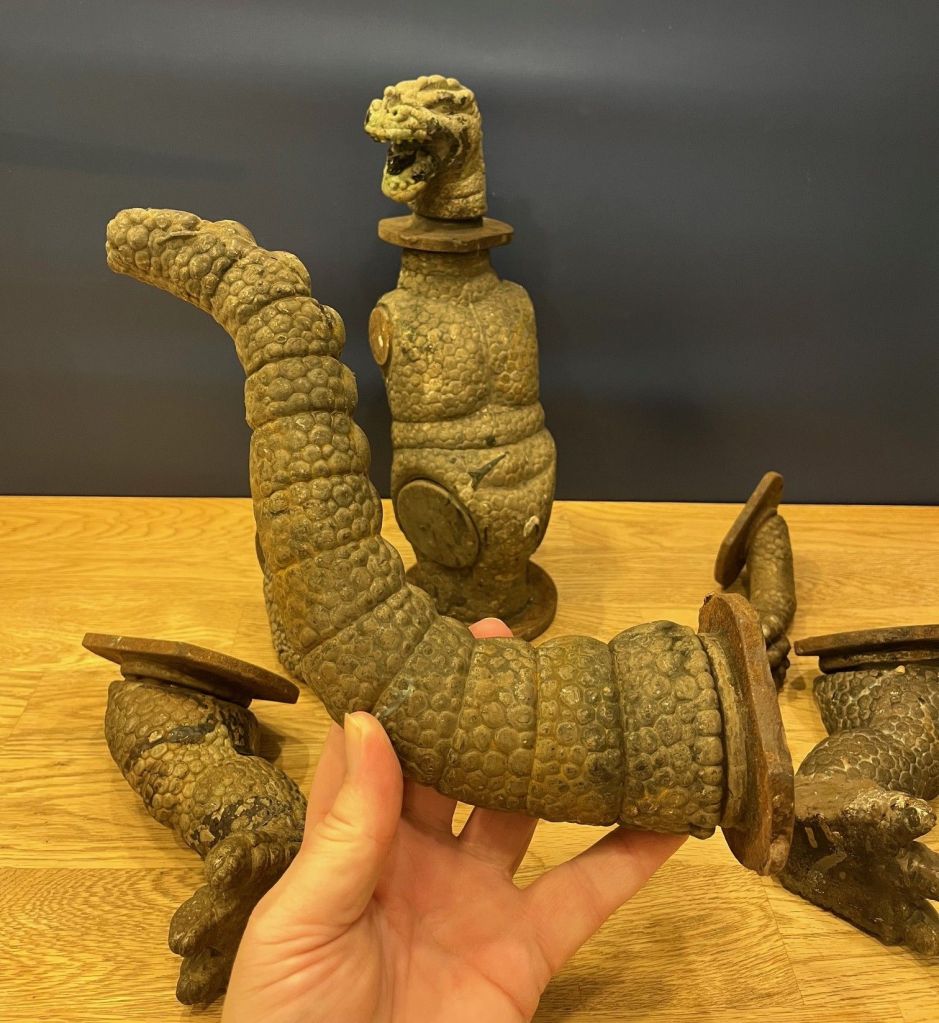
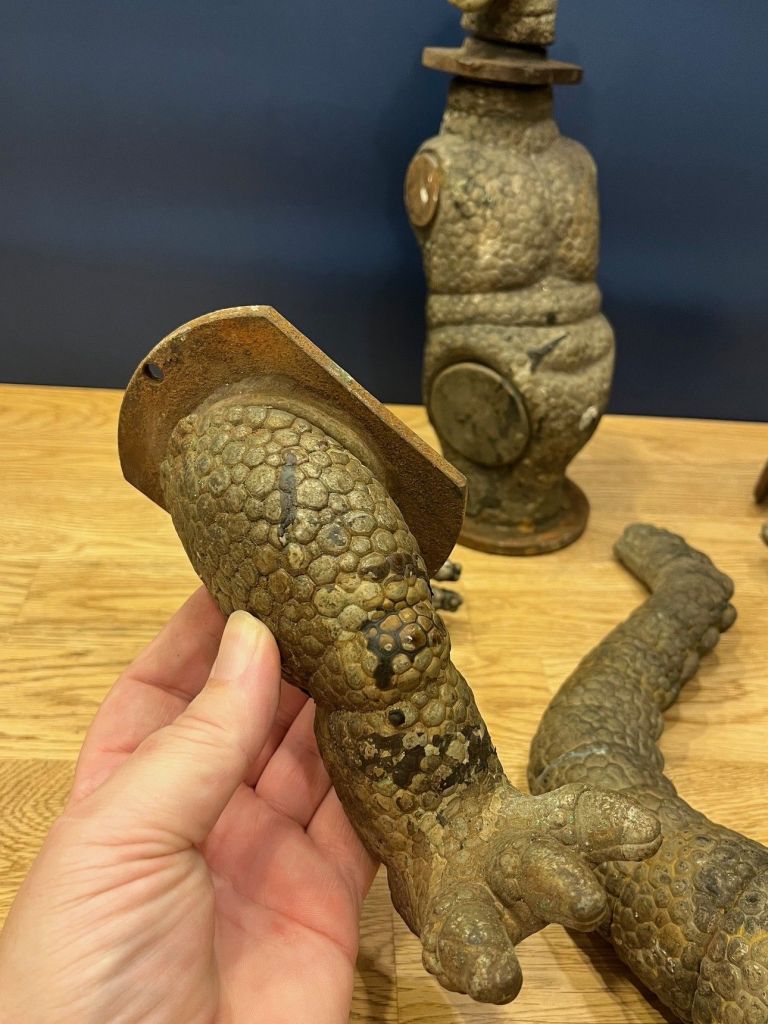
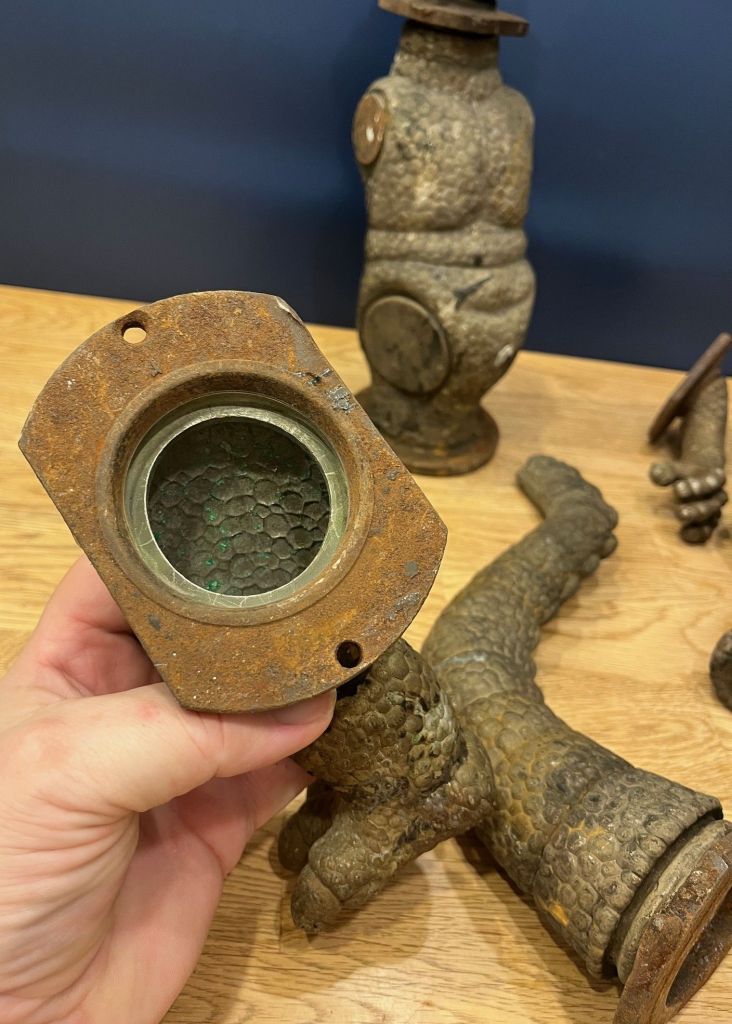
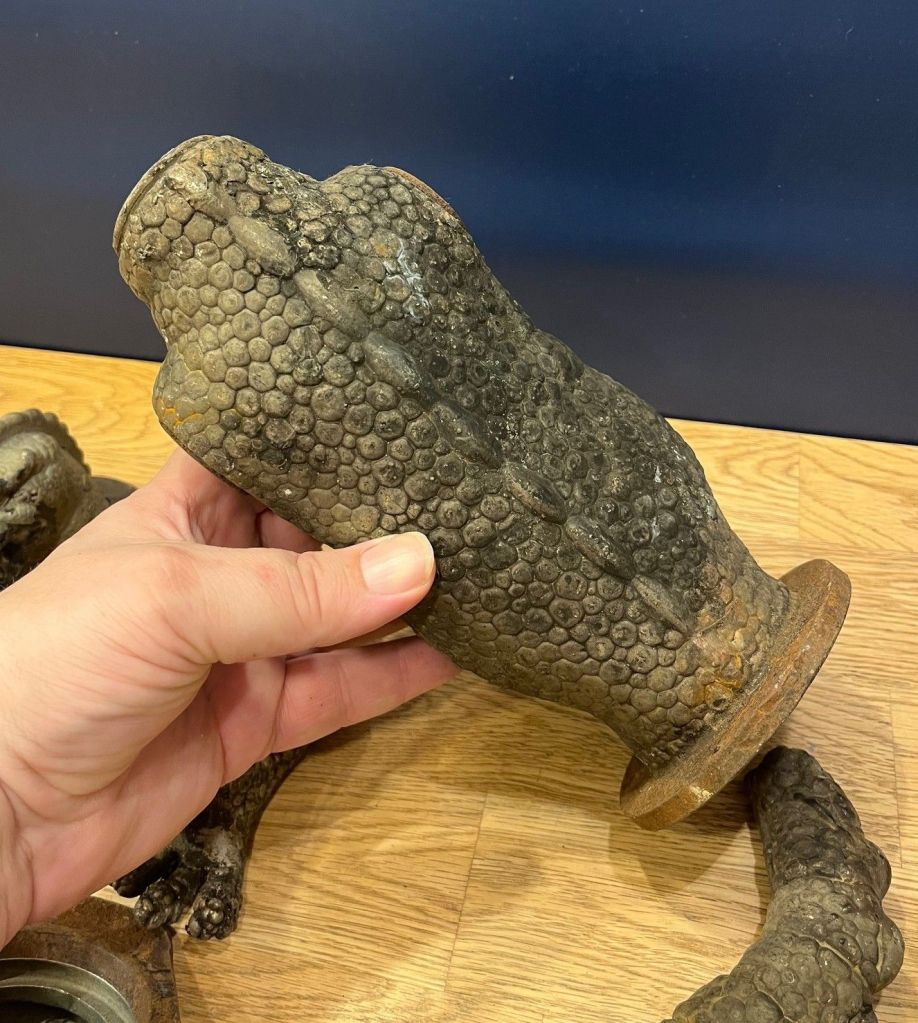
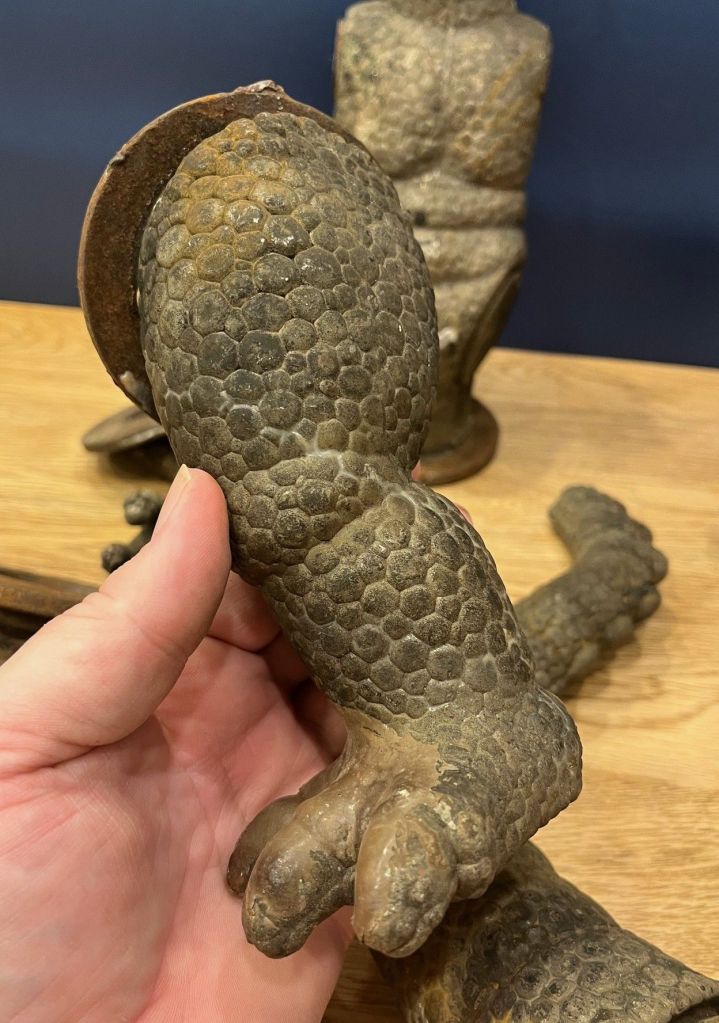
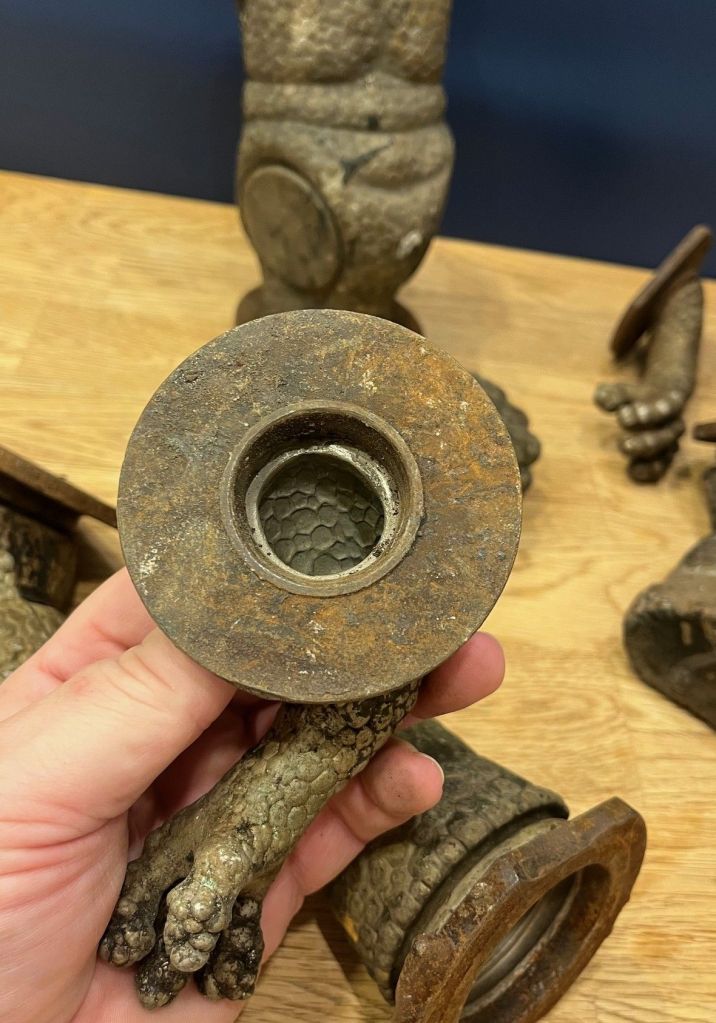
Against all odds, a few sets of the nickel-copper alloy rotomolds from these JHL Godzillas survived, and one has recently found its way into my collection via a passionate collector-dealer in Spain. To him I owe enormous thanks. These clunky oversized chunks of metal (thrillingly, with faint traces of the JHL marks visible far down inside the mold for the right foot) sit on the corner of my desk at home, and for a European interested in Godzilla bootlegs, they are perhaps the single-most important item in my collection. In the event of a house fire, my charred corpse will by found by the firemen, still standing between these and our wedding photographs and children’s first mementos, unable to decide which ones I carry away from the flames. Every time I look at them, I am still in awe that they were saved from being recycled for their scrap content and have ended up in my possession. They are, as collectors say, my irreplaceable ‘Grail’ item.
These are molds produced for the rotomolding (rotational molding) process – by which plastics can be made to fill the inside of a mold without the use of pressurised atmospheres, to produce hollow, one-piece, durable parts.
The molds themselves were produced by an electroplating method, in which they were built up by passing an electrical current through a nickel-copper solution bath with a master mold (probably in wax) suspended in it, and thus have the features of the Godzilla body-part on both the outside and inside surfaces of the mold (albeit in more sharp detail inside). Once a thickness of metal between 5 and 8mm. was built up around the master mold, these be removed from the electroplating bath, and heated to melt the wax of the master, leaving a hole within the metal mold. These molds were then attached to steel or iron mounts (as here) to allow them to be bolted inside the rotomolding machine.
In essence, the rotomolding machine works by plastic powder being loaded into the heated mold, which then slowly rotates on two axes within a high-temperature oven causing the plastic to melt and evenly coat the internal mold walls before cooling. It has often been used for complicated plastic items that do not need to resist large stresses, such as toys. The burnt material adhering to the outside of some of my molds (see the mouth) is crunchy to the touch and light in weight, and would appear to be leftover spilled plastic that has been through the oven of the rotomolding machine numerous times and cooked down to this residue.
While the rotomolding process is relatively low-tech, the machines are large and bulky, and their output is glacially slow (taking between 40 and 80 minutes to produce a single part). For balance, molds tend to be mounted within the machine in pairs, usually with up to three pairs mounted at one time depending on the size of the part. A small factory in the 1980s would operate between one and three machines, while a medium sized factory might have only as many as five machines. In the 1980s, these machines needed manual loading and emptying, with additional time for the slow-cooling of the molds between each production run. Thus, with seven molds involved with each Godzilla bootleg, a worker with a single machine might produce only a few complete toys each working day. Few machines means few molds were needed, and so the number of molds that existed in the 1980s was probably never that high anyway, and when the vast majority of these molds went out of service they were presumably melted down and made into new molds in-house, or sold wholesale to scrap metal dealers.
All of this accords well with what I was told by the seller of my molds to me – that they came from a man who worked in the 1980s for the JHL factory as well as a number of other toy makers in Ibi. About ten sets reportedly survived together this way, and it seems likely that these represented a complete set of molds for about five rotomolding machines, presumably taken when JHL ceased operations. They were, most probably, the main and only set of molds for this JHL Godzilla bootleg.
They have survived by a series of almost incredible lucky chances – taken home by an employee, and not thrown on the scrap pile, perhaps for some nostalgic value or in case production could be started up again elsewhere, and then forgotten in some garage or shed for the following four decades, and not sold for some small sum for their metal scrap value during that time.
It occurs to me as a final thought on this, that it might even be possible to still use these molds to produce modern Godzilla bootlegs as an homage to the glory of JHL – like a modern ‘repopped’ vintage sofubi. If any reader knows more about this, or has an old rotomold machine sitting in a shed somewhere, I am all ears.
Anyway, back to the three types of JHL Godzilla bootlegs.
⁂⁂⁂
The ‘G-Rex’ made by JHL – the profound influence of Jurassic Park:
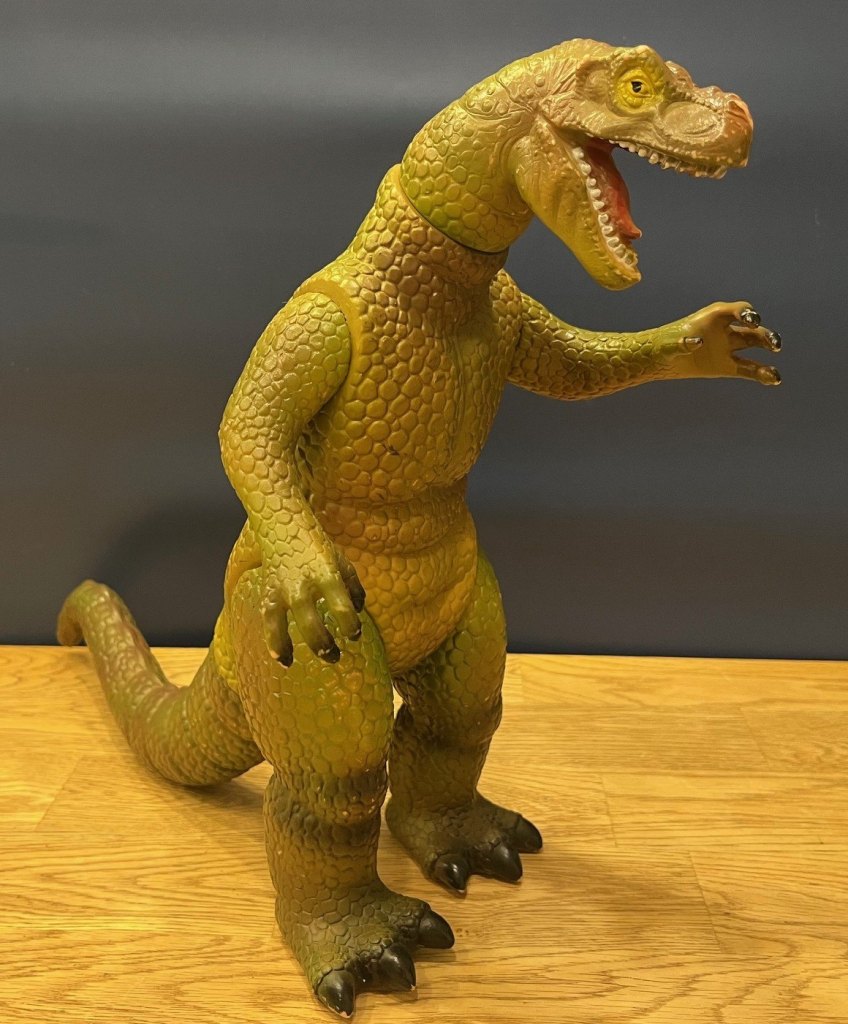
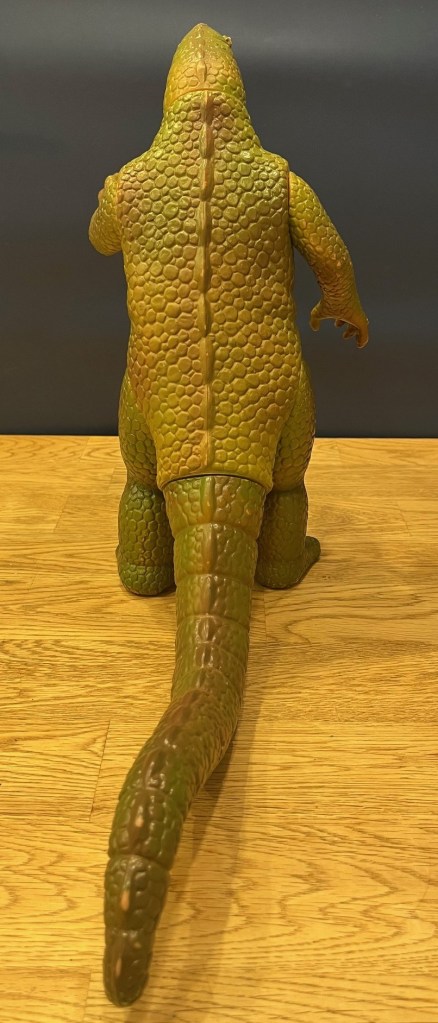
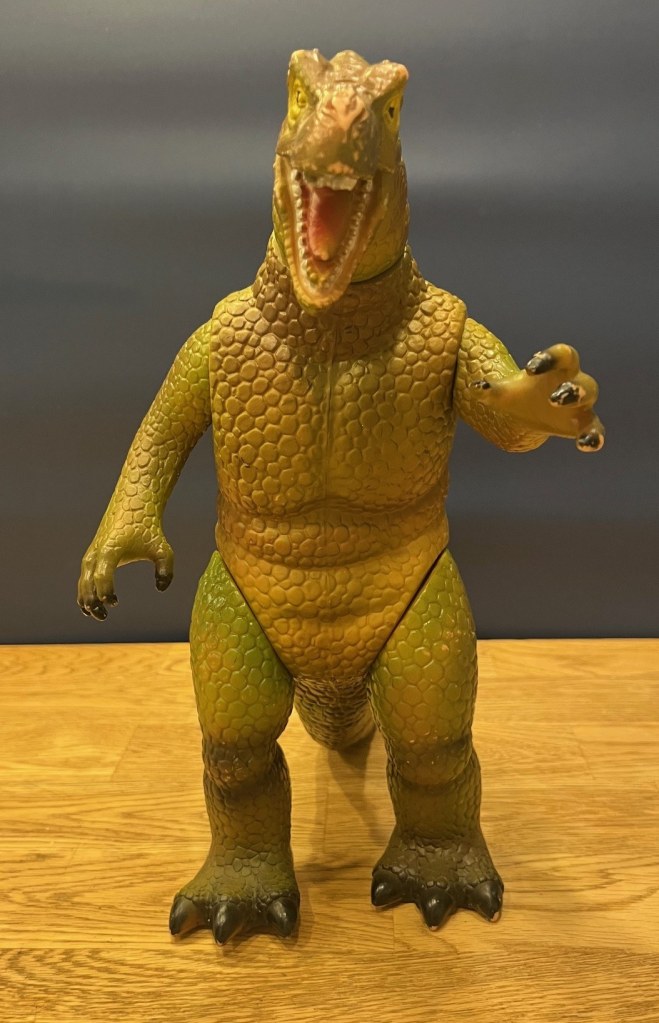
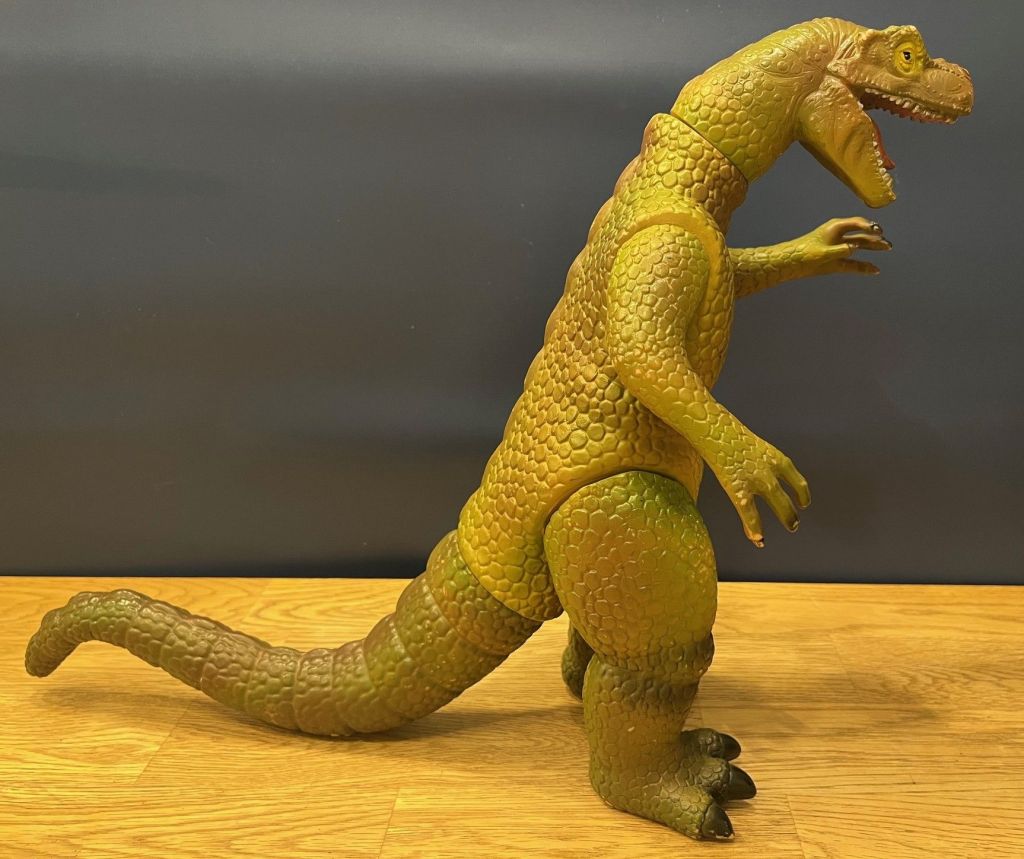
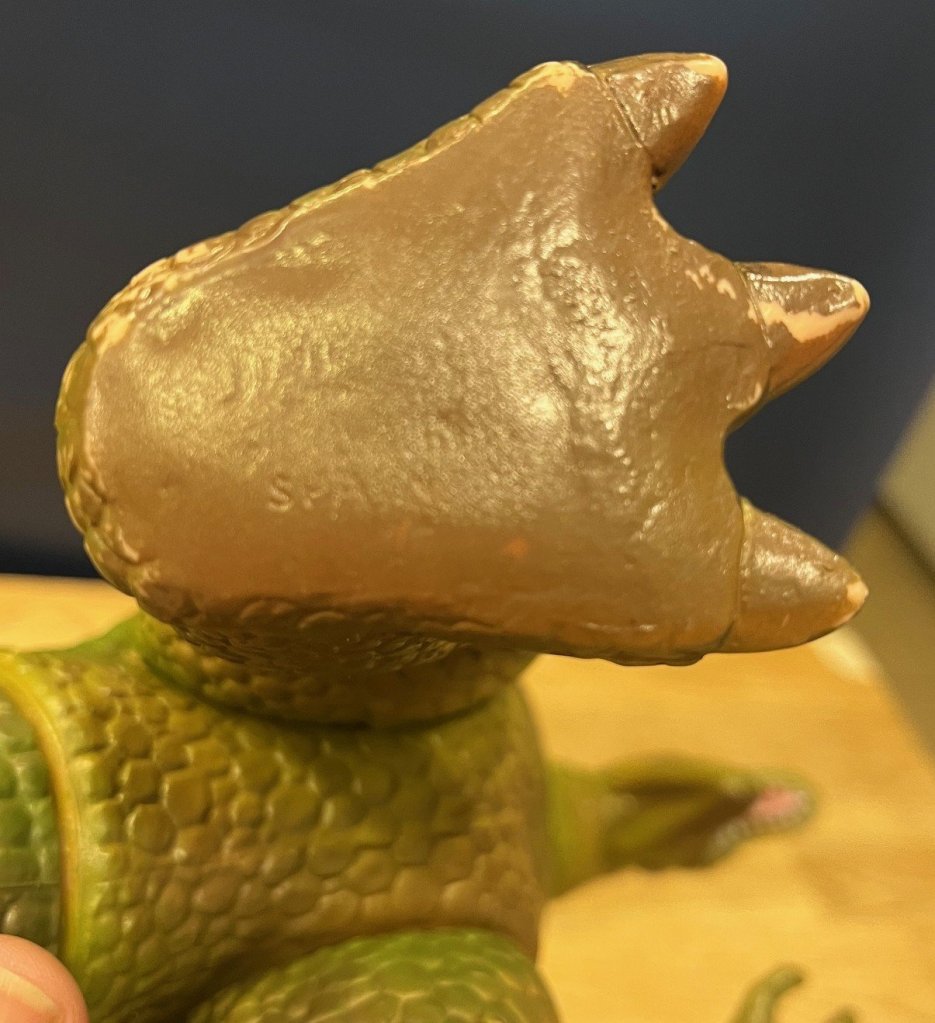
The third type has already been given the rather appealing name, the ‘G-Rex’ by the bootleg collector, Jamie Francis, in a post to the ‘Warriors of the Universe’ group in Facebook. His has no visible marks on the sole of its right foot, however, mine, while faint, can still be read in raking light as: “JHL / … / Spain”, with traces of the ‘registered trademark ‘R’ also visible.
The feet of these and any scuffed areas reveal that they were made in flesh-coloured vinyl, spray-painted in green (usually light green shaded in various browns, but occasionally darker hues with some black shading), and with brown painted soles to their feet. Their bodies are identical to the other JHL copies of Dor Mei Godzillas, but the heads have been replaced with anatomically correct representations of Tyrannosaurus Rex heads, with wide open mouths mid-roar and fleshy undulating tongues. These clearly copy the form of the roaring T-Rex designed for the film, Jurassic Park (released in 1993), and most probably were directly copying the Kenner toy produced alongside the film with its wide open jaw and long undulating tongue:
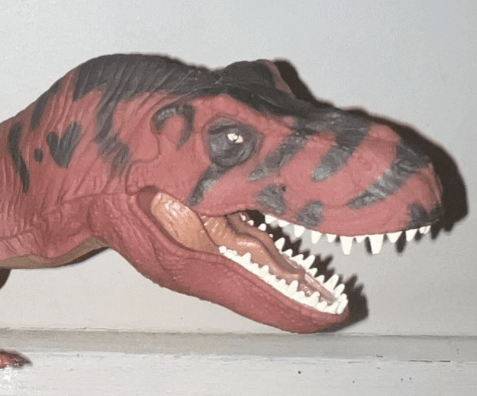
(These images from an eBay listing; see also this post on the Kenner toy)
JHL must have been attempting to repurpose their figures to cash in on the boom of interest in the film. The bodies of these examples are sprayed in a subtle green, shaded carefully in a pinkish-red (the same colours but in opposite distribution from the Mattel toy), with finely painted black claws, white teeth and a red tongue. The use of this Jurassic Park model, of course, allows us to date this figure quite precisely to 1993 and perhaps the year or so after. I suspect these ‘G-Rex’s were a last attempt by JHL to repackage these toys for a changing market.
⁂⁂⁂
One last JHL toy – the large size King Kong:
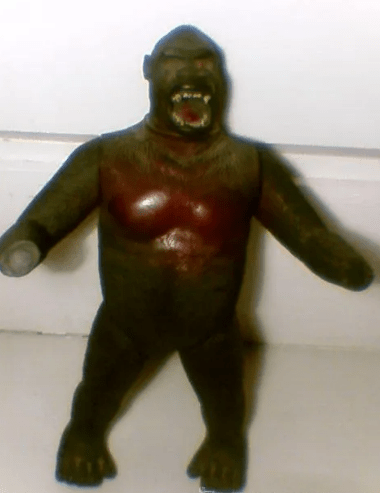
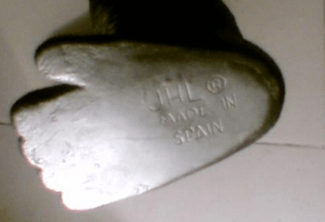
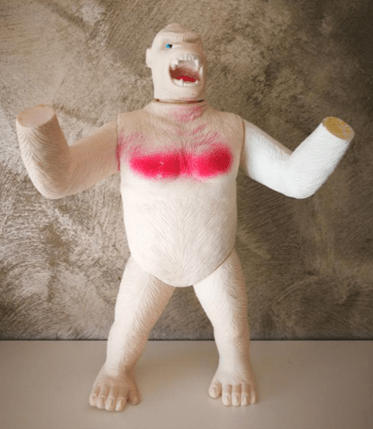
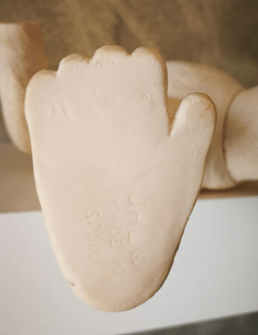
It is perhaps worth noting here for the sake of completeness that another monster toy was copied by JHL, and in part given its own individual colour scheme: the extremely hard-to-find King Kong model:
(These images from Todocollection’s online sold archive)
[UPDATE: 26 May 2026: thanks to a Wallapop listing still active as we write this, we can now see better images of this JHL-made Kong with its hands still attached]
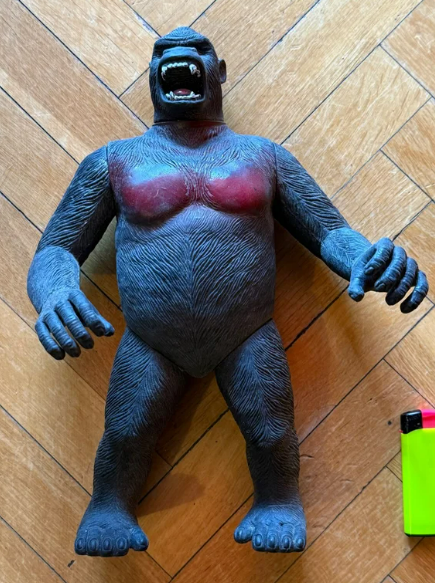
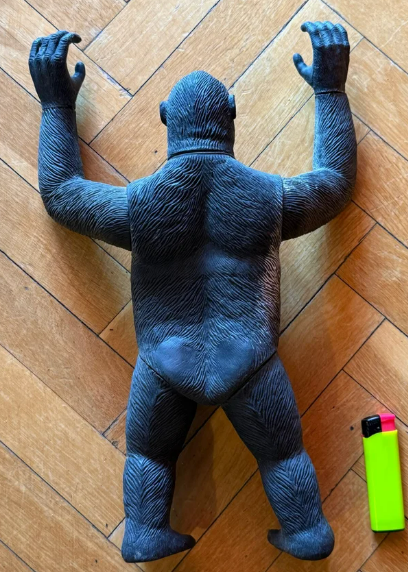
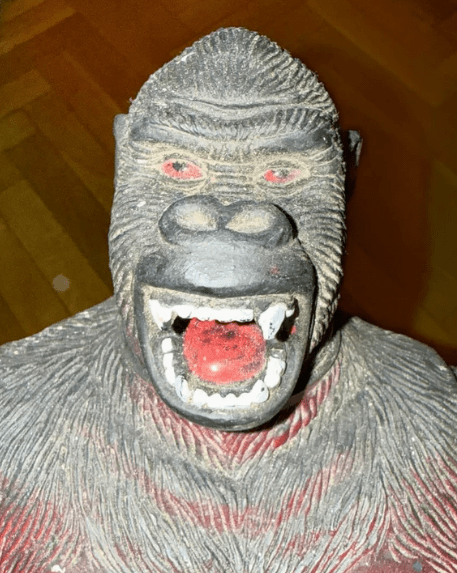
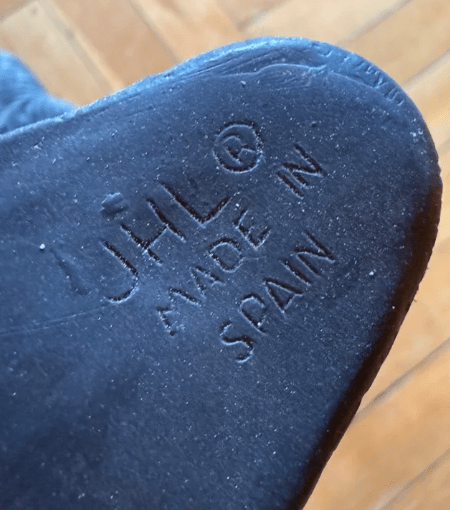
(Images from Wallapop listing)
This figure reportedly stands 330mm. high, and of course copies the large King Kong toy produced by Imperial in China in 1976 and the years after.
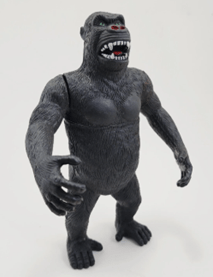
(The Imperial Kong: this image from a current eBay listing)
Only two colour schemes are known to me: the black, which copies the Imperial model, and adds its own red highlights to the chest, and the surprising albino version in snow-white with bright red-pink shading, which perhaps copies the extremely rare pink Imperial model, and rivals the JHL Godzillas for its bright ‘plumage’. I have never seen one of these Kongs with my own eyes, and I do not know why both pictures of these toys known to me are missing their hands – perhaps these were only glued on, and when the glue failed these fell away quite quickly and were commonly lost.
⁂⁂⁂
I know of no other toys produced by JHL, and sometime after 1993 the company went silent, and either through retirement of the anonymous founder or perhaps his death, it went out of business, leaving its clients and now us wanting much more. No more are these the cheap kiosk toys of Spain, and they appear in collections and sales as far flung as the US and Japan, as well as a large number of the countries in-between. If, as seems likely to me, JHL was founded and run by a man who adored dinosaur toys and B-movie monsters, surely he would be proud and delighted by the enduring worldwide popularity of the figures he produced. Gracias maestro, gracias.
- 'MUTTON DRESSED AS LAMB': Godzillas and kaiju that look vintage, but are not
- American made Pachi
- BOOTLEG DINOSAURS – a little off topic, but sometimes needed here
- BOOTLEG GODZILLAS
- Bootleg Tokusatsu from China and its immediate neighbours
- Bootleg Tokusatsu from the Americas
- BOOTLEG TOKUSATSU HEROES
- Central Europe – Godzillas and kaiju from behind the Iron Curtain
- Chinese-region bootleg Godzillas -the plastic tide from the East
- Chinese-region made Pachi
- European made Pachi
- European-made Godzillas
- PACHI
- Pachi kaiju
- Pachi kongs
- Pachi superheroes – Ultraman and similar
- The Americas – bootleg Godzillas from the New World


 Confessions of a Kaiju Hunter
Leave a comment