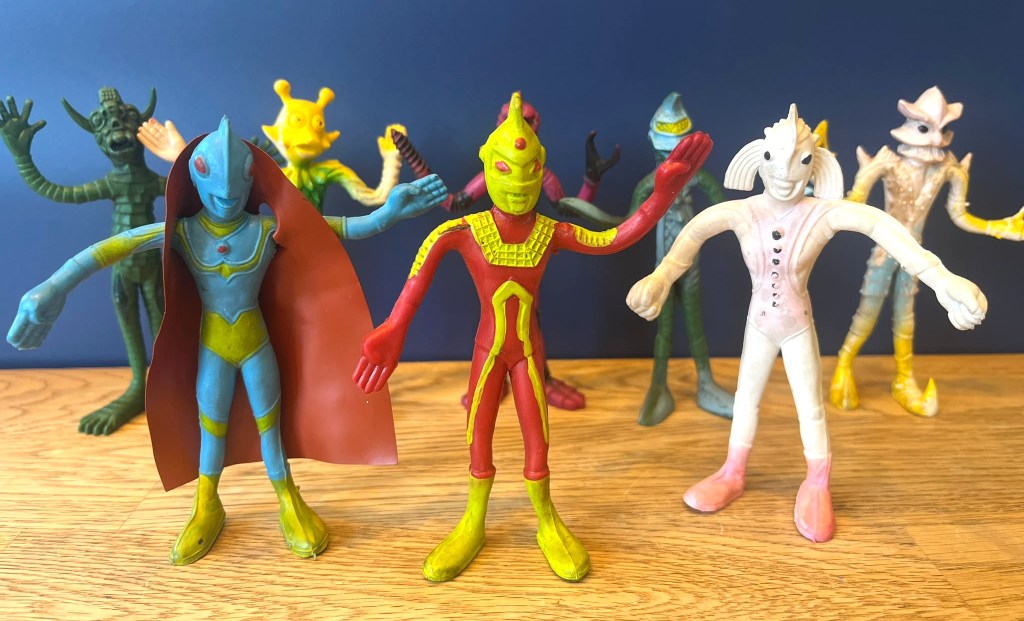
As regular readers know, I try to keep it classy here, focusing my attention on the sophisticated and highbrow end of pachi and bootlegs. However, the popularity of a recent post on Instagram has persuaded me to open up the ‘guilty pleasures’ barrel and peek downwards at what lurks at the bottom. The public have spoken – and so we will now turn our attention to Tokusatsu and kaiju bendys (or bendies?) made in Hong Kong for the Japanese market.
Bendy toys, with a foam or rubber body poured as liquid into a mold already containing a wire skeleton (this allowing the figure to be posed after the foam or rubber has set), began in the 1950s with the idealistic ‘claymation’ character Gumby and his cynical horse Pokey (I know it’s weird, just go with it) created by Art Clokey. He created the characters in 1953, and the first bendable figures of them were produced by Lakeside Toys in 1955. Then in the late 1950s Charles W. Neufeld founded Bendy Toys Ltd. in the UK, and secured licensing agreements to create bendy versions of popular characters from Walt Disney, Enid Blyton, and later Doctor Who. There is a really informative 1957 Pathé news clip from a British factory showing production there (see here). By the 1970s, Hong Kong had become the global leader in inexpensive toy production, and had a booming bootleg toy production industry as well. Thus, virtually all bendy production moved there in the course of a few years, and the ‘Age of the Bendy’ had come.
Large factories in Hong Kong districts like Kwun Tong and Chai Wan churned out millions of these inexpensive figures (with a focus on popular cartoon characters, Western heroes and occasional strange-looking three-headed dogs and similar), usually in rubber and with elongated and Ozempic-thin limbs and bodies that allowed them to be bent into shapes or around other objects. This tidal wave of production was done for companies with license to manufacture these toys, and for bootleggers without such permissions. Most of the bendys produced in Hong Kong appear to have been made for sale in the US, UK and European markets, but somewhere in this frenzy of activity a few companies produced some Tokusatsu- and kaiju-based bendys apparently for the Japanese market. While not collecting these obsessively, I remember bendys fondly from my childhood and have bought these Japanese-marketed ones whenever I have seen them over the last decade or so, as an homage to the long-lost Disney character and Marvel hero bendys of my youth. As a result of this casual-collecting over time, I now have enough to discern some groups and some of their basic details.
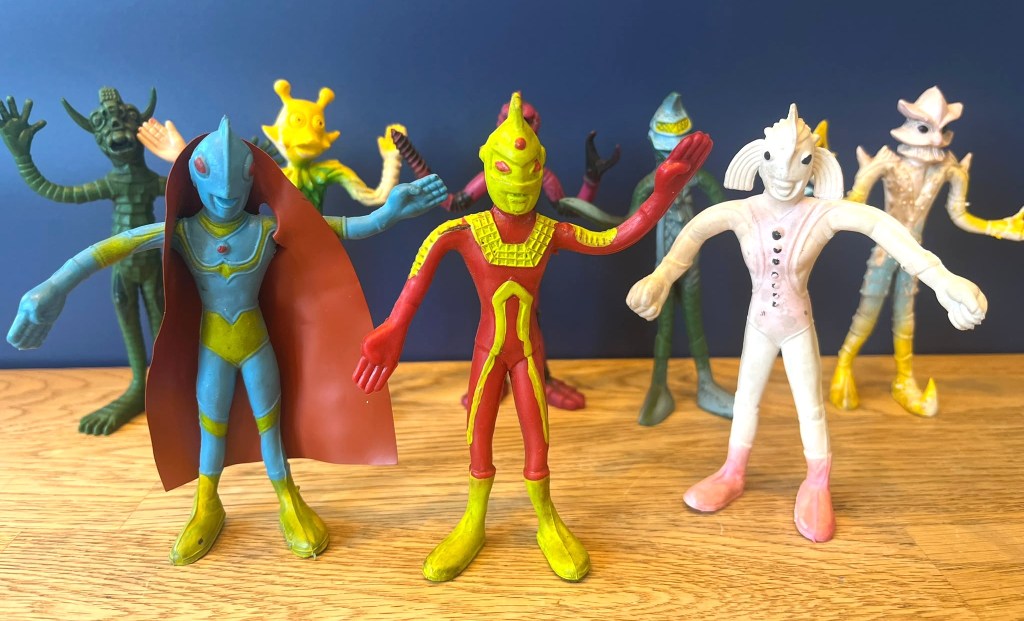
(Getting three of these unstable little buggers to stand up at once takes luck and perseverance, when all they seem to want to do is fall down in the direction that is most likely to set off a domino effect, and getting eight to do it is in the realm of the miraculous – so while this is not the best picture, I hope readers will appreciate the blood, sweat and tears that went into it)
They stand just under 120mm. tall, and each has a series of double-holes like vampire bites at various points in their reverses, these left by metal pins that held their wire skeletons in place within the mold while the foam or rubber was setting. Despite being marketed as nearly indestructible toys, some 50 years later they can be quite fragile, with serious risk of the internal wire snapping – leaving limbs permanently fixed in odd poses forevermore signalling left or right, or with wonky feet that do not now support the figure, and in extreme cases, if they were kept in direct sunlight, entire limbs snapping off. You can see that the Ultraseven here has a chipped away section of rubber from his right shoulder, leading the exposed wire skeleton to rust in that area, and the Guiro here has a club foot that will not take his weight, so he needs a small sticky pad under his good foot to hold him upright. In addition, there is some dirt adhering on one or two of my examples, but after several gentle attempts to remove this with a wet-wipe, fears of their fragility and potential rusting has prevented me from wet-scrubbing it away with force.
All of the Hong Kong-made bendys of this form known to me are by anonymous producers, even when these were clearly licensed products, and I have never seen any packaging or sale display boxes or similar for any of these.
⁂
The ones I own fall into three groups – distinguished from each other by their general form and manufacturer’s marks:
Group 1: The Tokusatsu bendys, licensed by Toho, and apparently from around 1973-1974
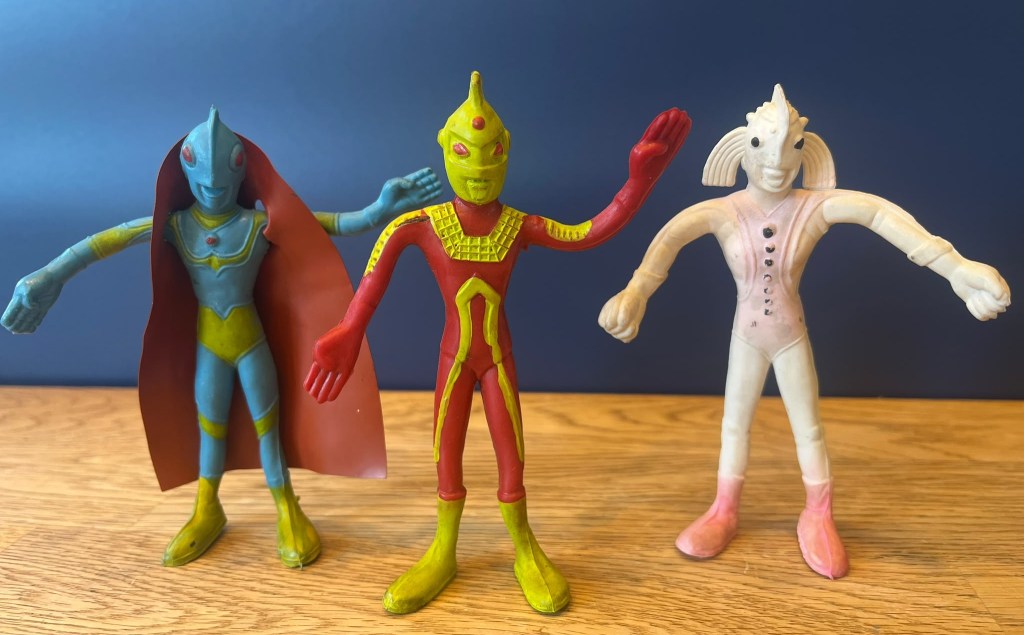
The main Tokusatsu hero here is clearly modeled on Ultraseven, the hero of the series of the same name which aired in 1967 and 1968, with his suit simplified and the ‘beam lamp’ in the middle of his forehead painted in the same red as the eyes of the toy (rather than the normal green).
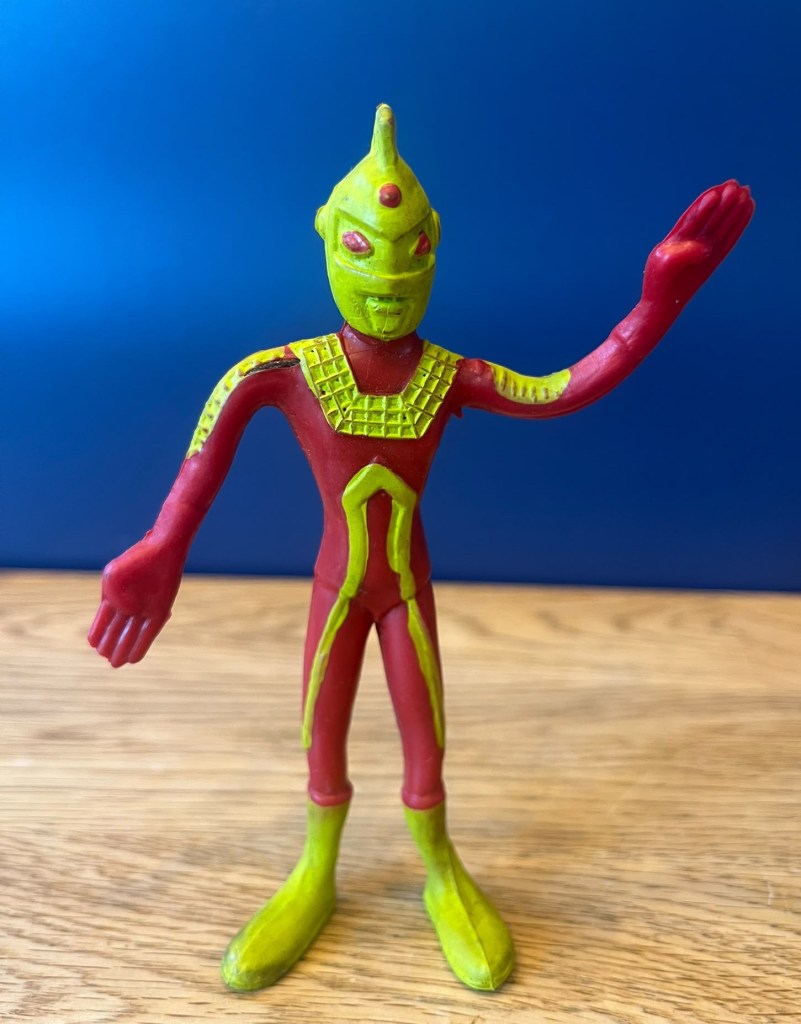
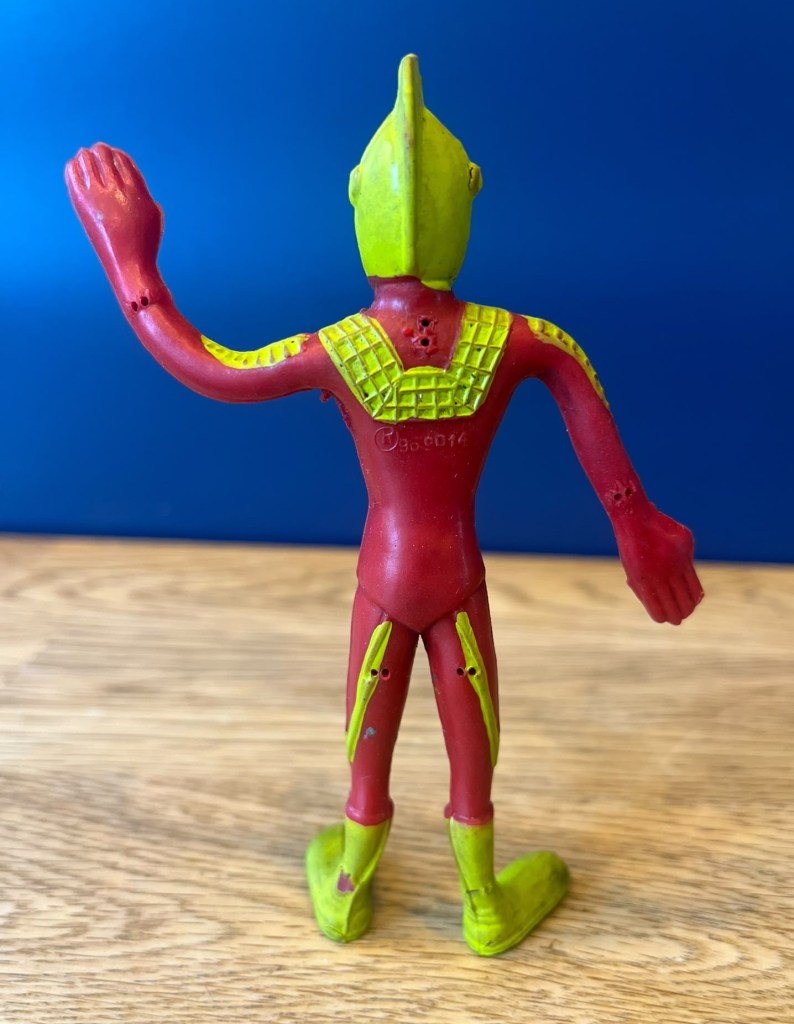
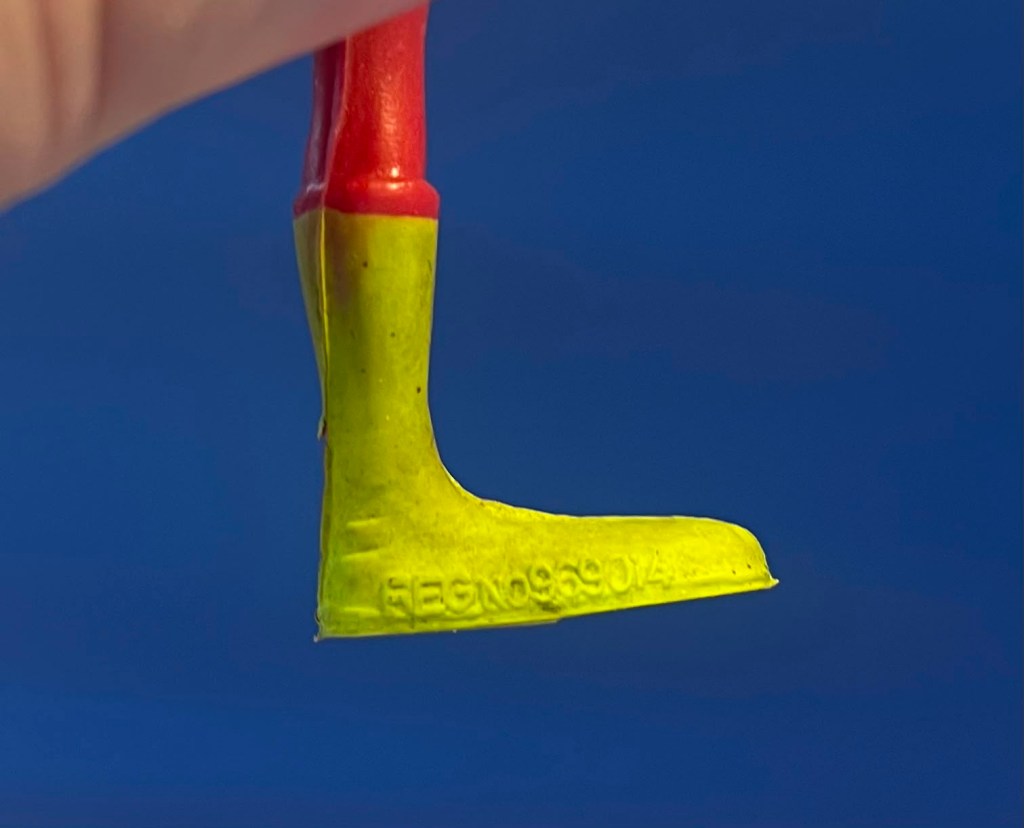
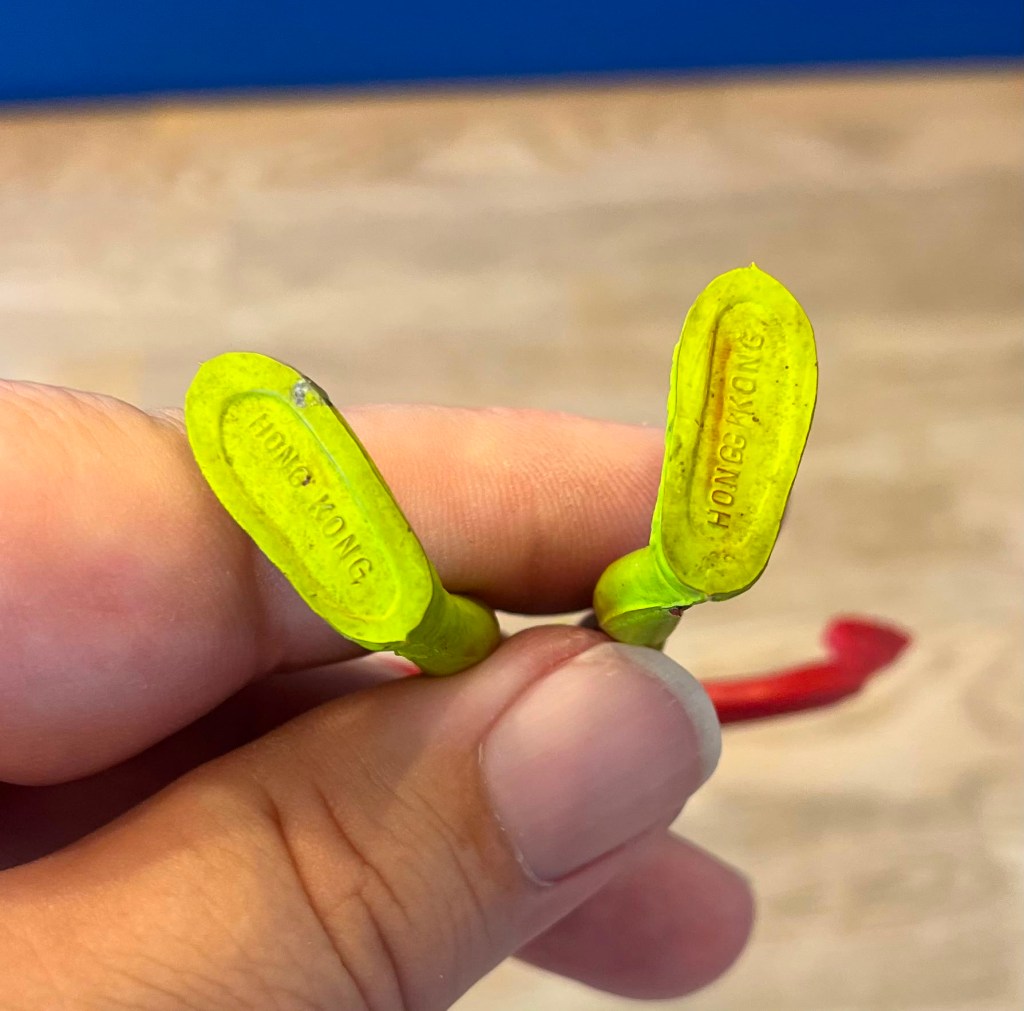
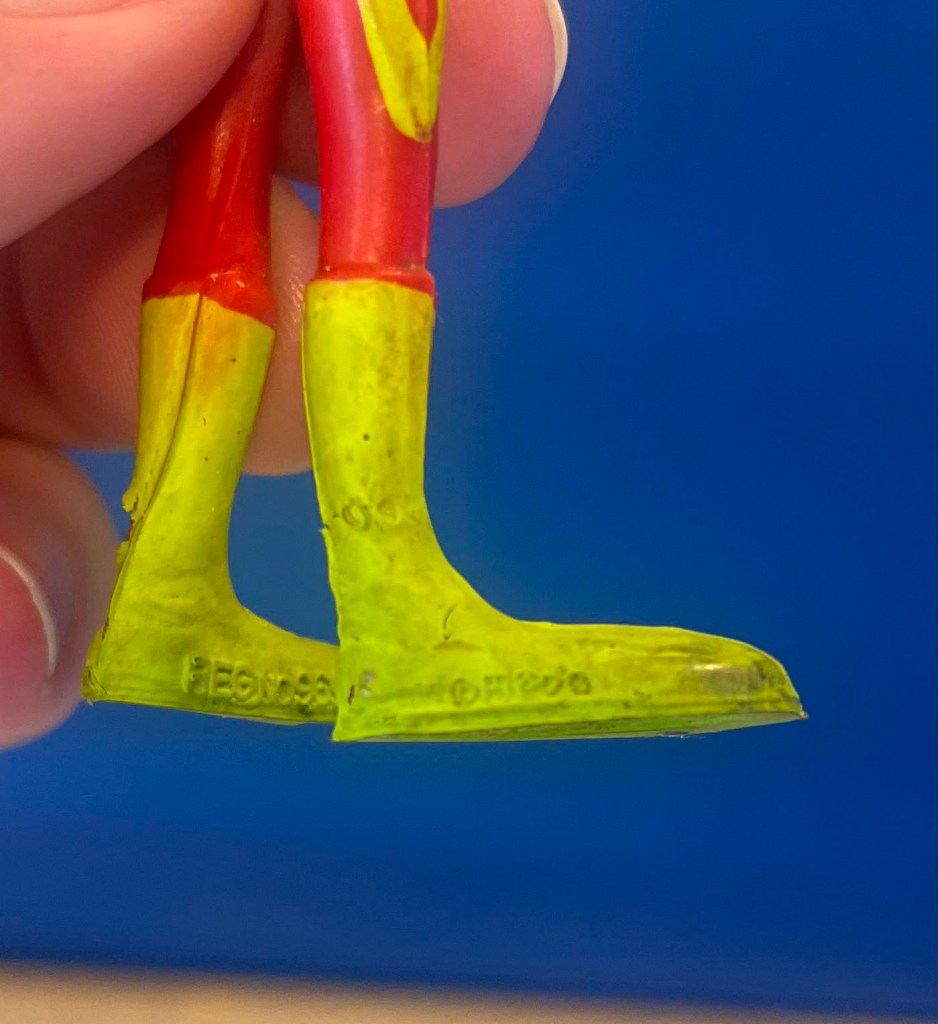
He has has a licensing mark in Japanese: “©円谷プロ” (‘Tsuburaya Pro’: Toho’s licensing arm) on the outer side of his right foot, “REG NO 969014” on the inner side of his left foot, and a ‘R’ in a circle (with the uppermost stroke of that letter forming the upper part of the circle) as a copyright mark and the product number “969014” again in the middle of his back. “HONG KONG” is also stamped under both feet, and as I actually have two of this figure, we can see that the fact that the left foot has been marked twice with partly overlapping strikes comes from a flaw in the mold, not some mark added to the figures while they were still unfinished.
There are four others from this toy-line known to me, and of course there will be others still to be found:
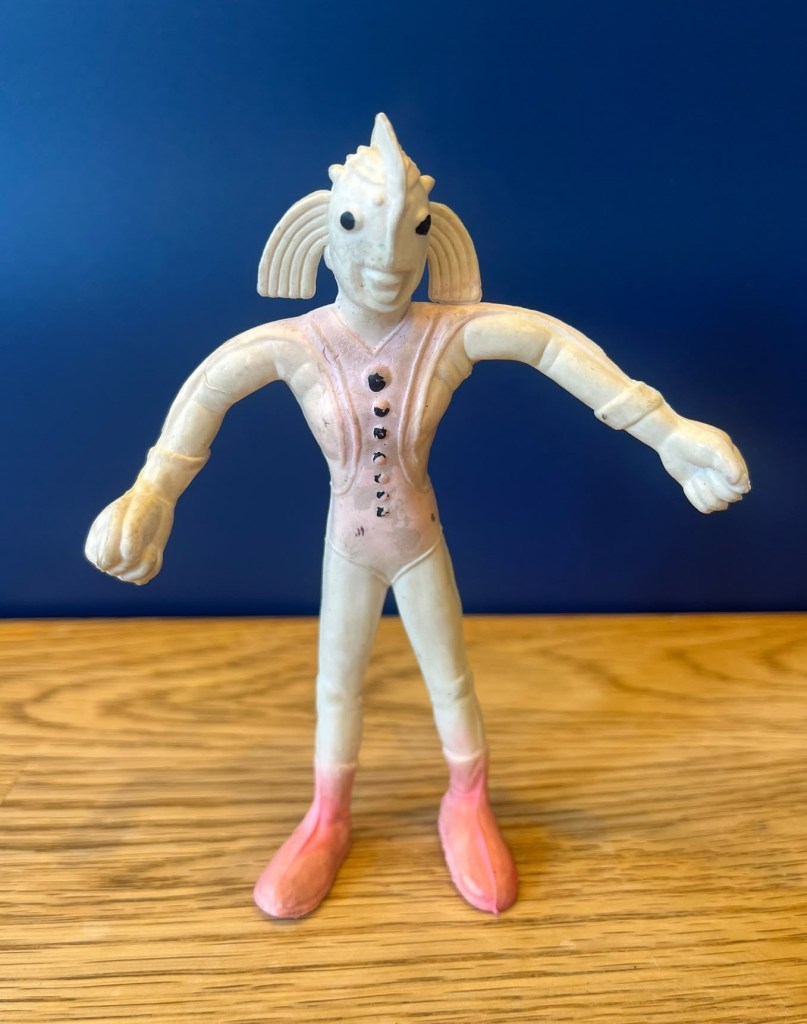
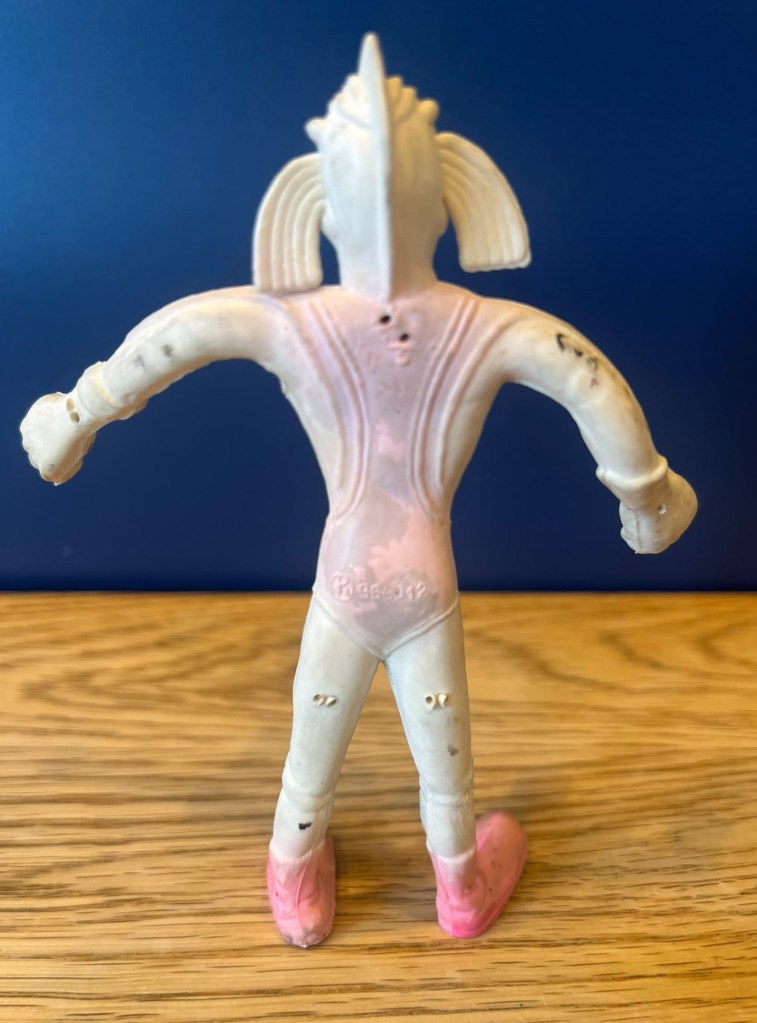
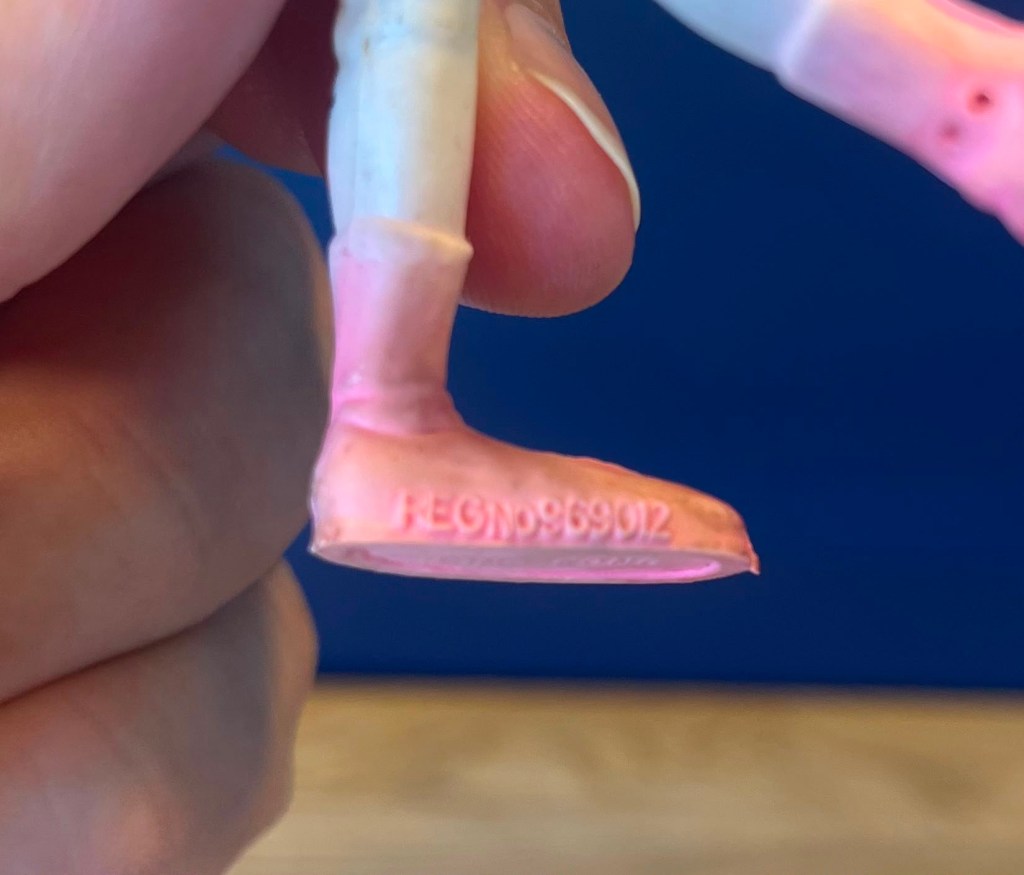
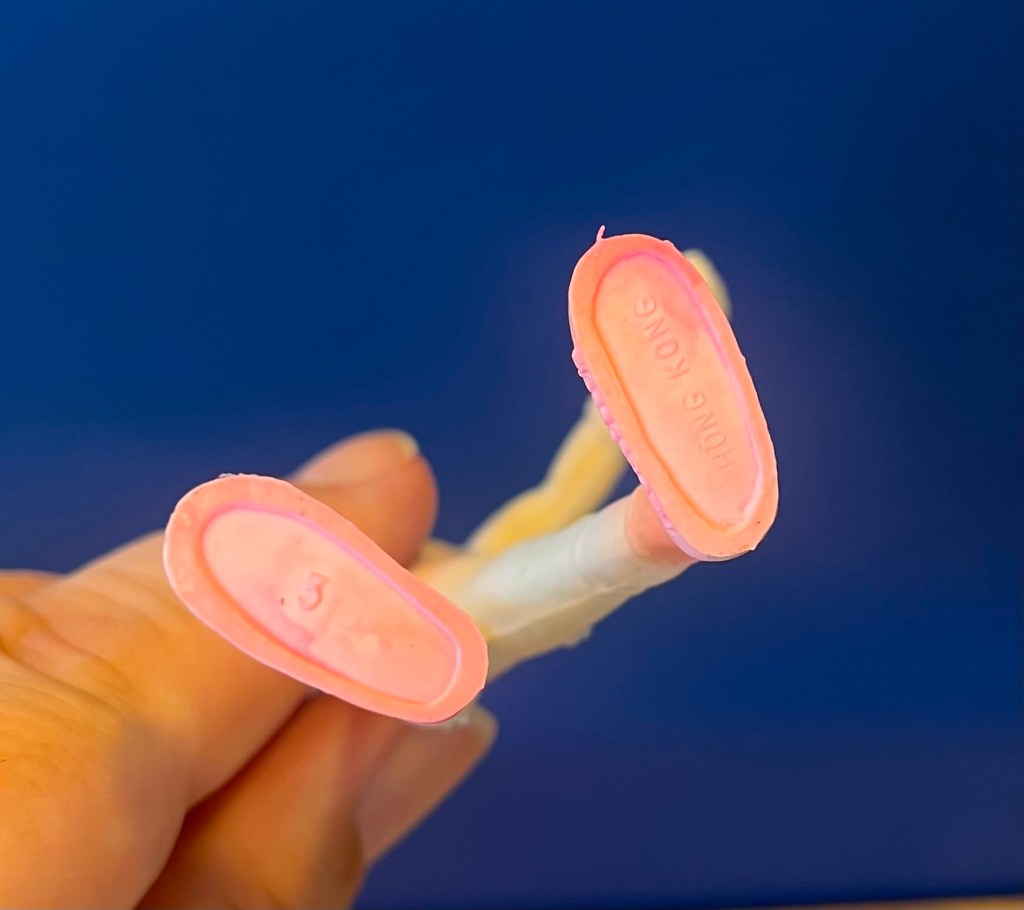
The first is clearly Ultra Mother, here in an unorthodox salmon-pink, but easily identifiable from her stylised rainbow-shaped ‘hair bunches’ and her row of button-like dots down her chest and stomach. This figure has the same marks as before, apart from the product number (here ‘969012’) and a “3” under her right foot instead of “HONG KONG”.
She appeared first in Ultraman Taro in 1973, and again in Ultraman Leo in January 1975.
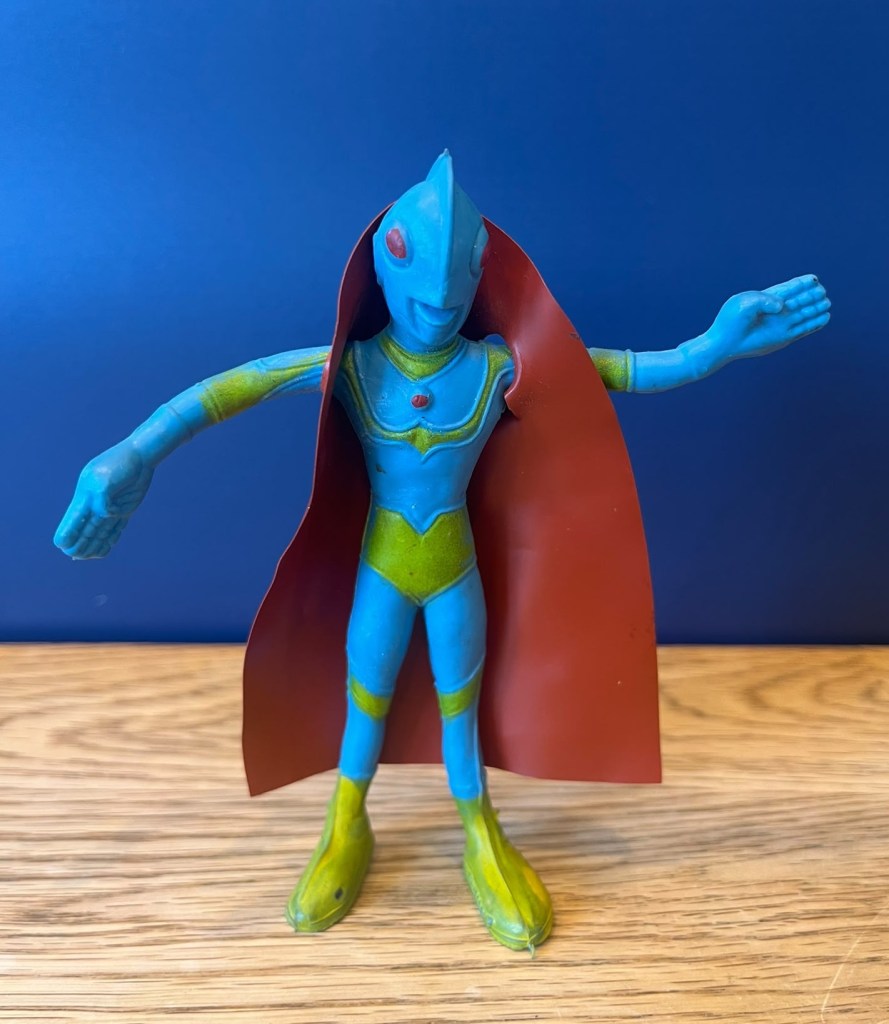
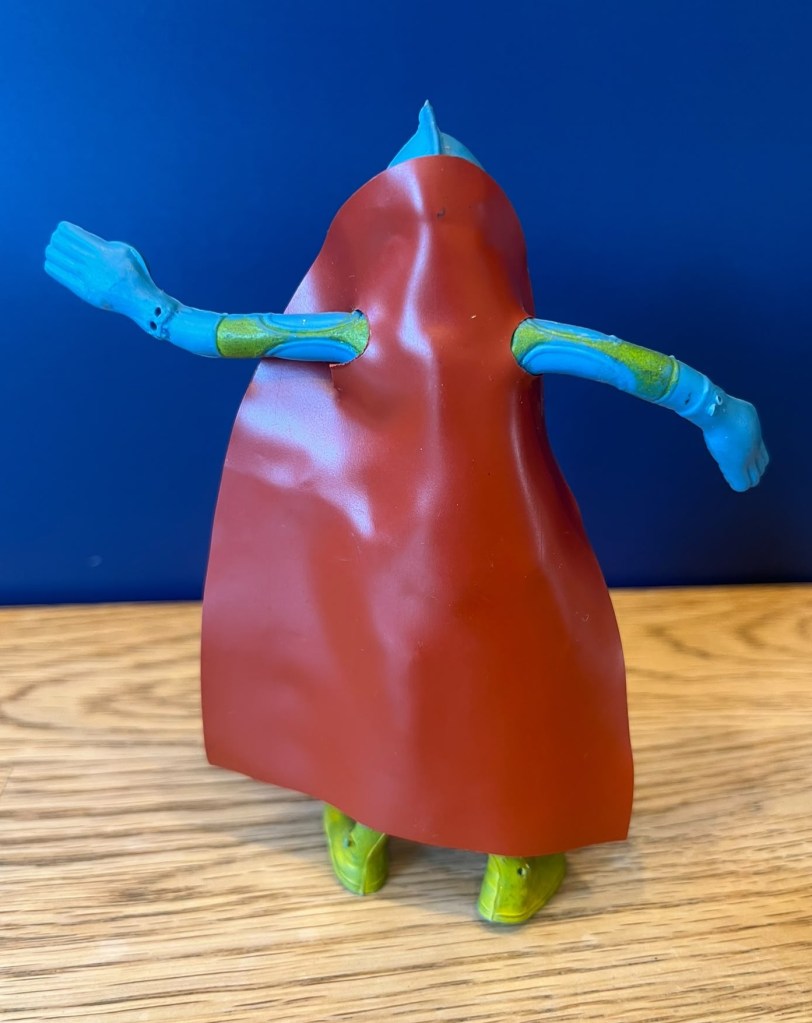
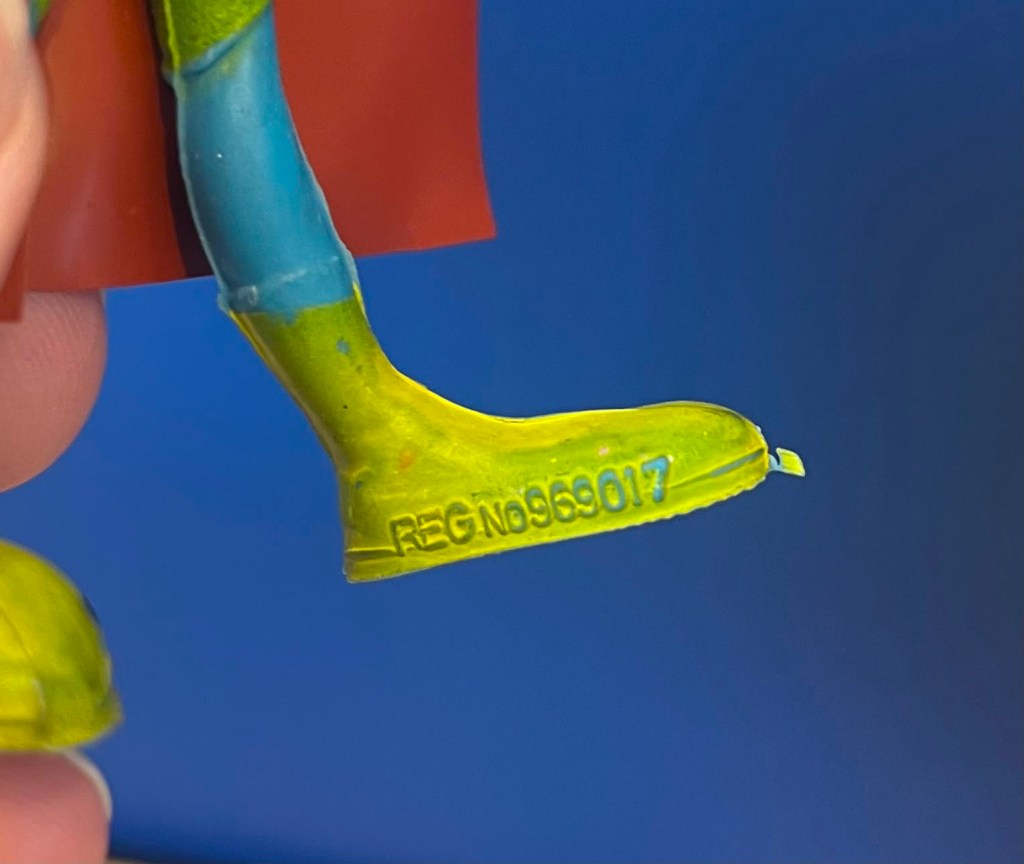
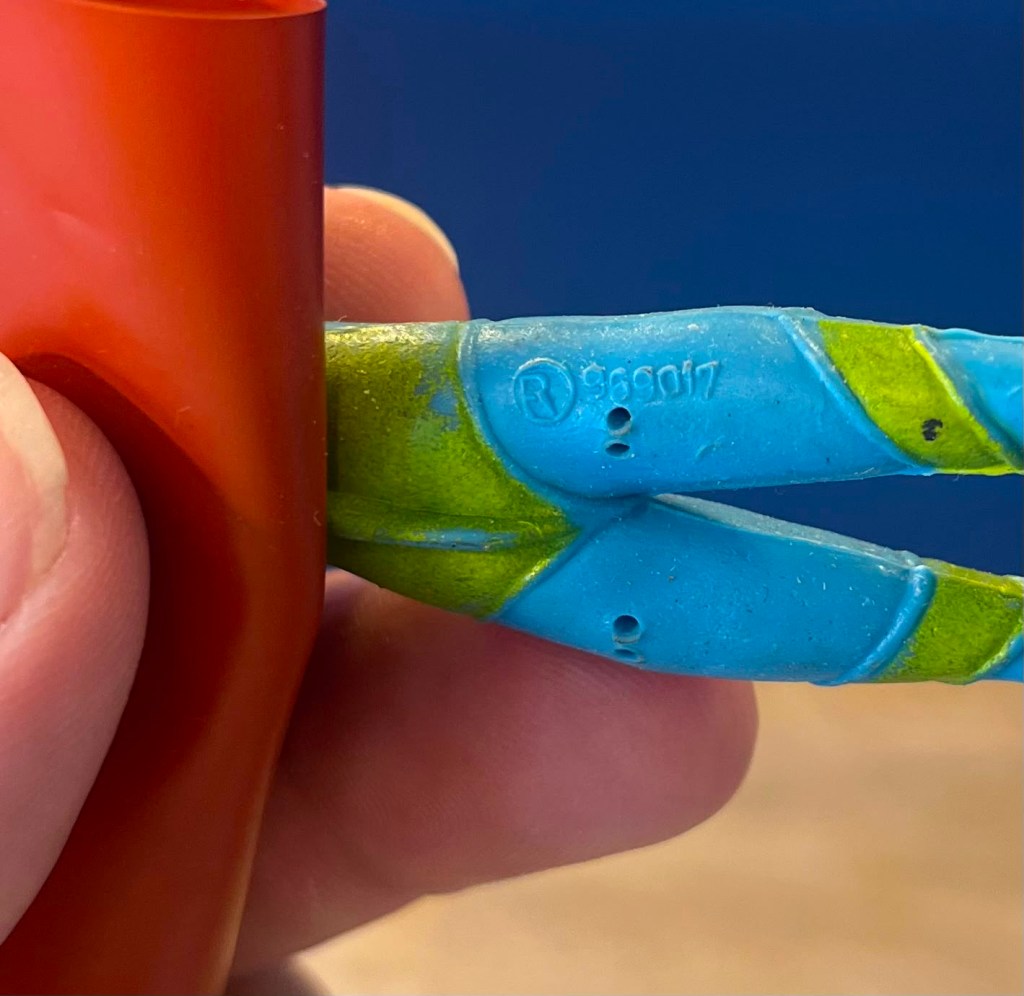
The second figure here must be based, in basic shape and design, on an early Ultraman, probably the original Ultraman or Ultraman Jack (see below for this model). However, the red cape and blue body does not fit with that character, and on reflection on these details as well as the fact that the character’s image was licensed from Tsuburaya Pro, this must be an attempt at Diamond Eye, from Toho’s TV series of the same name that aired first in 1973 (on this series see here and here). The figure here has the same marks as the others, but with the number ‘1’ under his left foot. The product number (here ‘969017′) and copyright mark normally found in the centre of the back, has now been moved to the reverse of the right thigh.
The probable presence of a Diamond Eye figure allows us to give these quite an early date. Diamond Eye was popular, but never saw the long-lasting success of the numerous Ultra series, and it is hard to find any toys produced of Diamond Eye or associated characters much after the initial airing of the TV show. Thus, we can probably date these to 1973 or the years immediately after.
I know of only two others from this series, both from sale listings:
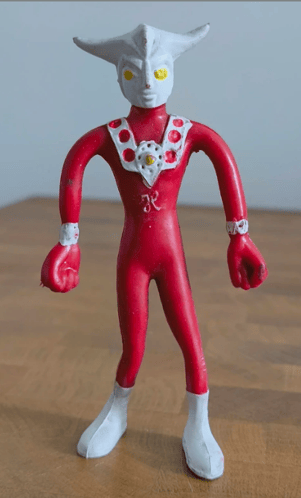
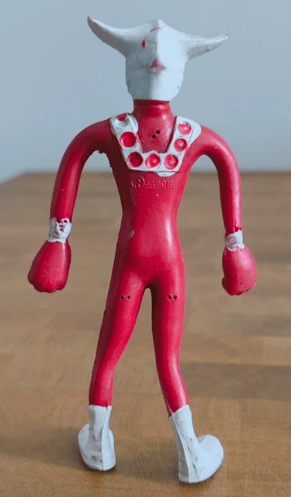
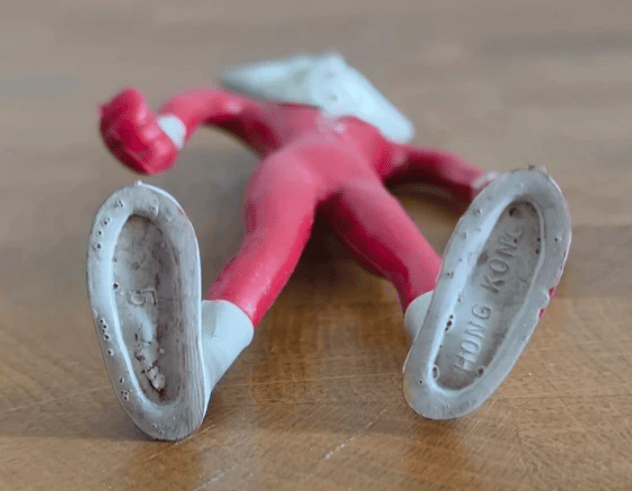
(Images here from a Vinted listing)
This is clearly Ultraman Leo, with his distinctive twin head spikes, neck adornments and the scrolling secret symbol in the language of the Ultras on his chest. Like the Ultra Mother above, he has a number (here “5”) under his right foot instead of “HONG KONG”. His other marks are the same as the other figures listed here, except his product number is ‘959015’ – some distance from the other figures’ product numbers. However, considering the similarities between this figure and the others, the sharing of other marks, and keeping in mind how close the sequence of the known numbers are (running from 969012 [Ultra Mother] to 969017 [Diamond Eye]), he was almost certainly a part of this series, with a product number that had to be adapted for some reason (see immediately below on this).
Ultraman Leo was the star of the TV series of his name that ran from 1974, pushing the probable production date of these bendys to that year or the year after.
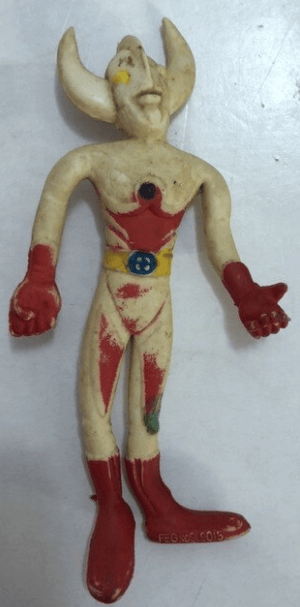
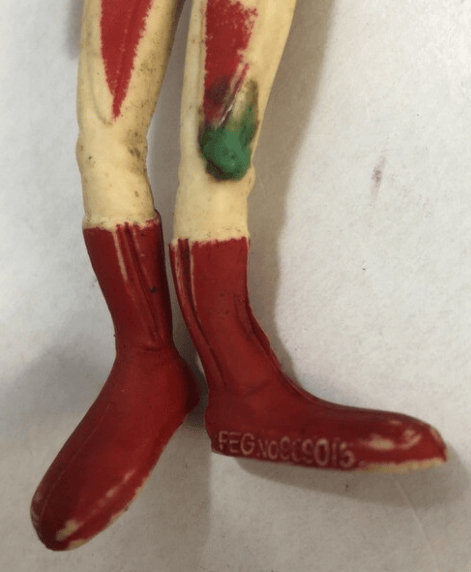
(Images from a Mandarake sales listing)
Despite the spectacular damage here (I think this is what they call pre-loved condition, and I prefer not to speculate what that green gobbet on his left knee is), the oversized horns make it clear that this is meant to be Father of Ultra. I have not actually inspected one of these figures, but the Mandarake sales listing does show a shot of his left foot, with the product number “969015” – and the assignment of that number to this figure may well explain why the Ultraman Leo discussed above had to be given a number so far out of sequence. I assume both were accidentally assigned ‘969015’, and following that the changing of the second number on the Ultraman Leo figure’s molds, gave these figures two different numbers but with the minimum amount of reworking of the mold.
Father of Ultra appeared first in a single episode of the TV series Ultraman Ace, aired in 1974, closely fitting in with several of the other probable dates for these figures.
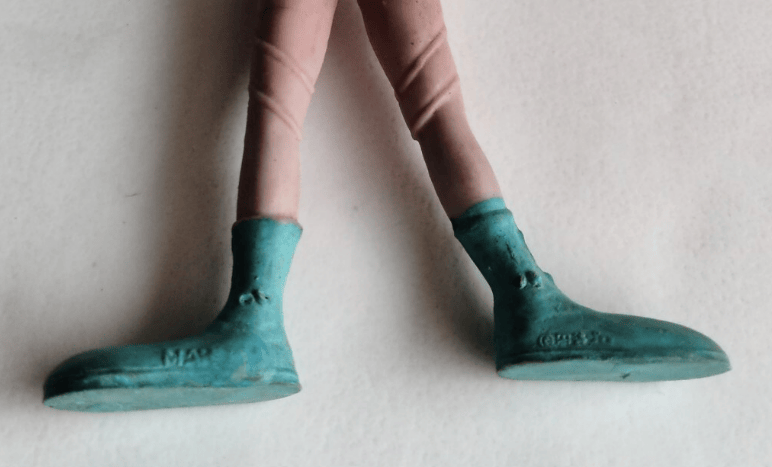
Finally, another Ultraman bendy has come to light in a current Yahoo JP auction. This is a faded pink original Ultraman or Ultraman Jack, which may be part of group 1, or may be part of an earlier production.
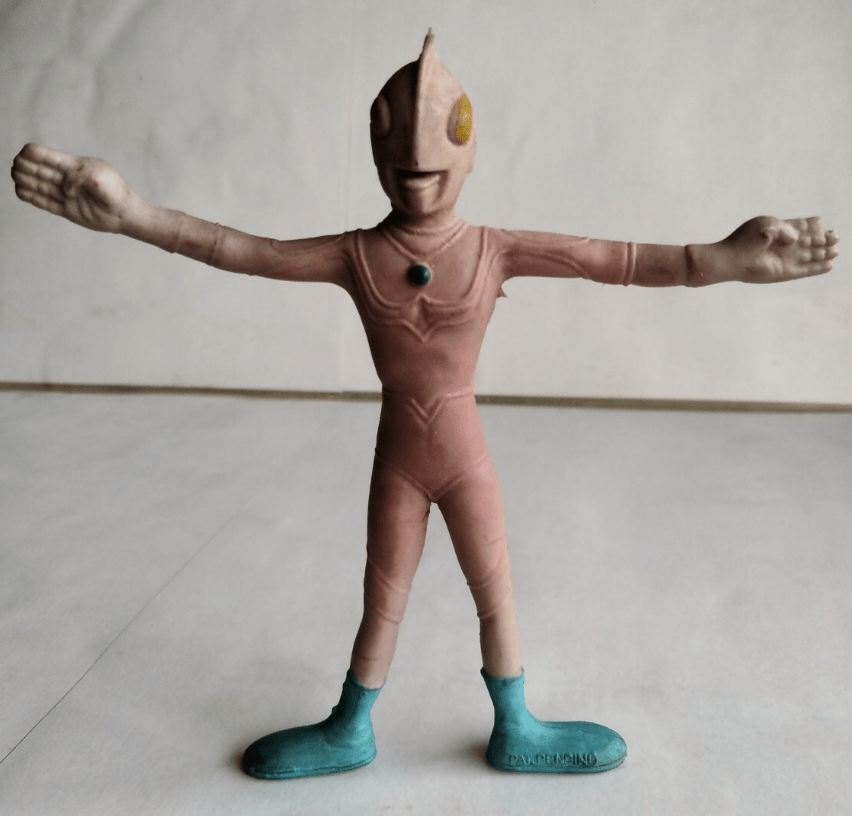
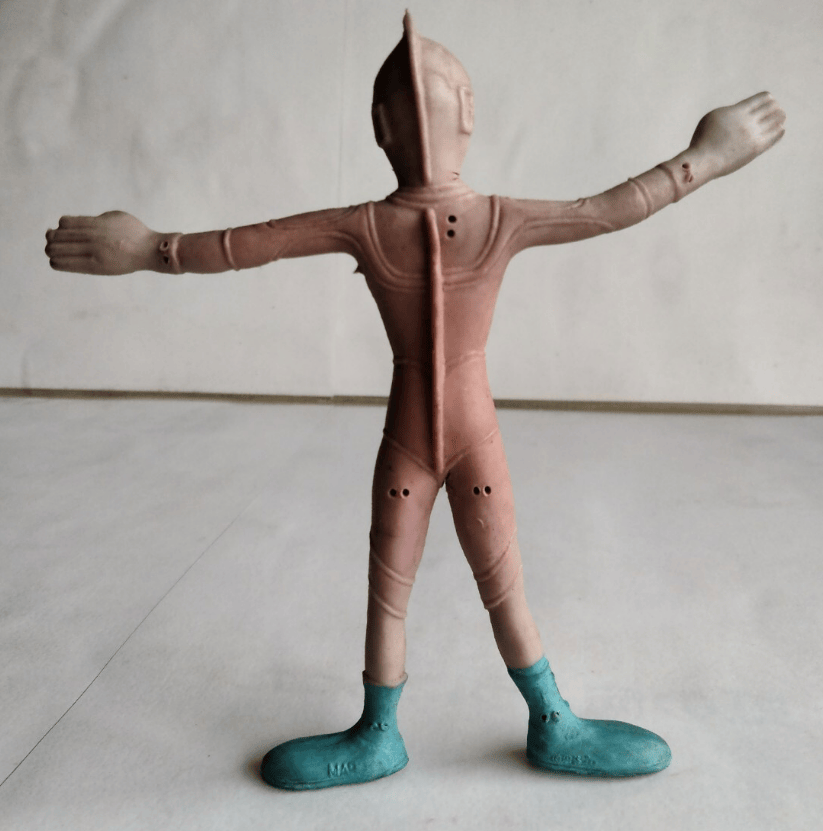
(Images from a Yahoo JP auction)
The design is clearly that which stands behind the Diamond Eye figure discussed above, and the Japanese copyright mark is identical and in the same place. However, the “HONG KONG” that is found under the feet of the others, is now gone, and the feet of this model are flat bottomed, not recessed as with the others. In addition, a “PAT. PENDING” has been added to the inside of the left foot, where the product number was on the other figures, and a new mark “MAR” appears on the outer side of the left foot.
This figure would appear to be closely related to the others, and almost certainly produced by the same manufacturers, but standing alone from the series the others were apparently produced in, and without a product number from that line. I suspect that it came first, and was produced on its own, before the line was expanded to include the others detailed above.
I would, of course, be delighted to hear from anyone with more from this series, and would love to add them here.
Group 2: the kaiju bendys, unlicensed bootlegs apparently made around 1975
The remaining five of my bendys, all copying kaiju, and this time without any official copyright marks, share a common manufacturer’s mark with each other: a tiny monogram formed of a W, a C and a T.
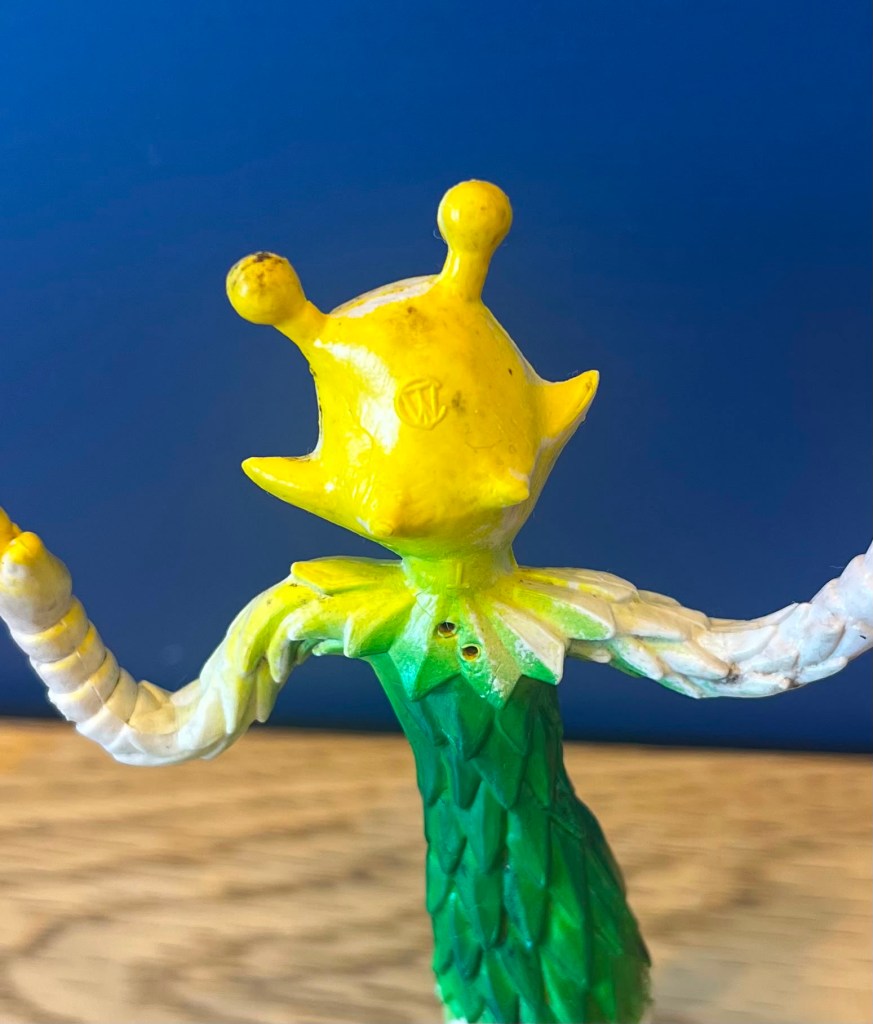
(The monogram is in the centre of the back of the figure’s head in the image above)
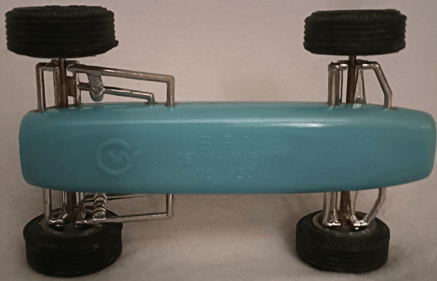
This design is unfortunately too early to be recorded in the published catalogues of Hong Kong toy manufacturing companies (those here start in 1980). However, assuming that the ‘T’ here stands for ‘Toys’ then we are left with only two options, and while a ‘CW toys’ did exist in the 1970s and ’80s in Hong Kong, their logo is quite different:
(Image from an eBay sales listing)
A ‘WC toys’ also appears to have existed in Hong Kong at the same time, but I have found no example of their logo, despite long searches. If any reader knows who WCT(?) or WC/CW Toys were, please do get in touch.
In addition, these figures have “HONG KONG” under one foot (but in a different size and font to those in group 1 above), and “PAT PENDING” under the other. All of these are overwhelmingly found today in the Japanese market, and must have been produced mainly for sale there.
Let us begin our startlingly-skinny kaiju roll-call with this odd creature:
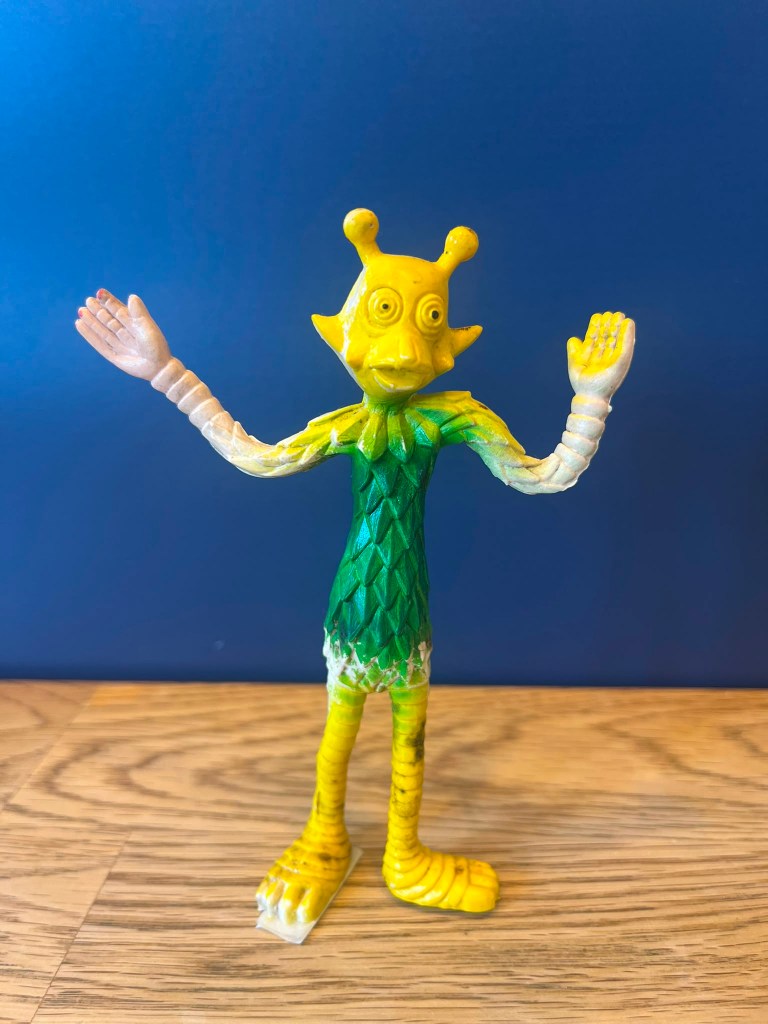
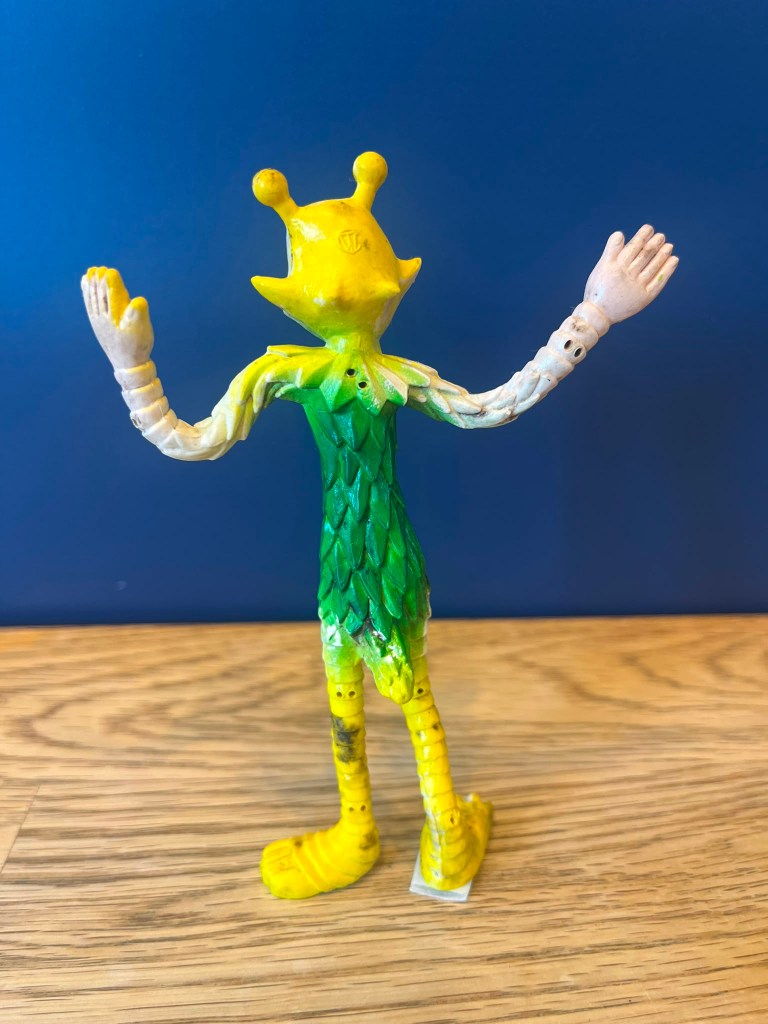
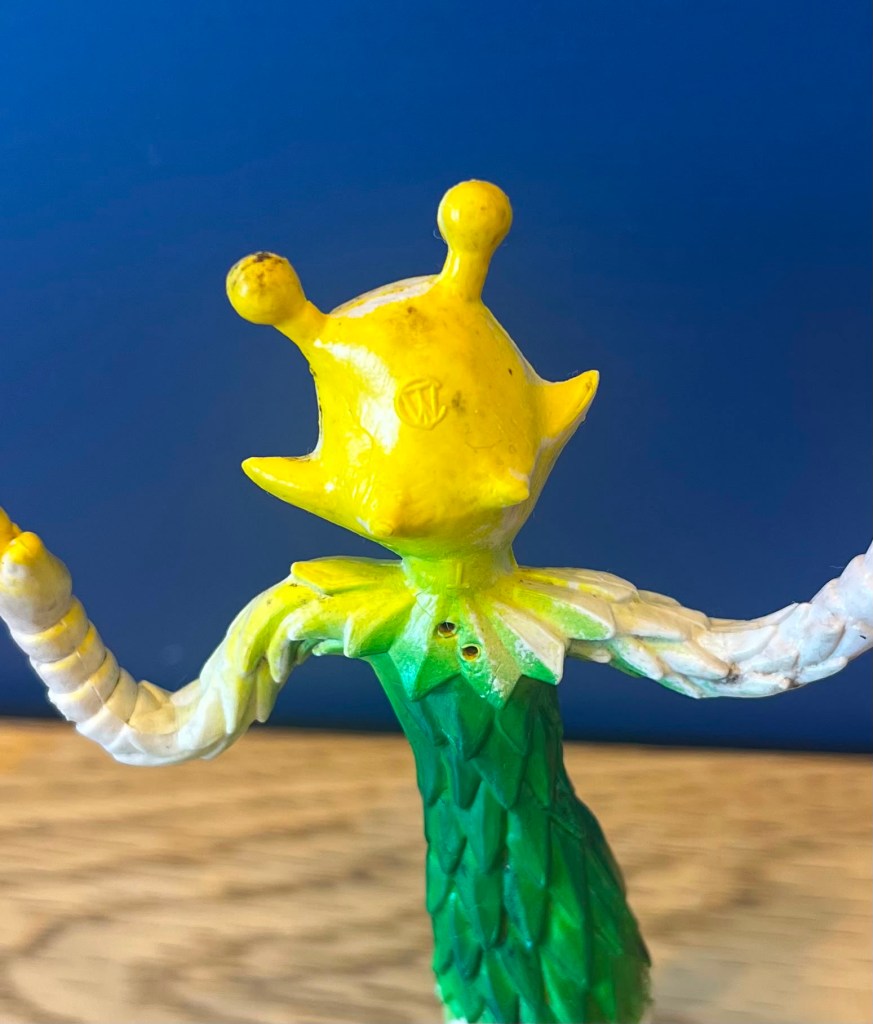
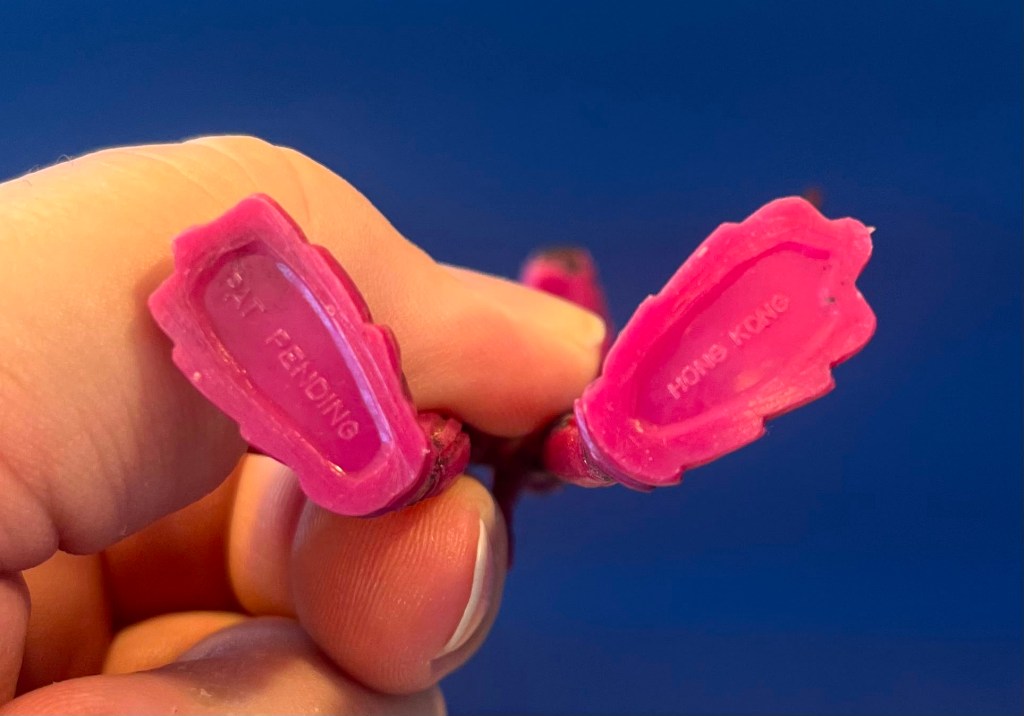
(The foot image here is from another figure in this series [the Mechagodzilla: see below] as the detail on those feet is sharper)
The first of these kaiju is loosely based on Guiro (or Starbem Guiro) from episode 9 of Ultraman Leo which aired in 1974 and 1975. Here the maker’s mark is on the back of the head.
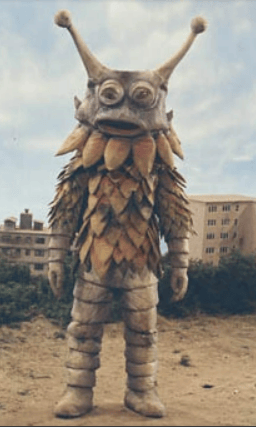
(Guiro / Starbem Guiro: image from here)
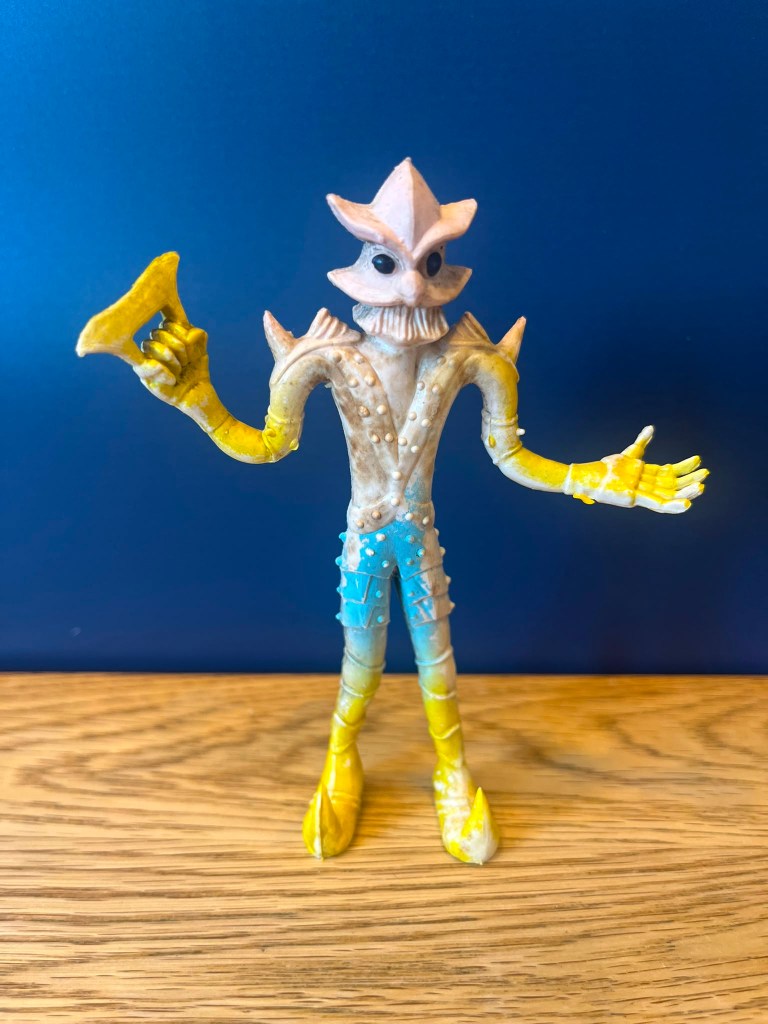
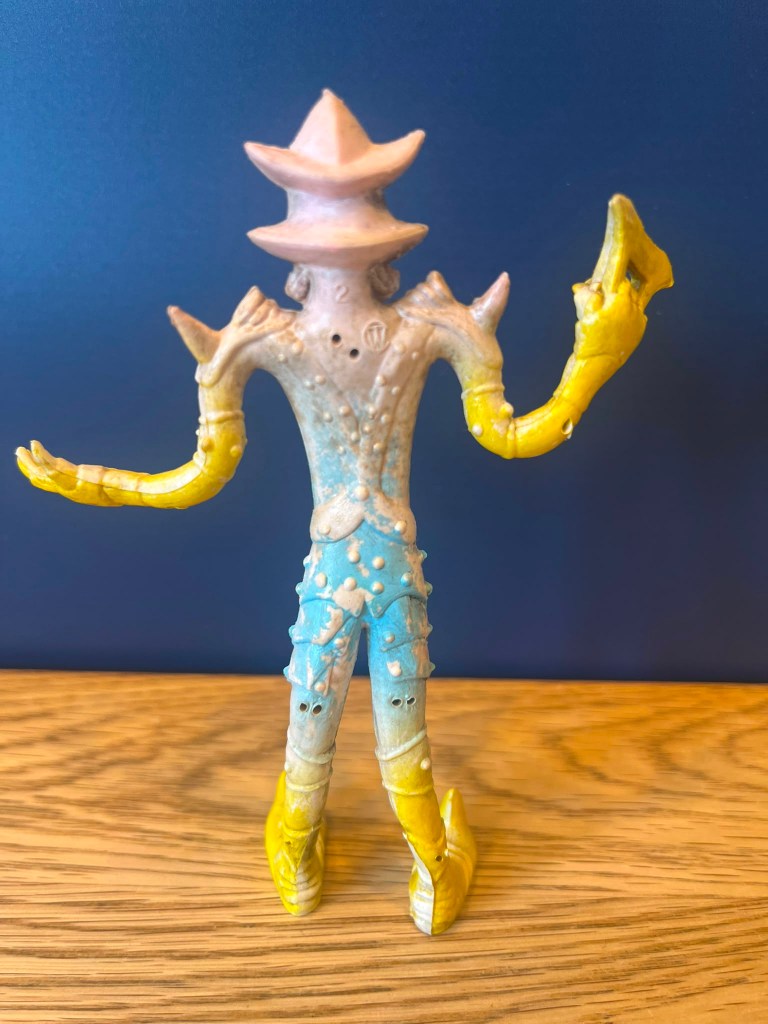
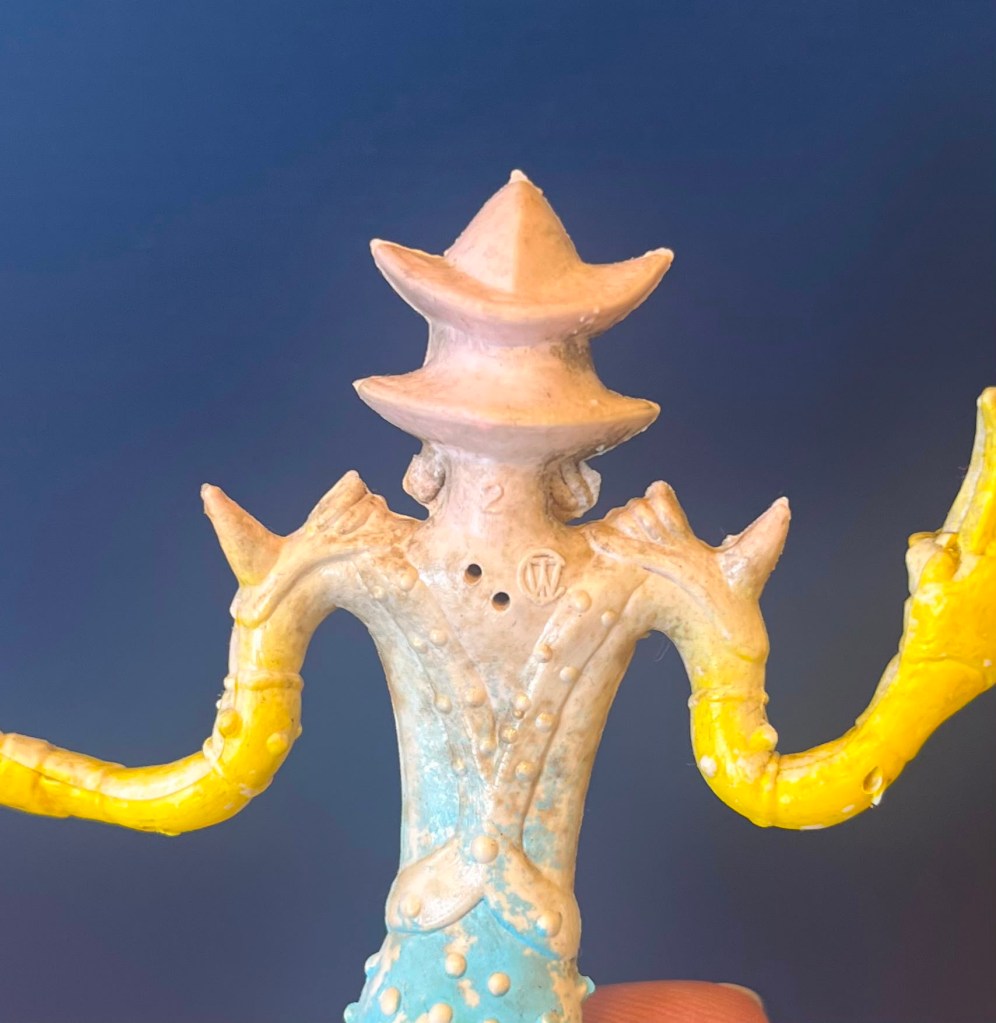
The second kaiju here is very loosely based on Ace Killer, a robotic killer created to assassinate Ultraman Ace that first appeared in episode 14 of the series of that hero’s name, which aired in 1972 and 1973. Here the maker’s mark is on the right shoulder blade with a “2” above it on the back of the neck.
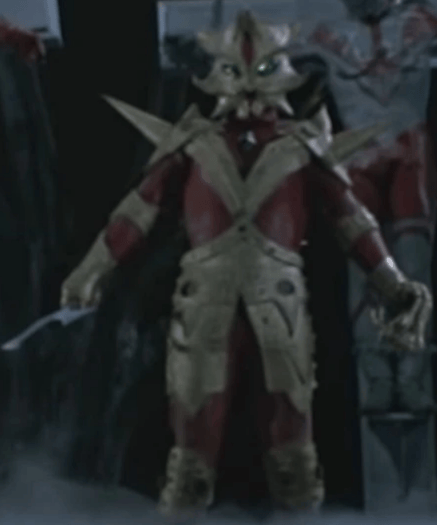
(Ace Killer: image from here)
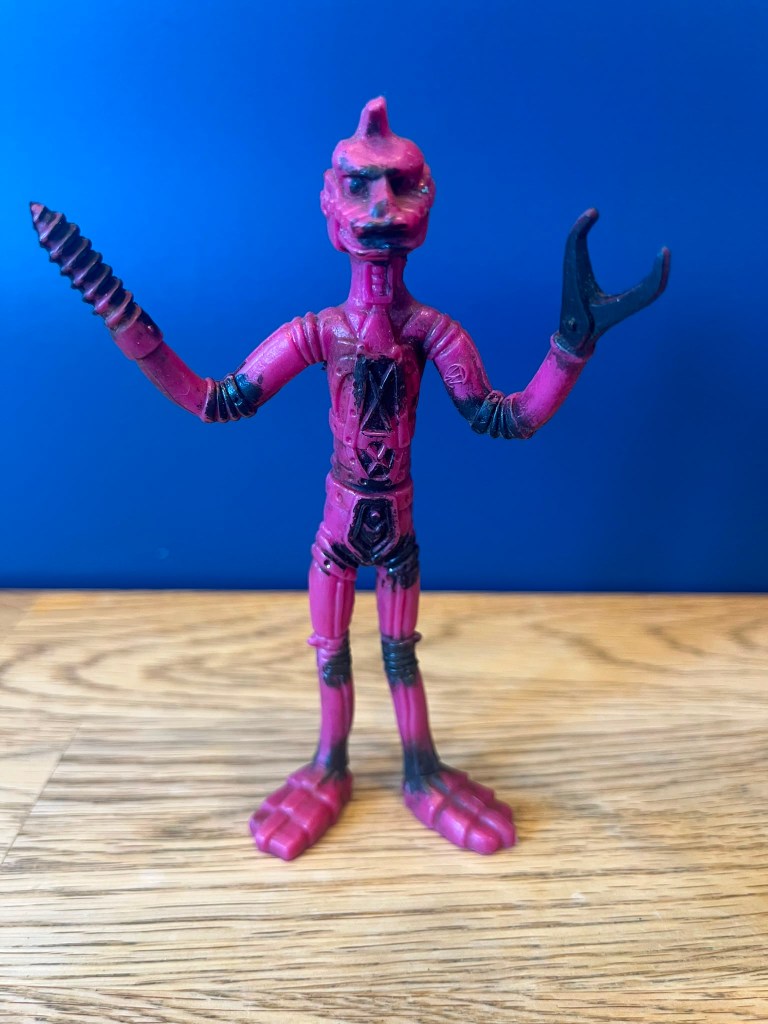
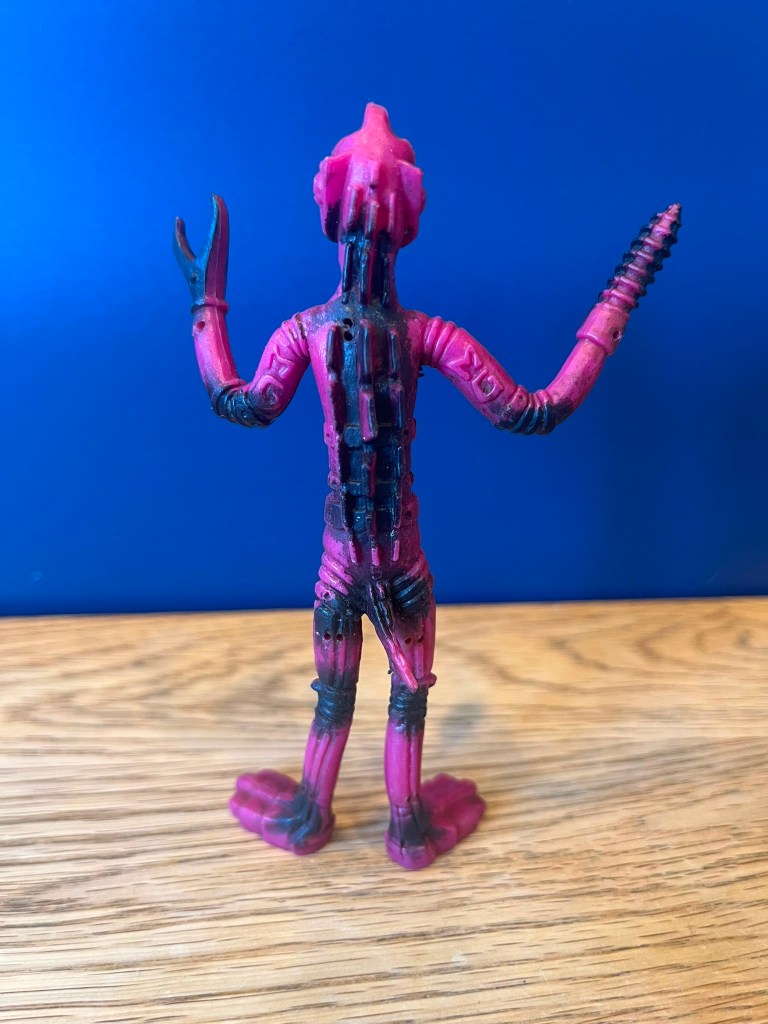
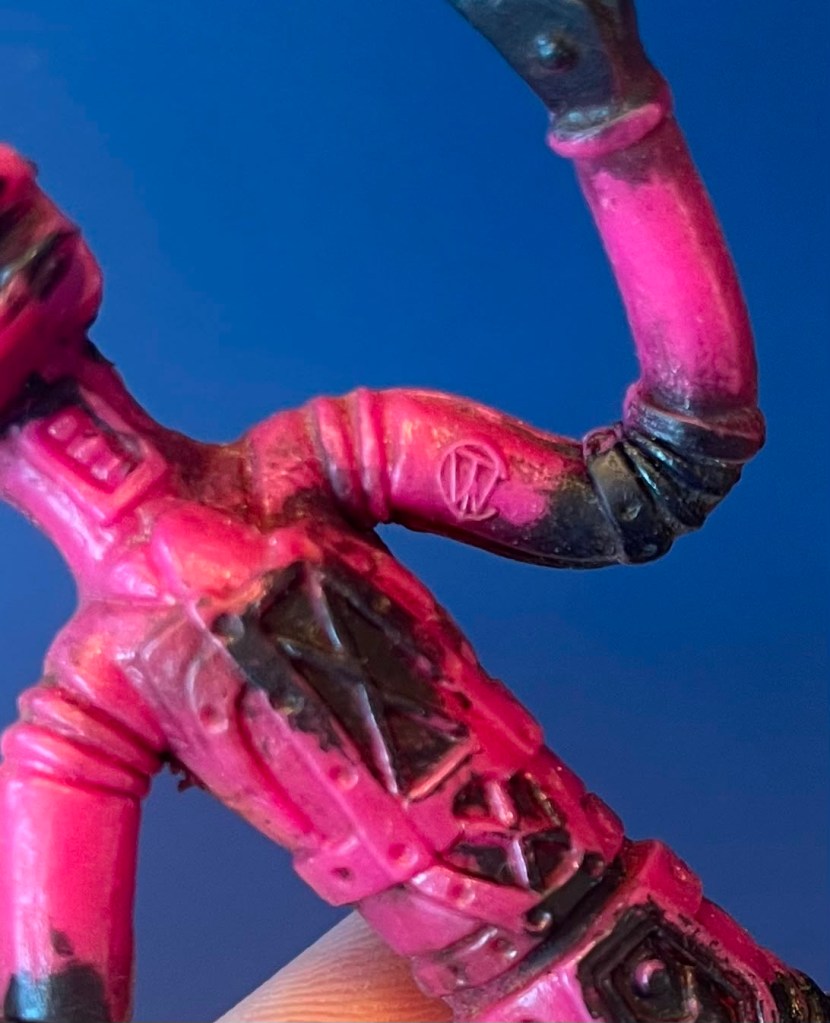
The next kaiju is clearly that of Mechagodzilla, the robotic counterpart of Godzilla first seen in the 1974 film ‘Godzilla vs Mechagodzilla’, and with his distinctive head-fin and armoured chest, but here in a startling hot-pink or purple, and with a clamp for a left hand and what looks like Megalon’s ridged spike for a right hand. Here the maker’s mark is on his left bicep.
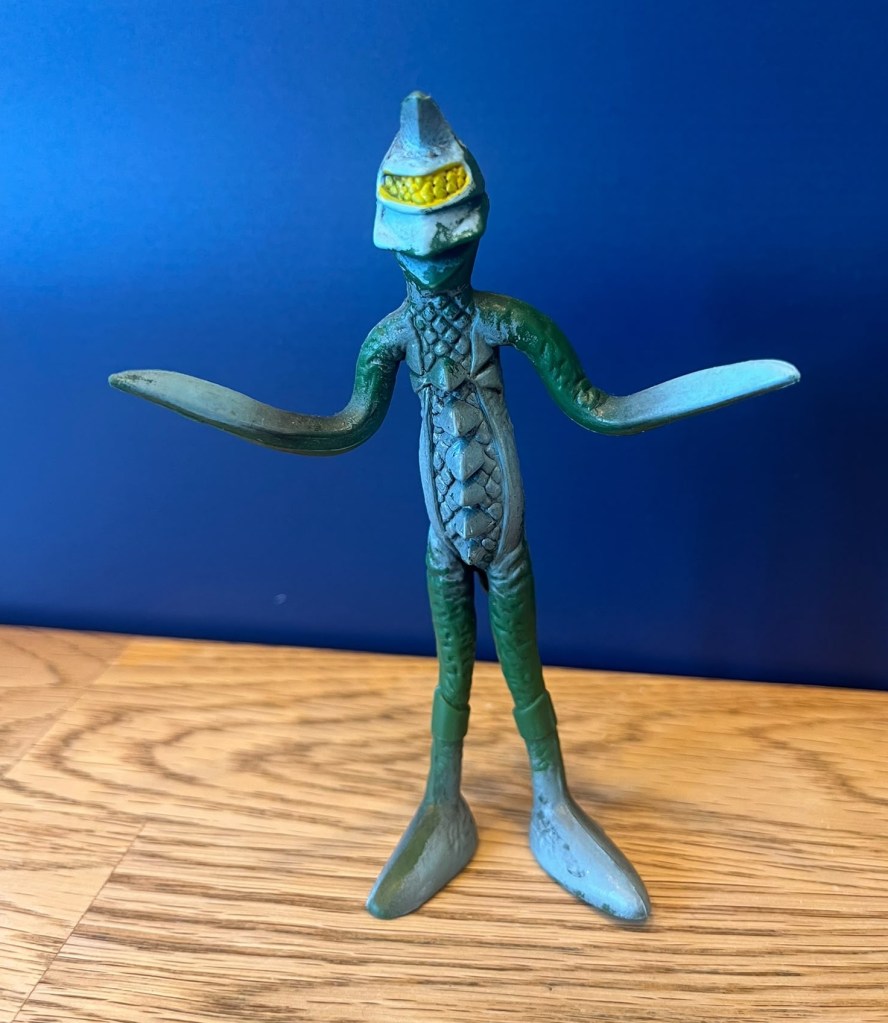
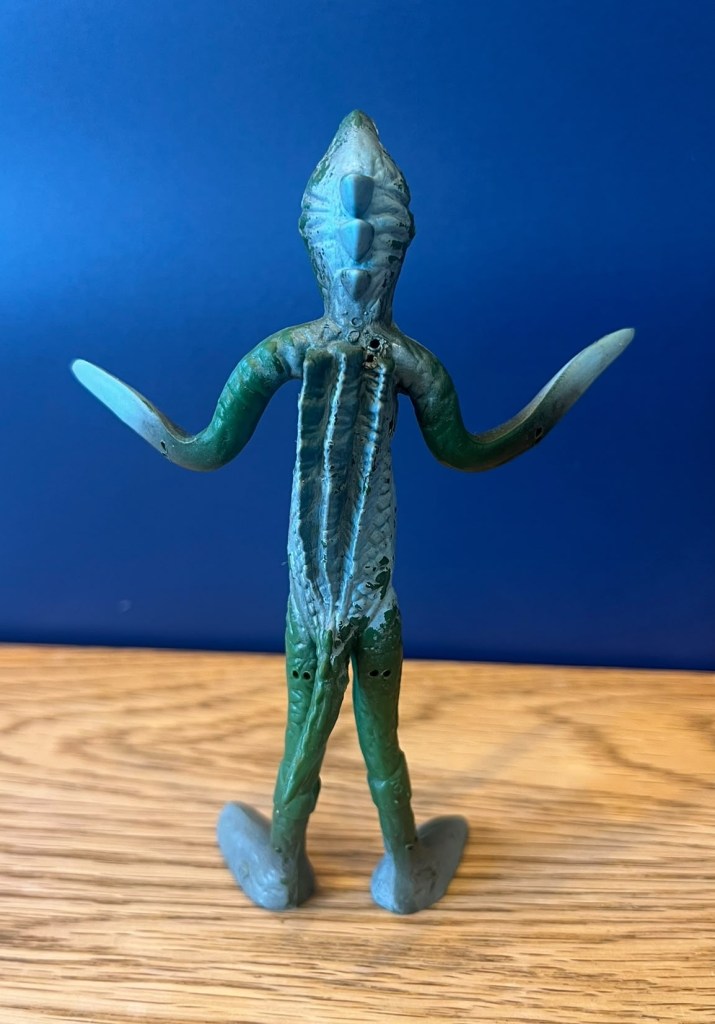
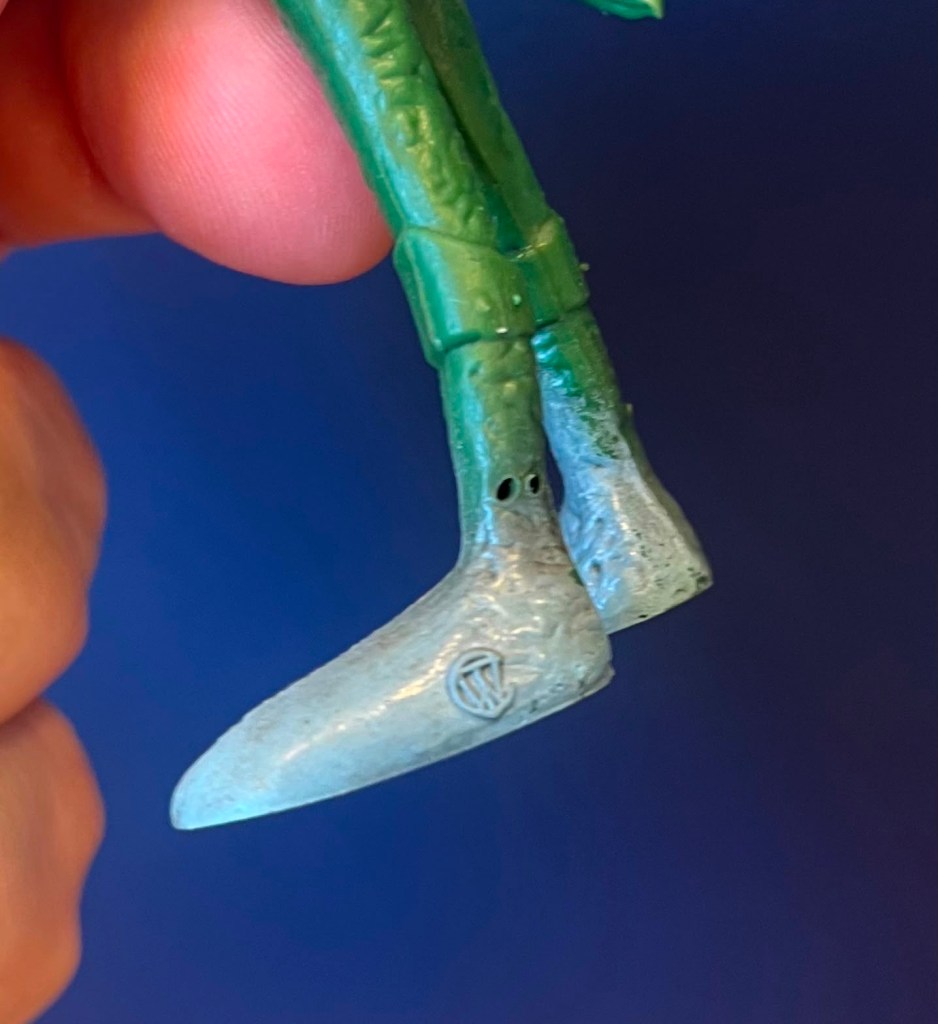
The next one here is clearly Gigan, the cyborg kaiju originally seen in the 1972 film ‘Godzilla vs Gigan’, with his usually prominent back-fins greatly reduced in size, and his normally rotund body slimmed down to spaghetti-proportions. The distinctive maker’s mark can be found on the outer side of his left foot.
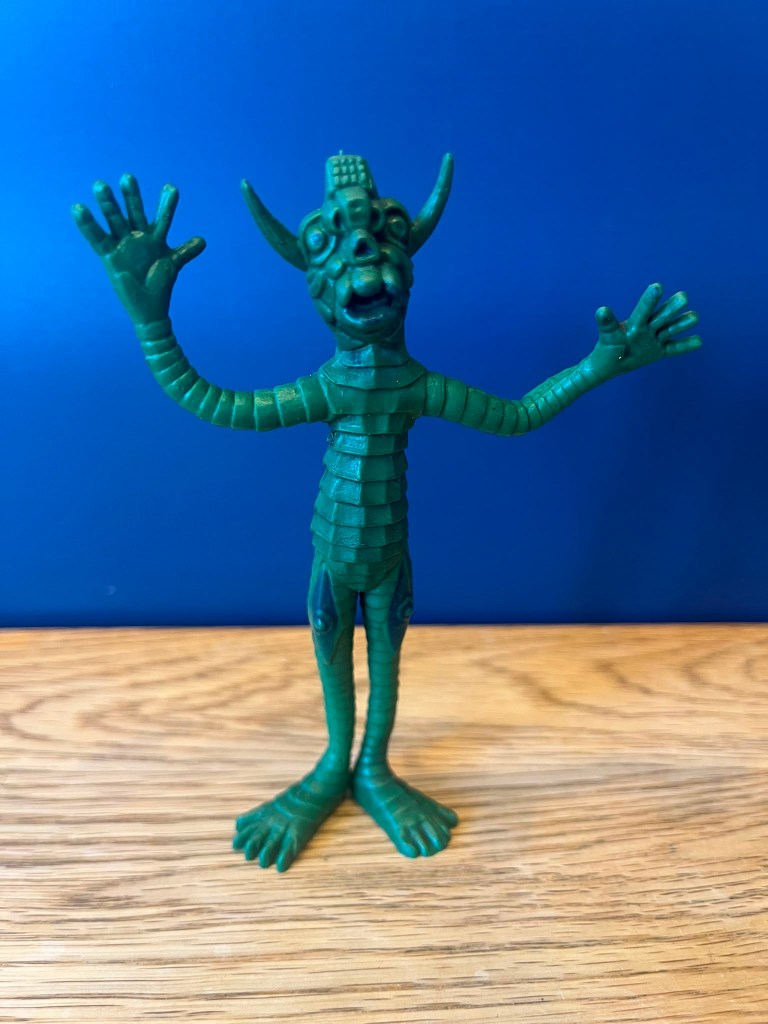
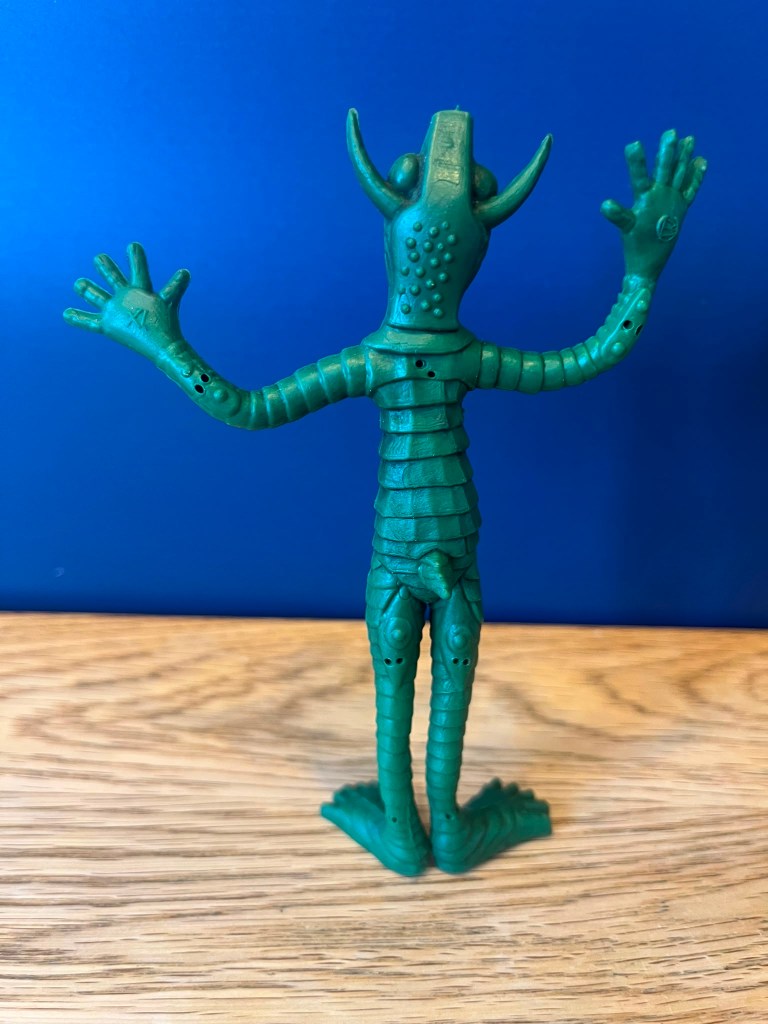
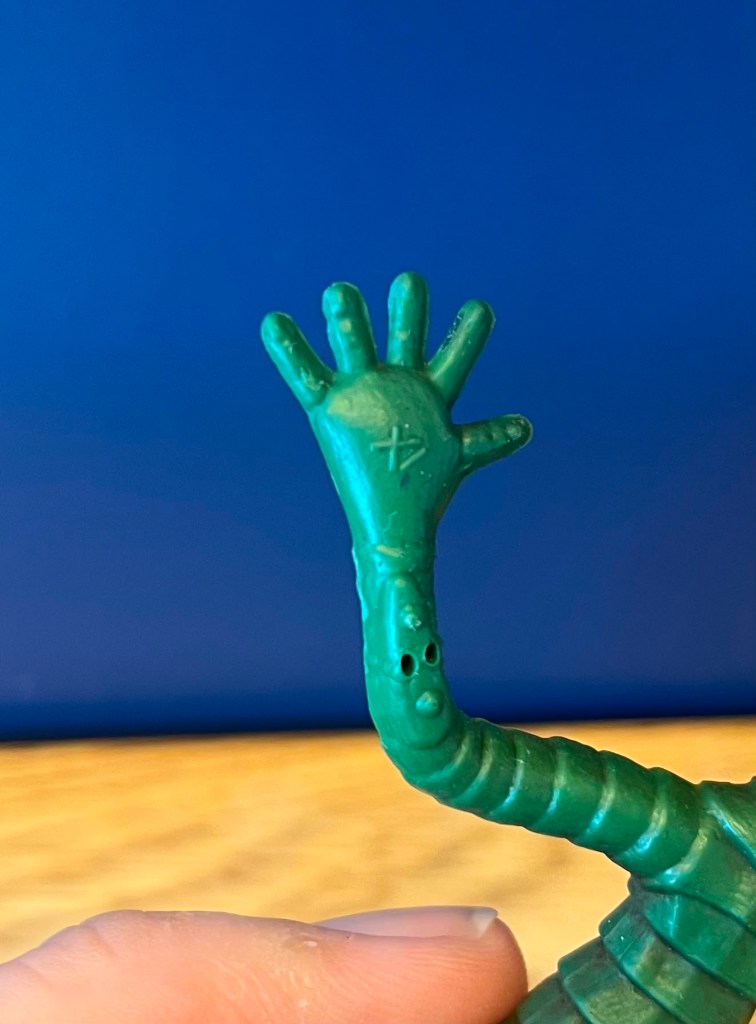
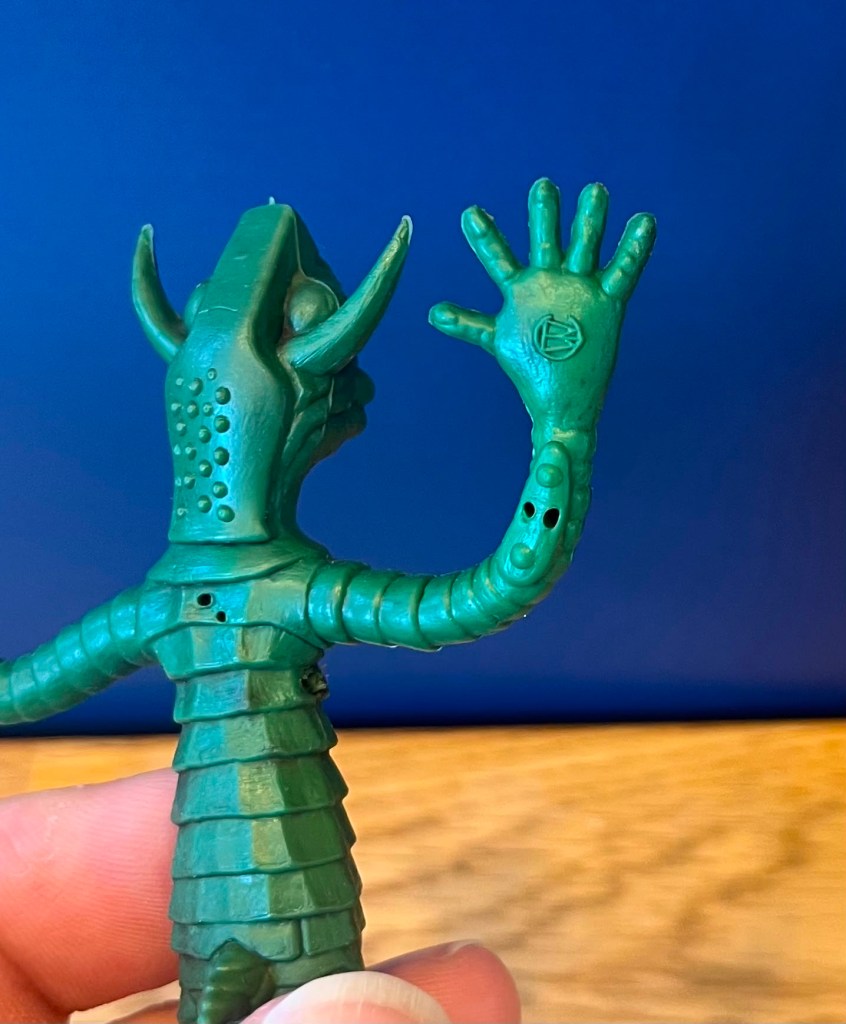
The final example I have is perhaps loosely modeled on the popular kaiju Miclas, he originally seen in the third episode of Ultraseven, and with that character’s horns and large rectangular crown-like protrusion on top of his nose, but in a much skinnier form. The maker’s mark is on the back of his right hand, and there is also a symbol that resembles a “XI” on the back of his left hand (but I am unsure as to the orientation of this symbol).
I am hopeful that I have nearly all produced in this set, as in other collections of them known to me, all that remains for me to find is a King Ghidorah bendy:
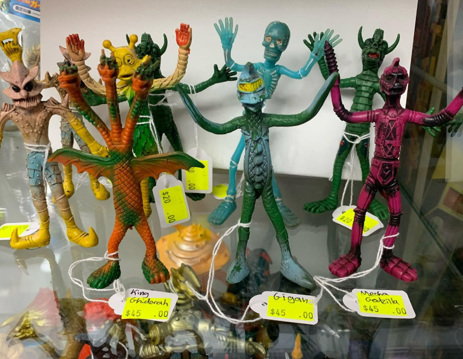
(Image from a Facebook sales listing by ‘King Kaiju’ – a Japanese Video Games and Collectables dealer based in Adelaide, Australia – of 7 August 2022)
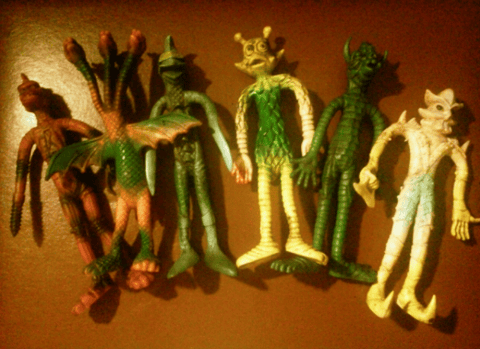
(Image from a JP Yahoo auction listing)
It is this one here, where the shape of the maker’s monogram can just be seen under the figure’s left armpit:
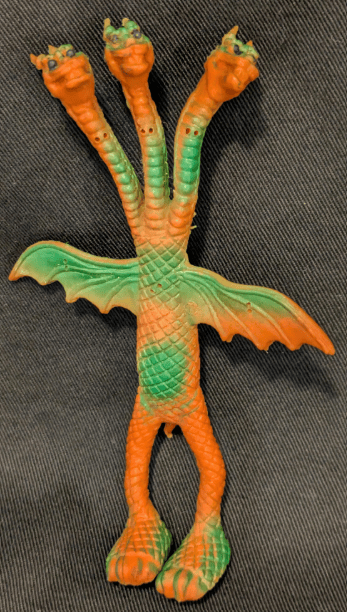
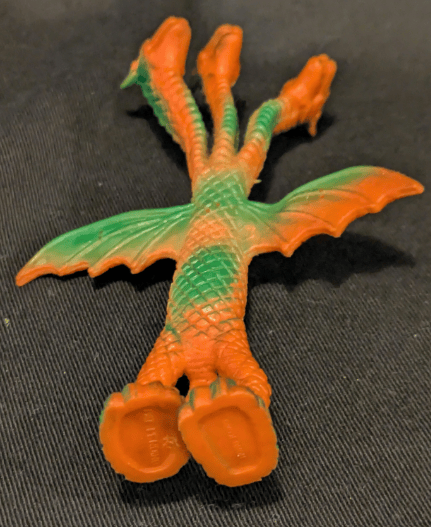
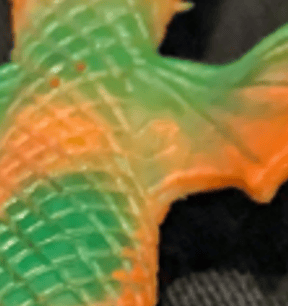
(Images from a Mandarake sales listing)
We can date this series of kaiju-bendys reasonably closely by the characters they follow, with a date range of the examples shown above spanning 1972-1975, and with most examples clustering in the period 1974/5. So a date around 1975 seems most likely.
⁂
However, there are other Tokusatsu bendys out there, and occasional sale listings archived by me show that some examples most probably made for the Japanese market appear to have been produced in the 1980s, with figures unrelated to those listed above.
Group 3: The later Tokusatsu bendys, reportedly licensed by Toho, and apparently from the 1980s
Two examples of this group are known to me through a sales listing: they are quite realistically depicted Ultraman Leo and his twin brother Ultraman Astra, who appeared together in episode 22 of Ultraman Leo in September 1974.
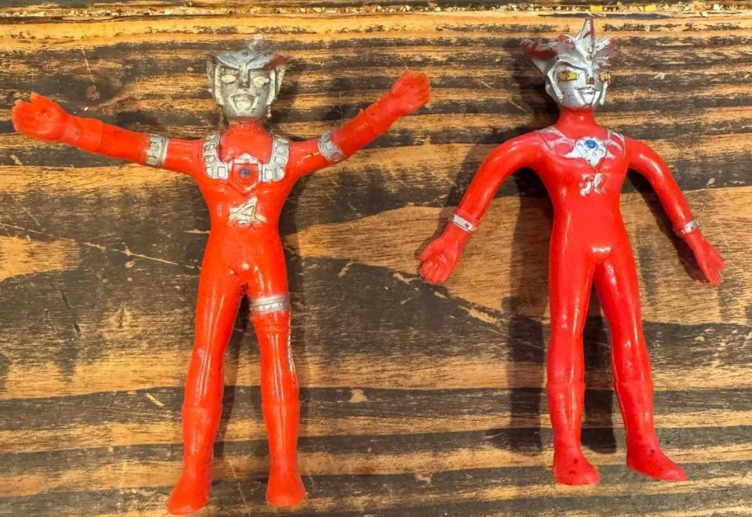
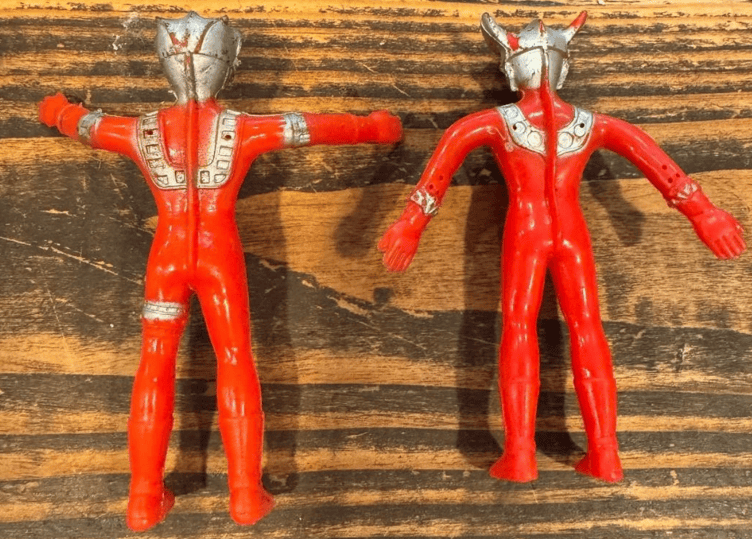
(Images from an eBay listing)
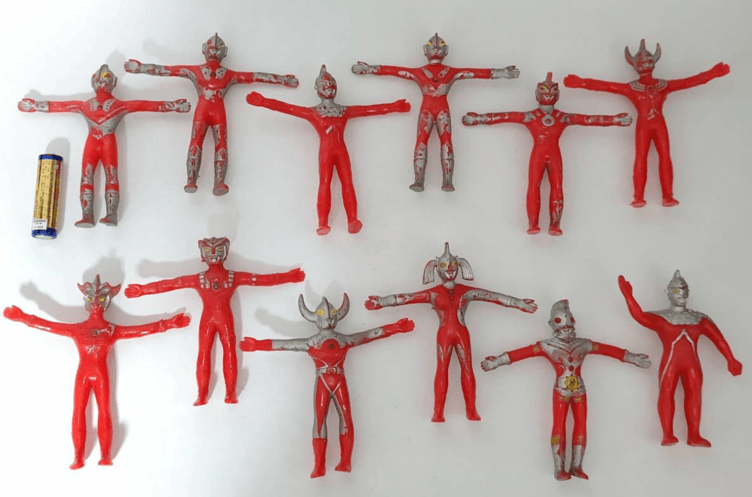
(Image from a JP Yahoo auction listing)
A Japanese sale listing reveals that these were part of an extensive group, and despite the fact that all the Ultras here are from the 1970s (even the apparent Ultraman King in the bottom row one from the last on the right, who appeared first in Ultraman Taro in 1974), the sophistication of their design leads me to suspect that these date to the 1980s. The rubber they are made from has a curious glowing sofubi-like quality, that looks very much like Bandai’s Ultra figures, and perhaps it is sofubi (which would seriously limit the movement of their limbs). If, or when, I obtain one of these, I shall update this post with some basic details. Japanese sale listings record that these figures stand around 97mm. tall, and have the copyright mark “Tsuburaya Pro” underneath their right feet.
⁂⁂⁂
That is the sum total of Hong Kong-made bendys for the Japanese market known to me. I find it odd that despite the decades-long waves of bendys produced for the Western market, so few were produced for distribution in Japan, and the first two groups, one officially licensed and one not, are so close together in their probable production dates. Perhaps the bendy-craze in Japan was short lived, and homespun cheaper toys, such as the various Omake and blowmold figures, dominated the sale points and kept these bendys from getting a foothold. In addition, try as hard as I might, the identity of the producers in all cases here remains to be discovered. There is much still to do, as usual 😉
⁂
[Postscript: For those being driven mad trying to recall where the title quote is from – it’s Radiohead’s The Bends, released in 1995]
- 'MUTTON DRESSED AS LAMB': Godzillas and kaiju that look vintage, but are not
- American made Pachi
- BOOTLEG DINOSAURS – a little off topic, but sometimes needed here
- BOOTLEG GODZILLAS
- Bootleg Tokusatsu from China and its immediate neighbours
- Bootleg Tokusatsu from the Americas
- BOOTLEG TOKUSATSU HEROES
- Central Europe – Godzillas and kaiju from behind the Iron Curtain
- Chinese-region bootleg Godzillas -the plastic tide from the East
- Chinese-region made Pachi
- European made Pachi
- European-made Godzillas
- PACHI
- Pachi kaiju
- Pachi kongs
- Pachi superheroes – Ultraman and similar
- The Americas – bootleg Godzillas from the New World

 Confessions of a Kaiju Hunter
Leave a comment