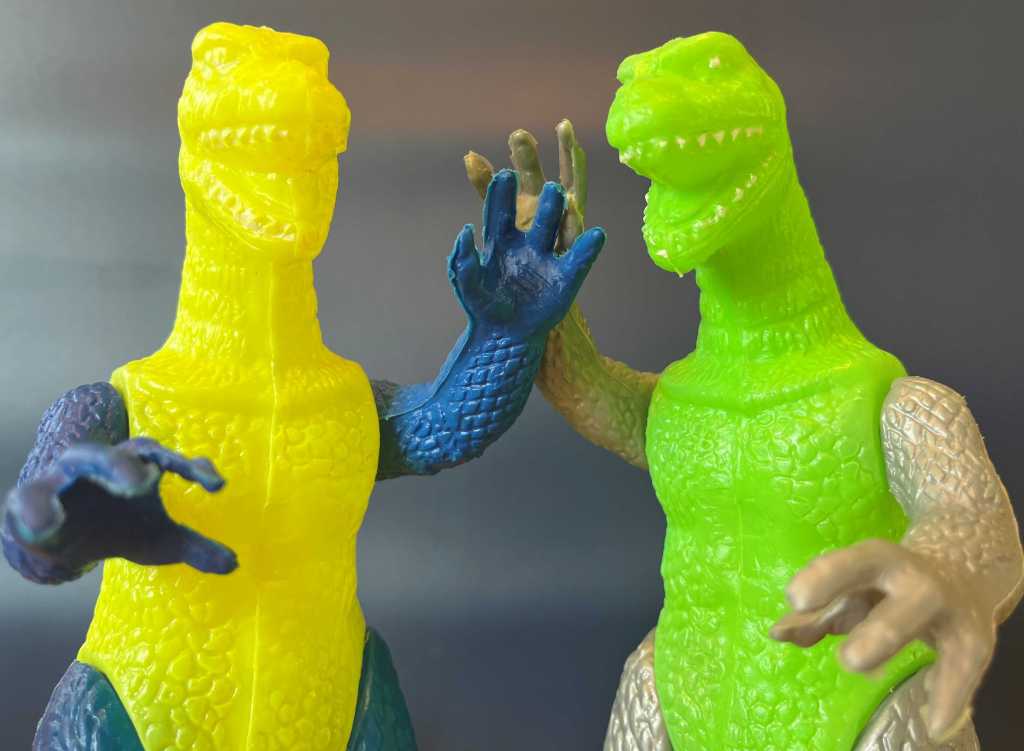
These are bootlegs of such purity in their economy of production, and extreme rarity in their survival and availability, that I feel a sense of real pride at having obtained two in my hunts. If what thrills the pachi and bootleg hunter is the absence of lists of products with photographs issued by the manufacturers, or published reference works listing all the toys and their variants, then these represent the zenith of such toys. They are testament to the powerful appeal of Godzilla far from the shores of Japan, and while I hope to see others one day, quite frankly I don’t expect to see many.
Peru had a long history of producing bootleg toys by the blow-mold and hard plastic methods, from about the 1960s to the 1990s, with large companies such as BASA (Bakelita y Anexos S.A.) dominating production, alongside many smaller and now-anonymous firms. However, unlike wealthier neighbouring nations such as Argentina and Mexico, far fewer of the toys produced there seem to have survived to the present day, or emerged onto the international market.
Peruvian blow-mold toys frequently show the ‘rainbow’ colouration as here – with limbs and body parts made separately in different colours, and assembled in this way for decorative effect. Mexico also has such ‘rainbow’ figures in blow-mold, but in Peru these are the norm. Indeed, the Peruvian ones are commonly mistaken for their more numerous Mexican peers – but from my own inspection of both, I can observe that the Mexican ones are made with thicker plastic and in deeper colours, this most probably due to the extra levels of economy in the Peruvian ones’ production, where the plastic is paper-thin and translucent, and hence in lighter colours.
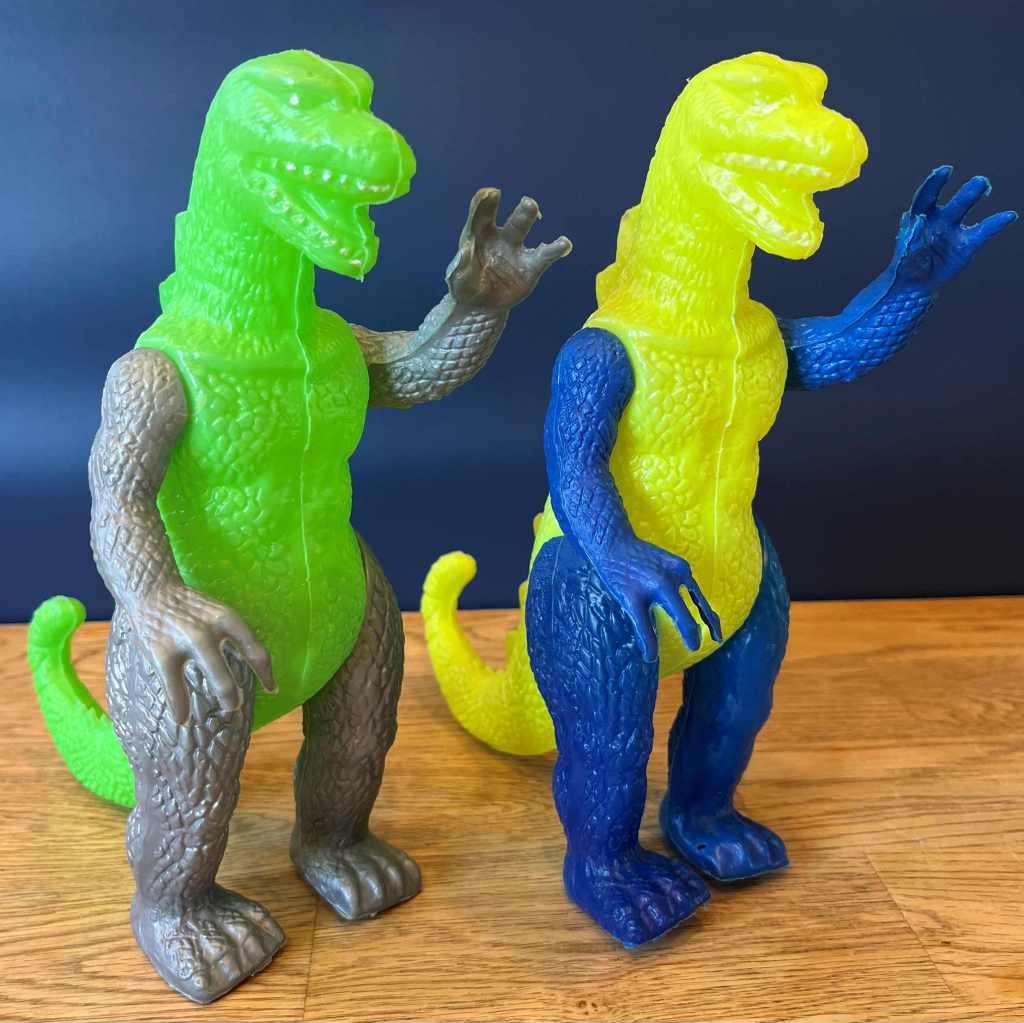
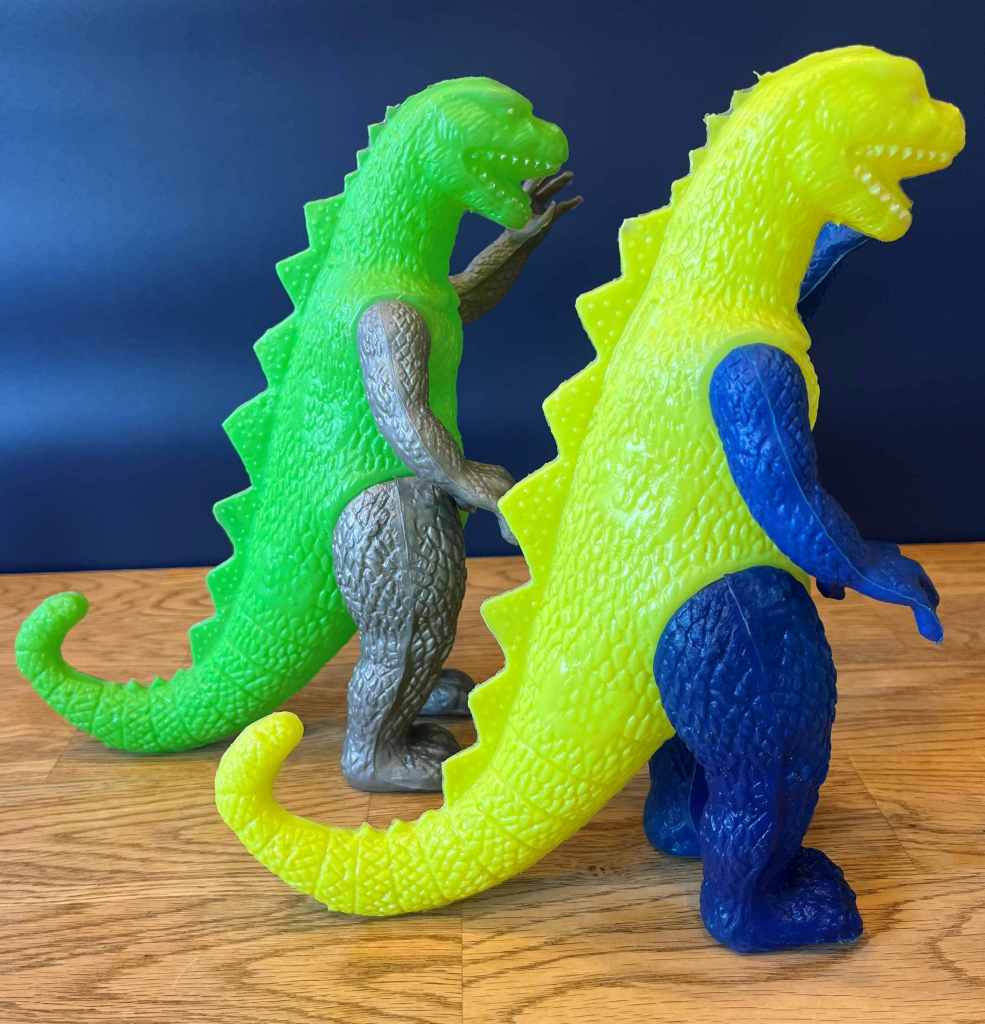
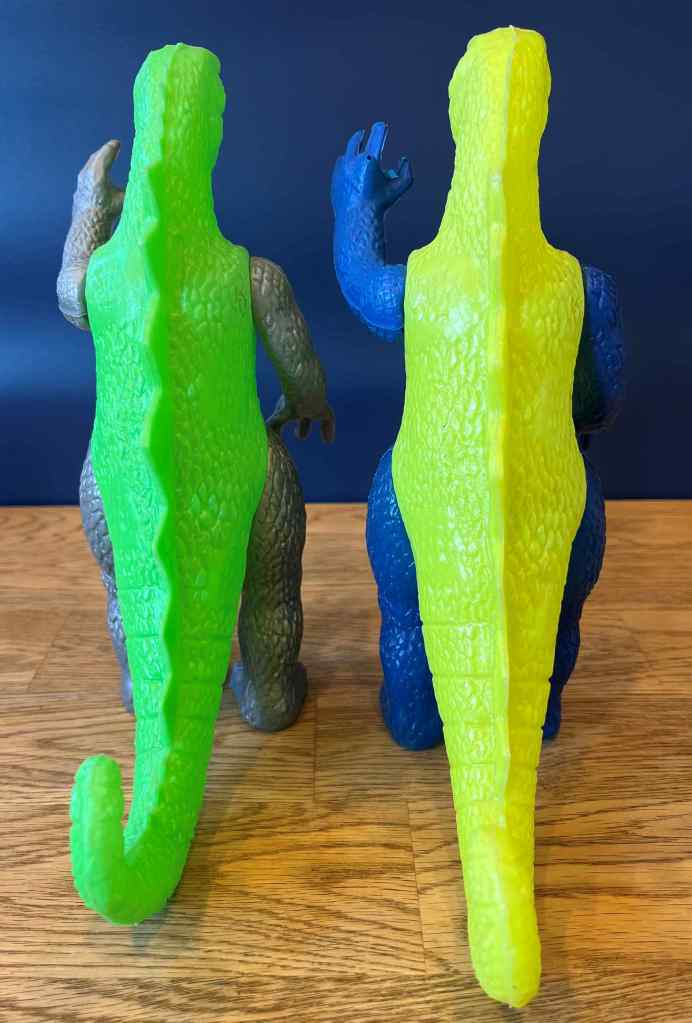
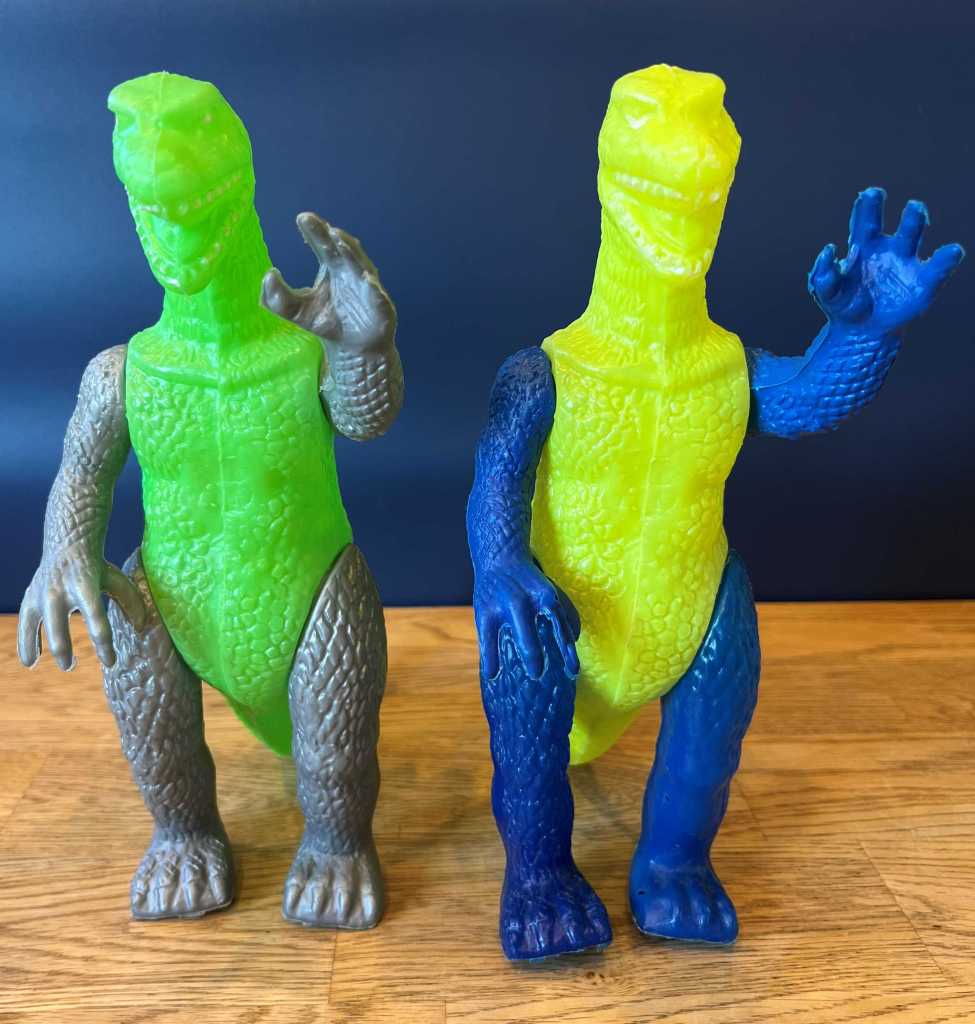
They stand 220mm. tall, and as they are made of the thinnest blowmold plastic they weigh only about 40g. They have articulated arms and legs, but a fixed tail and head. A tiny fleck of white paint has been added to each eye, and the teeth have been painted in the same manner. The mouths are sealed about two-thirds of the way from the throat to the end of the jaw. They were made in brightly coloured plastic, with their arms and legs in different colours to the main body (but in sets of arms in one colour, and the legs in another). A circular weak spot in the centre of the chest (approximately 20mm. in diameter) is probably is a mold-mark.
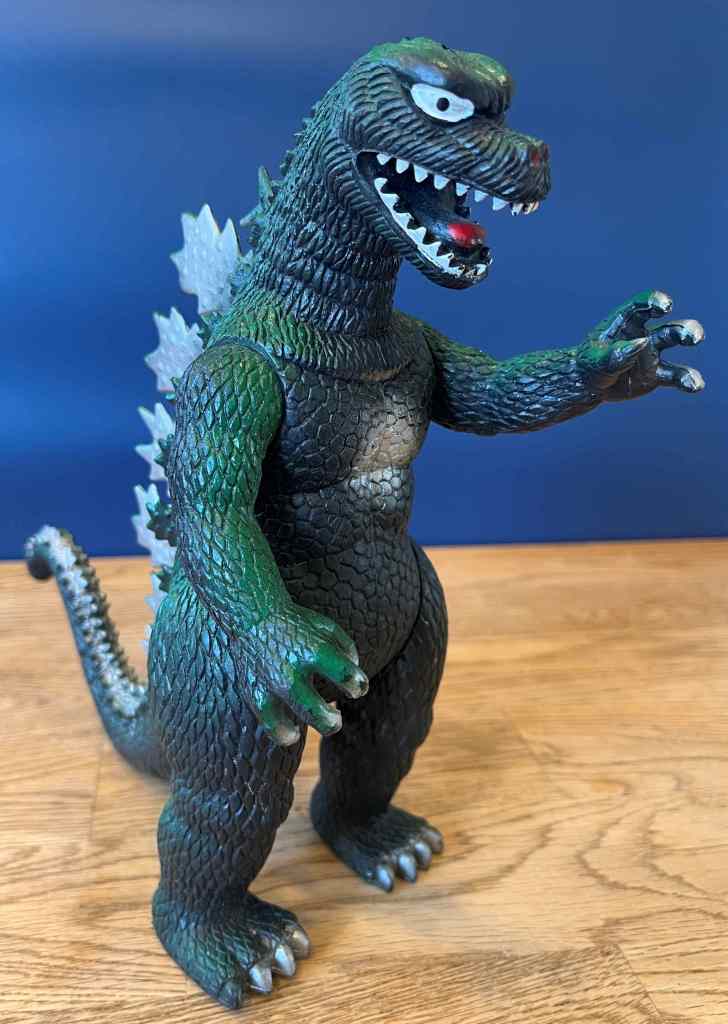
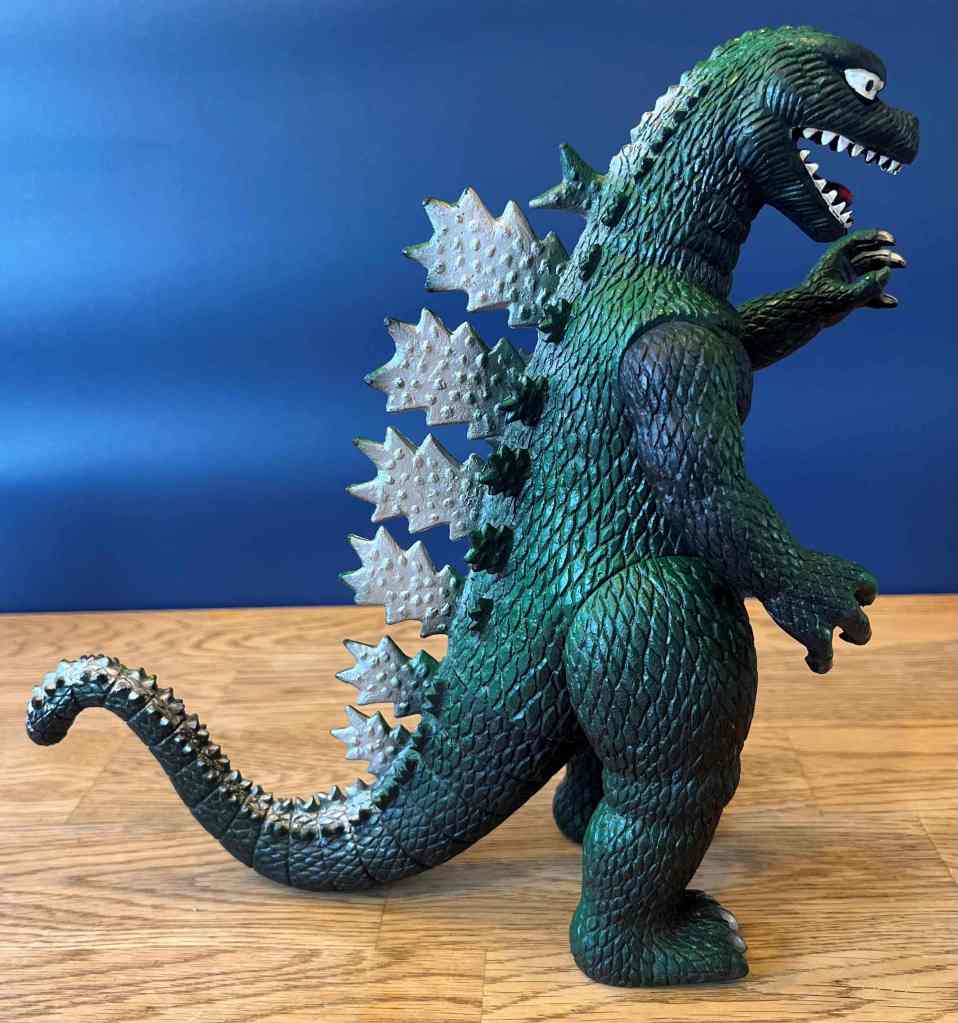
The model they are copying is easy to spot – the height of the figure, the shape of the head, the four toes ending in a single flat line together, the scale pattern, the sharp curl of the tail and most importantly the prominent rows of raised dots on the spine-fins, all point towards the Chinese-made ‘second spotty finned Godzilla’ (ie. the ‘Bootleg of Imperial model 2’ as detailed in my earlier post on the Chinese-region Godzilla bootlegs). The differences are in the shortened tail that now curls up and around itself, and the spine-fins which are in the triangular/sawtooth form rather than the more realistic jagged edged fins as found on the Chinese model. However, with closer inspection it becomes clear that these differences are economies of design made to make the figures fit within a smaller size and reduce the complicated details of its outer shape – most probably in order to simplify the figure for the blow-mold casting process.
Importantly, it is through this connection that we can date them to the second half of the 1980s.
I obtained my two from a seller in Peru, and only a handful of others are known to me. Two others were offered to me at the time, but then not traceable in the seller’s stock by him or his brother, and as the searches in their warehouse resulted in what they described as a ‘cave in’, they abandoned the search for the original offerings once they had found the two they later sold to me. They unlocated ones were these:
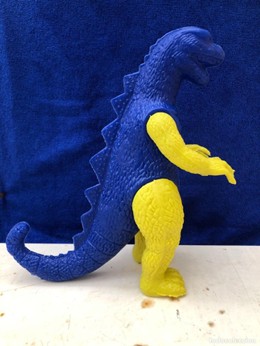
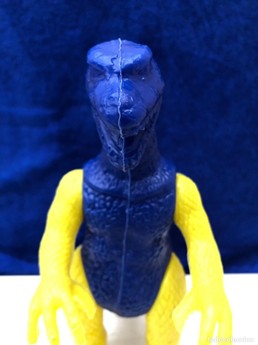
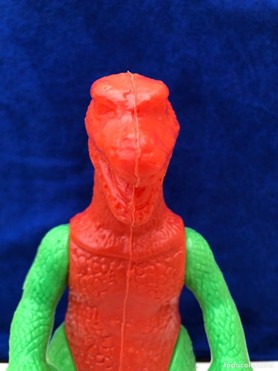
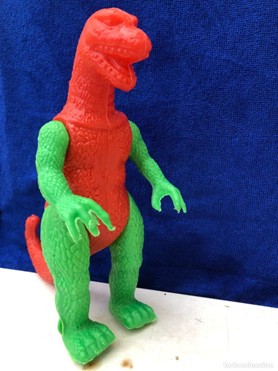
(These the seller’s images as listed on Todocollecion; that listing there now defunct)
The green and red one might, in fact, be that in identical colours that reappeared without identification on JP Yahoo on 13 October 2024, there owned by a collector from Shizuoka Prefecture in Japan, and we might suspect that he purchased it from the same Peruvian seller a year before I made contact with him, and its earlier sale was overlooked by the seller when listing items for sale some time later.
Two others have been listed a few times by a serious Godzilla collector named Rob Stewart (the last time known to me in the ‘Bootleg/Counterfeit Godzilla kits and figures group’ on Facebook in October 2025, with the following images:
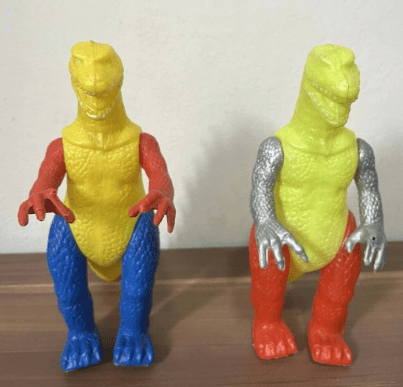
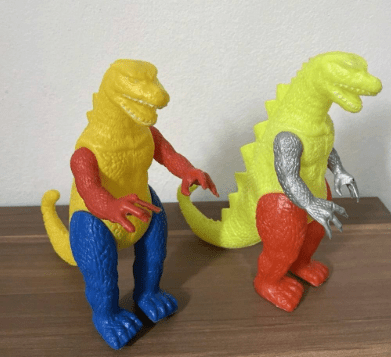
(These images used here with the owner’s permission)
Another user there posted his own in the comments (see image below):
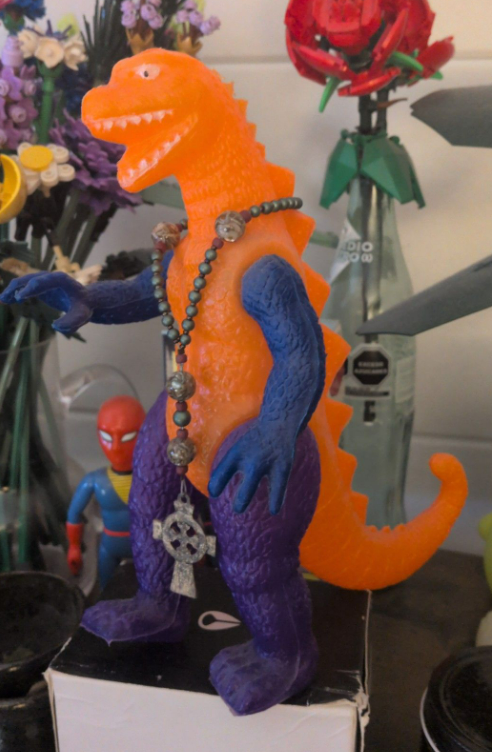
(This image used here with the owner’s permission)
Another three are known to me from images archived in a Worthpoint listing:
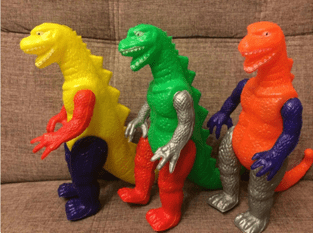
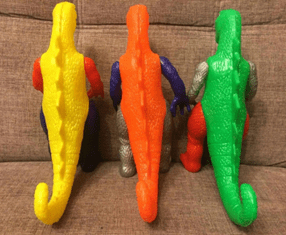
And, just as I thought I was finished with this blogpost, the private collector, Dich Vin, of Puebla, Mexico, posted images of three he owns on his Facebook and Instagram accounts for 2 March 2026:
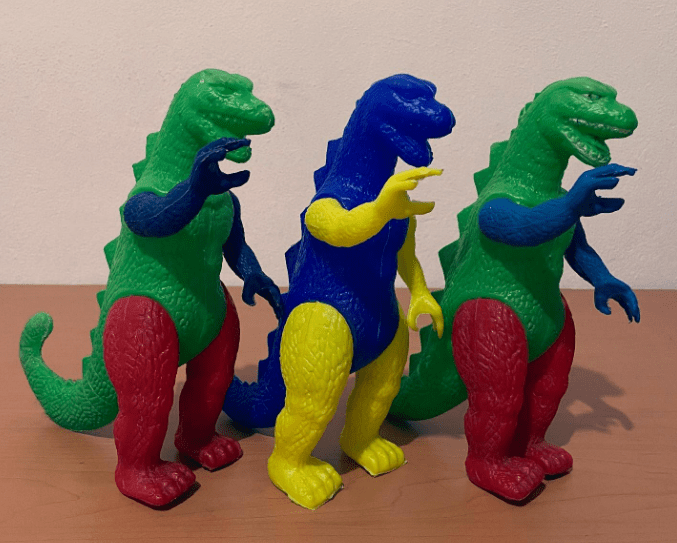
(Image reproduced with owner’s permission)
[UPDATE 28 May 2026: our kaiju-loving heart swells with pride almost to the point of bursting today, as the bootleg Godzilla connoisseur Cristian Fabian Barrientos Candia of Chile, has got in contact to say that after reading this blog, he discovered and obtained his own Peruvian blow mold Godzilla (devoted readers will remember Cristian as the collector who also has, apart from me, the only other recorded example of the ‘Wattle-asaurus’ bootleg as I named it in my earlier blog on Chinese-made bootlegs):
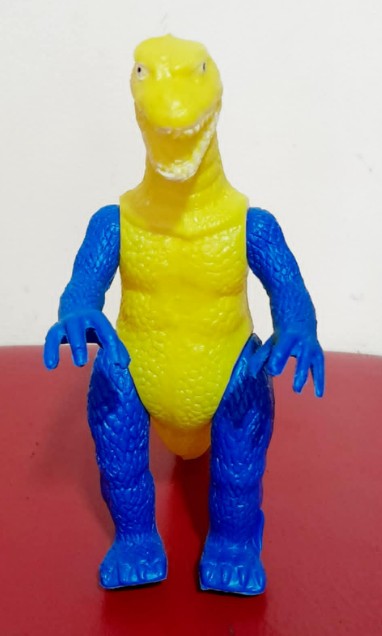
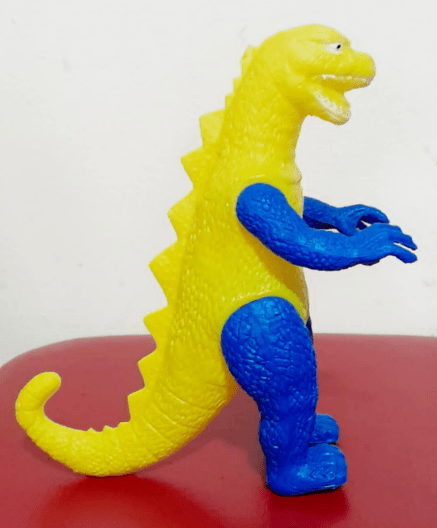
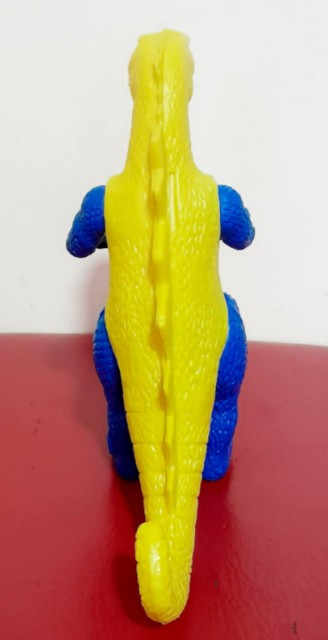
(Images reproduced with owner’s permission)
His Godzilla is in fabulously good condition, with its painted white eyes and teeth still present and crisp in their detail. I congratulate him, and am genuinely pleased that this blog played some small part in his new acquisition.]

(Image from Todocollecion sale listing)
[UPDATE 29 June 2026: during an unrelated search in the sold archive of Todocollecion, I stumbled over these three above – all sold together in July 2016]


(Image from owner; and reproduced here with their permission)
[UPDATE 13 July 2026: this handsome beast has now come to light in a US collection, and was acquired directly in the last month from a Peruvian seller. When opened for cleaning it was found to contain these two plastic disks that must have been the thin covers over each hip joint, with these then punched through during assembly, and perhaps left inside as these made the toy rattle]
I am more than happy to add images of any others owned by readers, in the hope of building up something of an archive of these gloriously efficient toys, and eagerly look forward to hearing from anyone with others.
- 'MUTTON DRESSED AS LAMB': Godzillas and kaiju that look vintage, but are not
- American made Pachi
- BOOTLEG DINOSAURS – a little off topic, but sometimes needed here
- BOOTLEG GODZILLAS
- Bootleg Tokusatsu from China and its immediate neighbours
- Bootleg Tokusatsu from the Americas
- BOOTLEG TOKUSATSU HEROES
- Central Europe – Godzillas and kaiju from behind the Iron Curtain
- Chinese-region bootleg Godzillas -the plastic tide from the East
- Chinese-region made Pachi
- European made Pachi
- European-made Godzillas
- PACHI
- Pachi kaiju
- Pachi kongs
- Pachi superheroes – Ultraman and similar
- The Americas – bootleg Godzillas from the New World

 Confessions of a Kaiju Hunter
Leave a comment