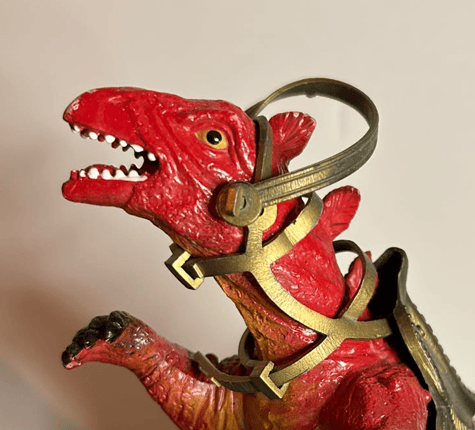
In a previous post (here), I laid out what, I hope, was a convincing case for a bipedal Stegosaurus-like bootleg dinosaur being produced in Poland in the early 1990s, around 1991-93.
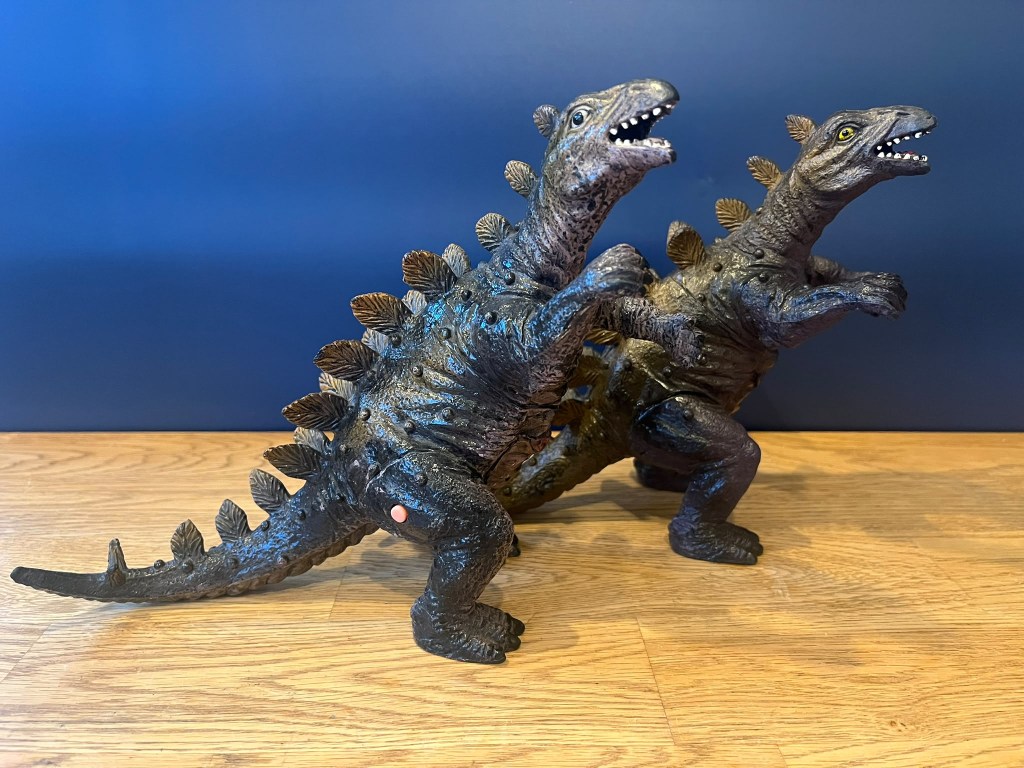
(The Stegozilla in its common form, and as discussed in the earlier post)
There I noted that “I have seen nine of these Stegozillas, all on Polish Vinted or OLX, and none anywhere else, with a single exception: an Instagram user named ‘kollektornius’ was the only person to respond to an appeal for information by me there and in the ‘Warriors of the Universe’ group on Facebook. Excitingly, they got in touch with the news that they purchased an example of the same beast, but in red vinyl, in Mallorca earlier this year:”
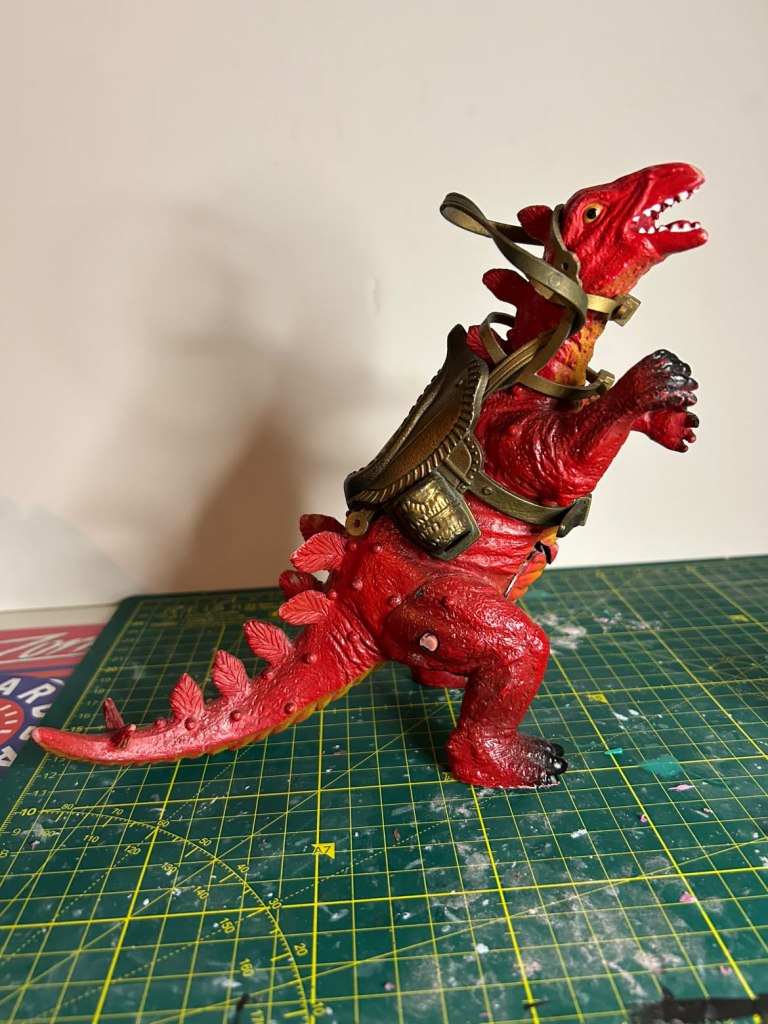
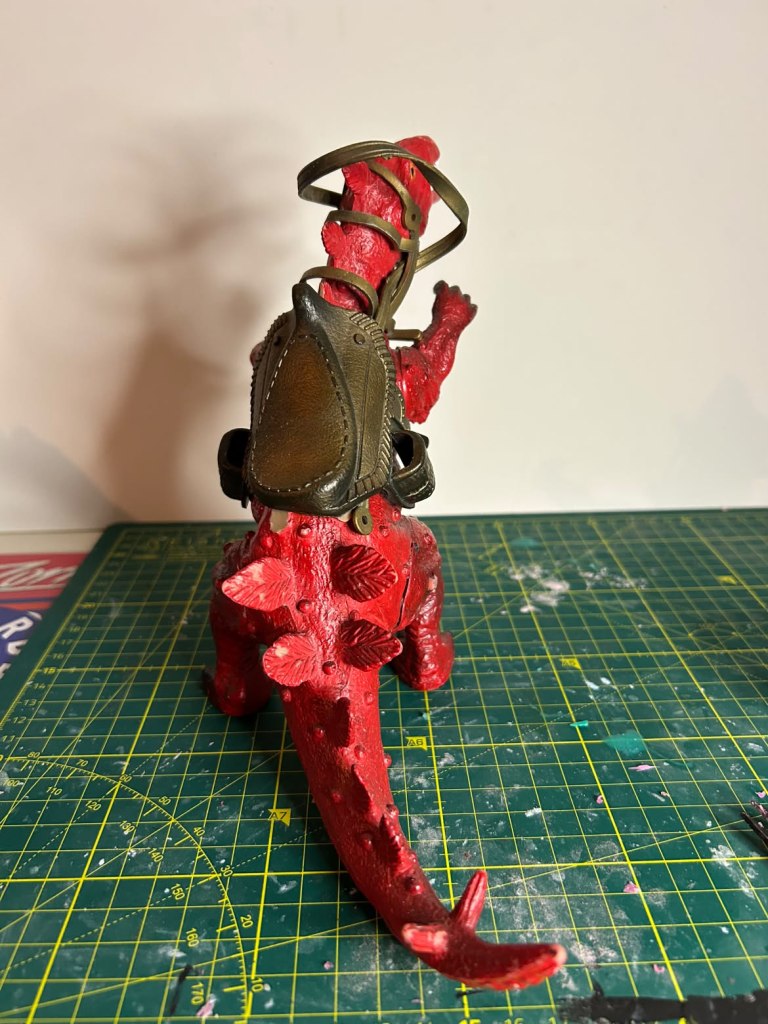
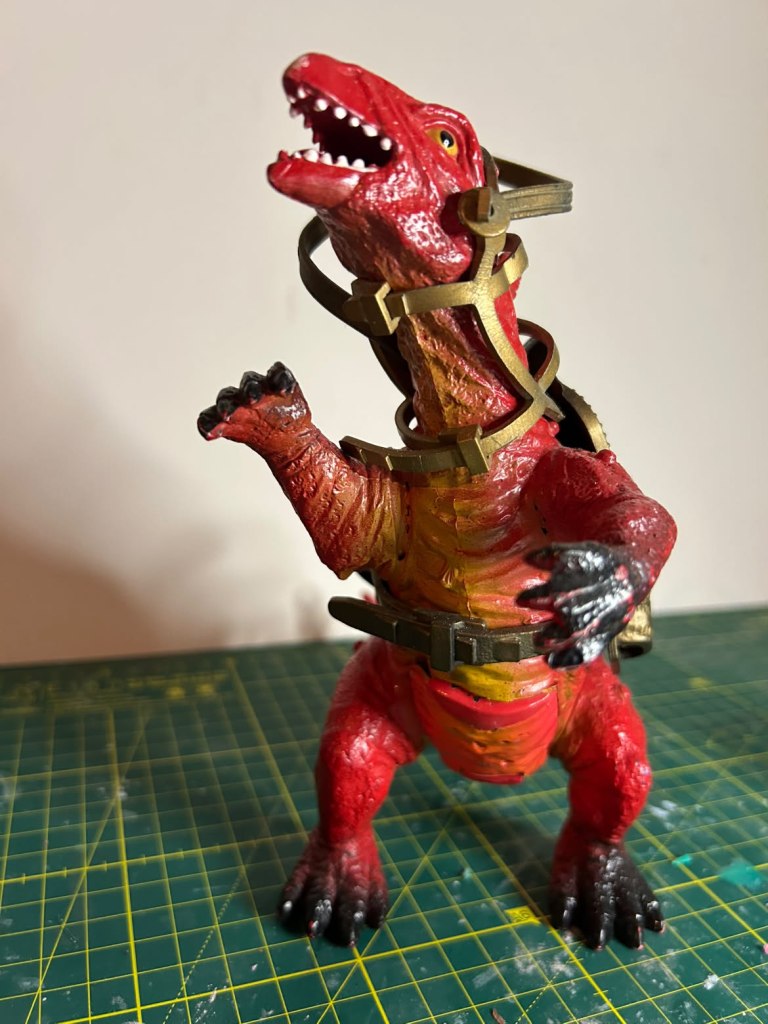
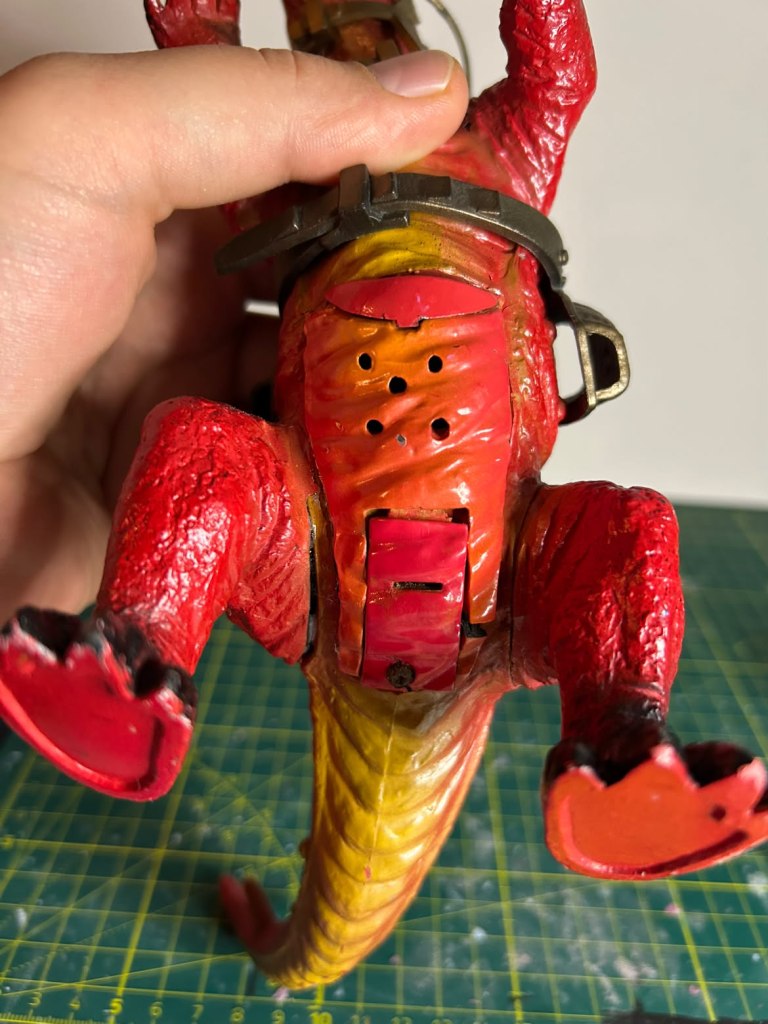
(All these images supplied by Kollektornius, and reproduced here with his kind permission)
I went on to say that “I think the harness here is from another toy and I fear a previous owner may have cut away a few of the dorsal fins to make that fit”, and part of this supposition was confirmed when Kollektornius sent me a further image of his figure with the saddle removed:
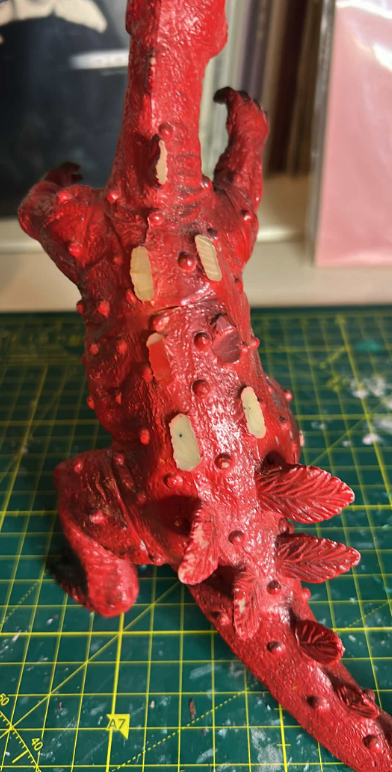
(This image supplied by Kollektornius, and reproduced here with his kind permission)
I thought at that stage, that this was a single isolated example of a Polish-made bootleg that had been repurposed by sawing off some of the spine-fins, and had made its way to Spain. I was emphatically wrong.
Soon afterwards, the sharp-eyed bootleg-hunter Jamie Francis (here and here) drew my attention to another such beast for sale in Almeria on the southern Mediterranean coastline of Spain. I give the seller’s images below:
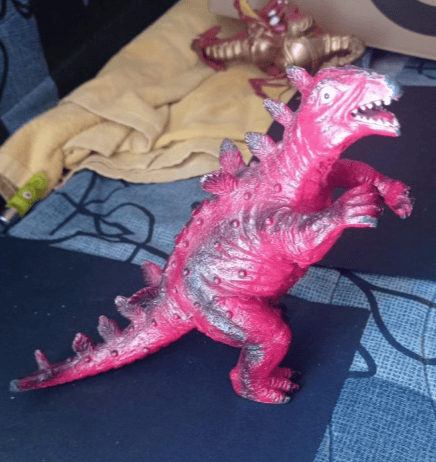
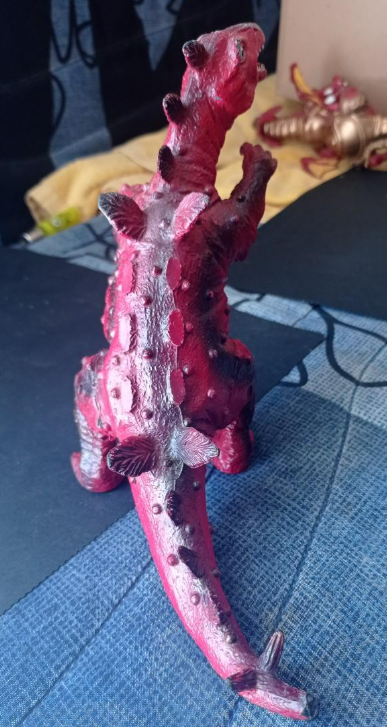
(These images not mine, and reproduced here from Todocoleccion’s sold lot archive, here; if you are the owner and object to their use here, please get in contact and we will take these down – but to do so, you will have to get in contact and explain where my dino is. Muah ha ha ha!)
I had trawled Todocoleccion’s sold lot archive for the earlier post, but as I explained there, I was searching for “the simplest and most productive of search terms here: ‘dinosaurio’”, whereas the seller here, presumably having got the toy to roar like a Dor Mei Godzilla, did not use that term, but threw himself into his writing with all the gusto he could muster and gave his listing the one-word description: “Godzilla?”. It thus evaded my earlier drag-net.
So I bought it, and waited, and waited, and waited, and then waited some more. 9 days into this the seller got in contact saying he would have to look for it, and that is the last I heard from him, and a month has now passed since my purchase. I am assuming at this stage, that it has been lost and I am being ghosted.
I would prefer to write up these things when I have a model in hand to inspect, but on occasions that is not possible. So, what can we say here until another pops up in the Spanish market? These toys in the purple-black forms found in Poland and the red form found in Spain were almost certainly from the same molds, and in addition to the perfect agreement in the parts of the body here, we also have exactly the same apparently haphazardly put together battery compartment. Scuffs on the extremities show that the red models have been overpainted with thick red paint, and in parts the black base colour plastic underneath looks very much like the examples we know from Poland. In addition, the cutting away of the spines for the saddle strongly suggests that the red ones came after the black-purple ones as an adaptation of the existing figure for a new purpose.
However, there are differences between the two known red examples that also tell us something about this reuse.
- There is a noticeable difference in colour, beyond what we might account for with different sets of lighting and cameras – with one cherry red and the other near pink.
- In addition, Kollektornius’ would appear to have a body made from a cream-coloured plastic, and limbs made from black plastic; while the Almeria appears to be in all black plastic (this, I suspect, will be explained in a future post on a related dino – watch this space).
- The fins that were cut away are slightly out-of-synch with each other, with Kollektornius’ one starting one set of fins higher than the Almeria example, and having to also remove part of the central fin at the base of the neck because of this.
- The red spray over this suggests that the Almeria example was repainted after the fins had been removed, while Kollektornius’ one appears to have had only some of its fins removed before its respray, and having more removed after (leaving cream-coloured vinyl showing at the head of the stumps).
- Most importantly, I noted in the earlier post that there were variations in the symbols on the battery compartment covers on the examples found in Poland, with marks specifying the batteries to use (“3×1.5V”) and an apparent product number (“R44/AG13”), common to most examples, but one figure having a slightly clumsy and forged “CE” mark and diagrammatic instructions informing the owner not to throw it away in general trash. Now the battery compartments on the two known red examples have different marks, suggesting that they cannot be from a single, small and closely related batch:
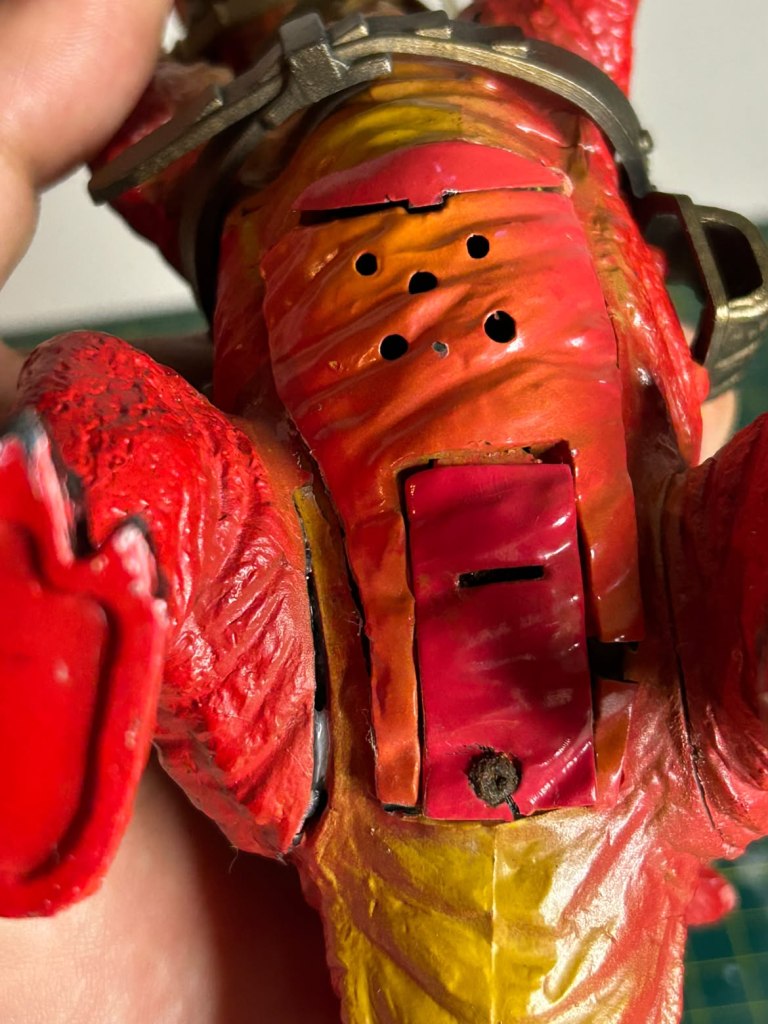
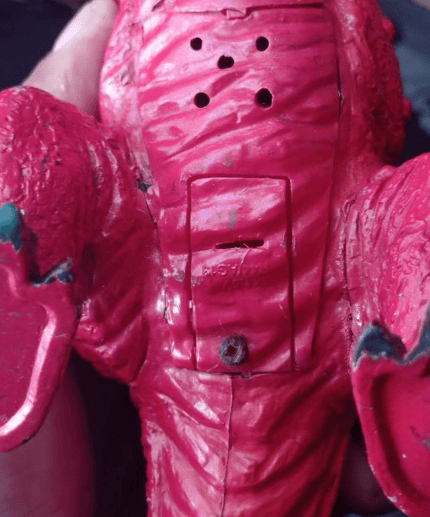
(Kollektornius’ example with no marks whatsoever on the battery compartment; and the Almeria example with the marks indicating only the type of batteries and the product number)
⁂⁂⁂
It still seems extremely likely that these strange beasts originated in Poland (and another future post on a sister dinosaur also most probably made there by the same bootleggers will consolidate this impression – in the whispered words of Yoda: “There is another …”). So, it appears that at some point, most probably in the 1990s, a group of these Stegozillas were taken to Spain, where they were resprayed red/pink and clumsily repurposed by a team of bootleggers (with varying approaches, styles and paint mixes) for use in an apparent warrior and rider set. As an aside – I would dearly love to know of any Spanish-made warrior-rider that might fit with this beast. It might be worth noting that the two known examples both come from the southern Mediterranean coastline of Spain and the nearby Balearic Islands. In addition, it is far more likely that a group of these figures made this trip, rather than the molds to make them, as these figures were then adapted in Spain by the removal of fins – something that would have been easier to adapt the molds for, before producing the red versions if they were made there. Finally, it would appear that these red Stegozillas were bought in Poland, either from various sources to fulfill the numbers needed (perhaps the German toy market may have acted as a go-between, if the idea of a Spanish toymaker traveling Poland looking for inspiration seems to go too far), or were selected from a large warehouse stock, which had been built up from various batches at various times.
This is the only certain point of contact between the two great toy-bootlegging cultures of Europe that I know of – but I have long suspected that the large number of Polish bootleg vintage toys that emerge in Spanish collections might be evidence of direct contact between Spanish and Polish toy collectors and bootleggers, perhaps going back some three decades now.
- 'MUTTON DRESSED AS LAMB': Godzillas and kaiju that look vintage, but are not
- American made Pachi
- BOOTLEG DINOSAURS – a little off topic, but sometimes needed here
- BOOTLEG GODZILLAS
- BOOTLEG MECHA
- Bootleg Mecha from Europe
- BOOTLEG PRODUCTION MATERIALS – MOLDS ETC.
- Bootleg Tokusatsu from China and its immediate neighbours
- Bootleg Tokusatsu from Europe
- Bootleg Tokusatsu from the Americas
- BOOTLEG TOKUSATSU HEROES
- Central Europe – Godzillas and kaiju from behind the Iron Curtain
- Chinese-region bootleg Godzillas -the plastic tide from the East
- Chinese-region made Pachi
- European made Pachi
- European-made Godzillas
- Japanese-made pachi
- Japanese-made Pachi
- LICENSED GODZILLAS AND KAIJU – deserving honorable mentions despite their official status
- PACHI
- Pachi kaiju
- Pachi kongs
- Pachi superheroes – Ultraman and similar
- The Americas – bootleg Godzillas from the New World
- Uncategorized


Leave a Reply