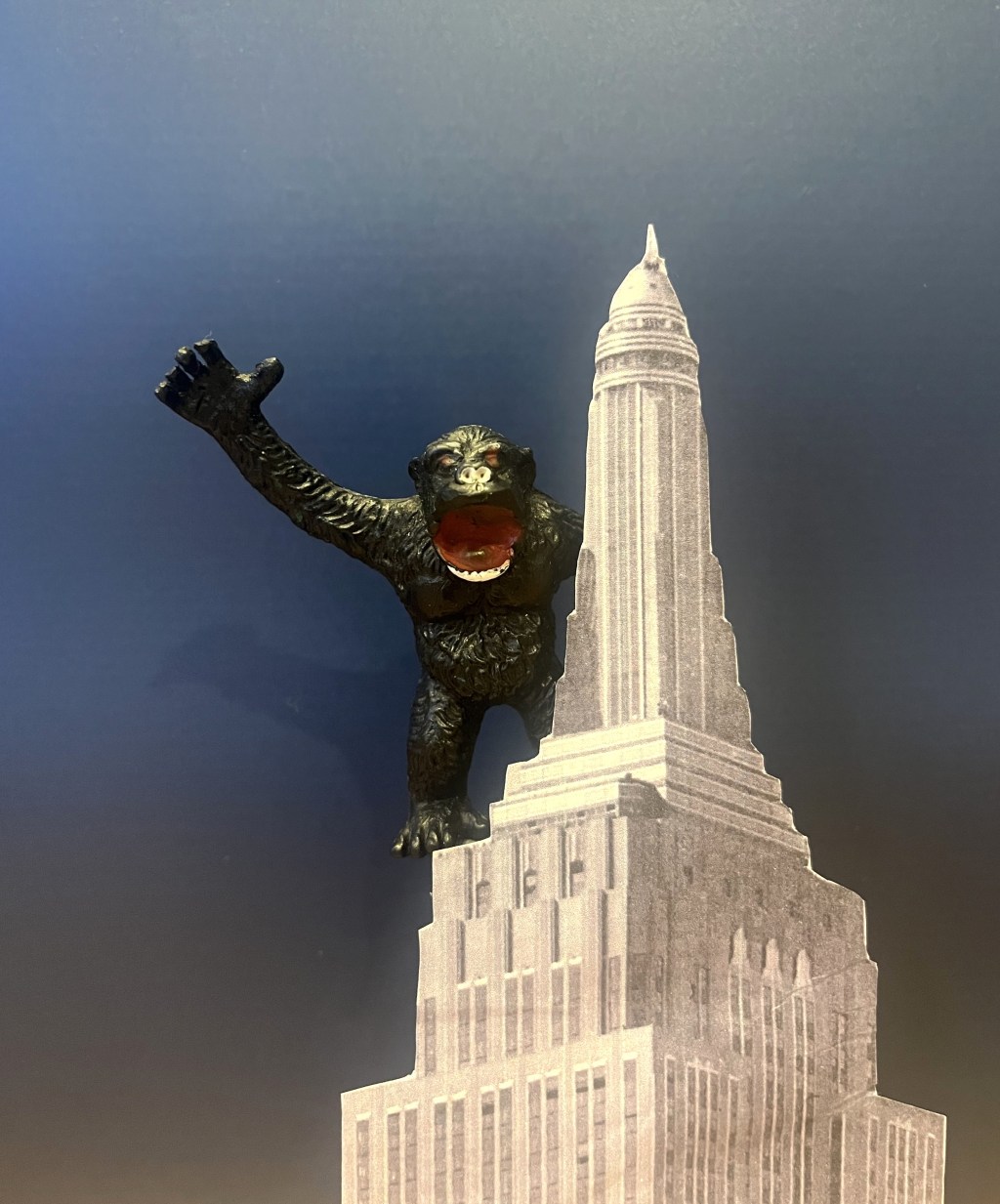
Readers of my posts, especially those with an interest in Polish bootleg dinosaurs and kaiju, will remember an earlier post (here), that discussed some small Polish-made brightly coloured bootlegs of silently screaming Chinasaurs. A crucial part of that blog was this image below:
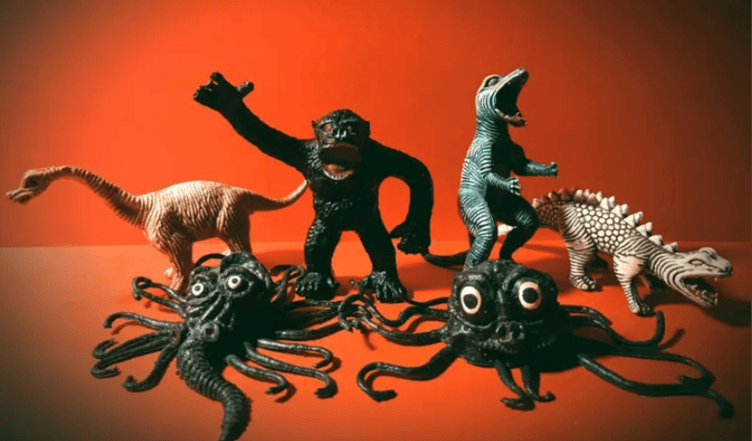
(The image posted to Instagram by ‘rolka_wspomnien’; and reproduced here with their permission)
The image above was posted by an Instagram user named ‘rolka_wspomnien’ on 27 May 2022 (see here). As we noted there: ‘rolka_wspomnien’ recalled buying these at an amusement park in Chorzów in 1991 (that amusement park was the oldest one in Poland, originally called Śląskie Wesołe Miasteczko when it opened in September 1959, and rebranded as Legendia in 2017). This eye-witness observation of their purchase in Chorzów, as well as the fact that most of the ‘Polskasaurs’ here, have re-emerged within half an hour’s drive of the park, means it is very likely that they were produced in the park or its vicinity, for sale there.
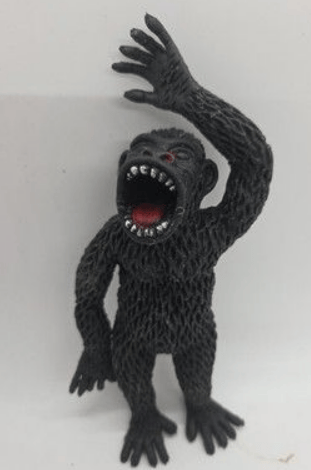
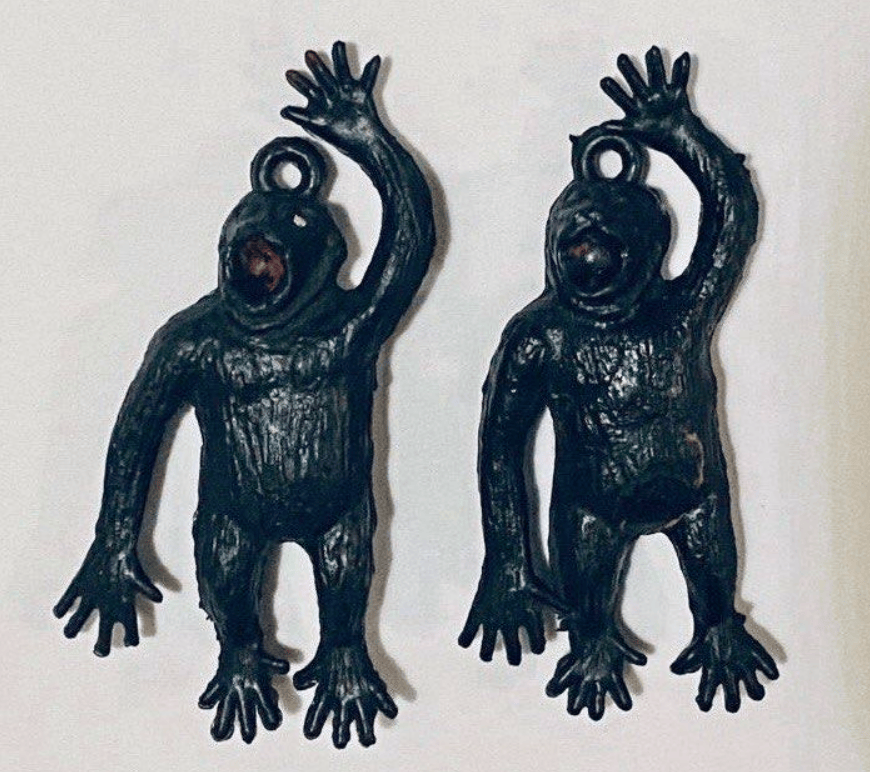
At the time of the earlier post, I had not given much attention to the two monster ‘jigglers’ in the foreground of picture, or the Kong in the background. However, I recently noticed a similar looking Kong on a Polish sale site, and bought it on a hunch.
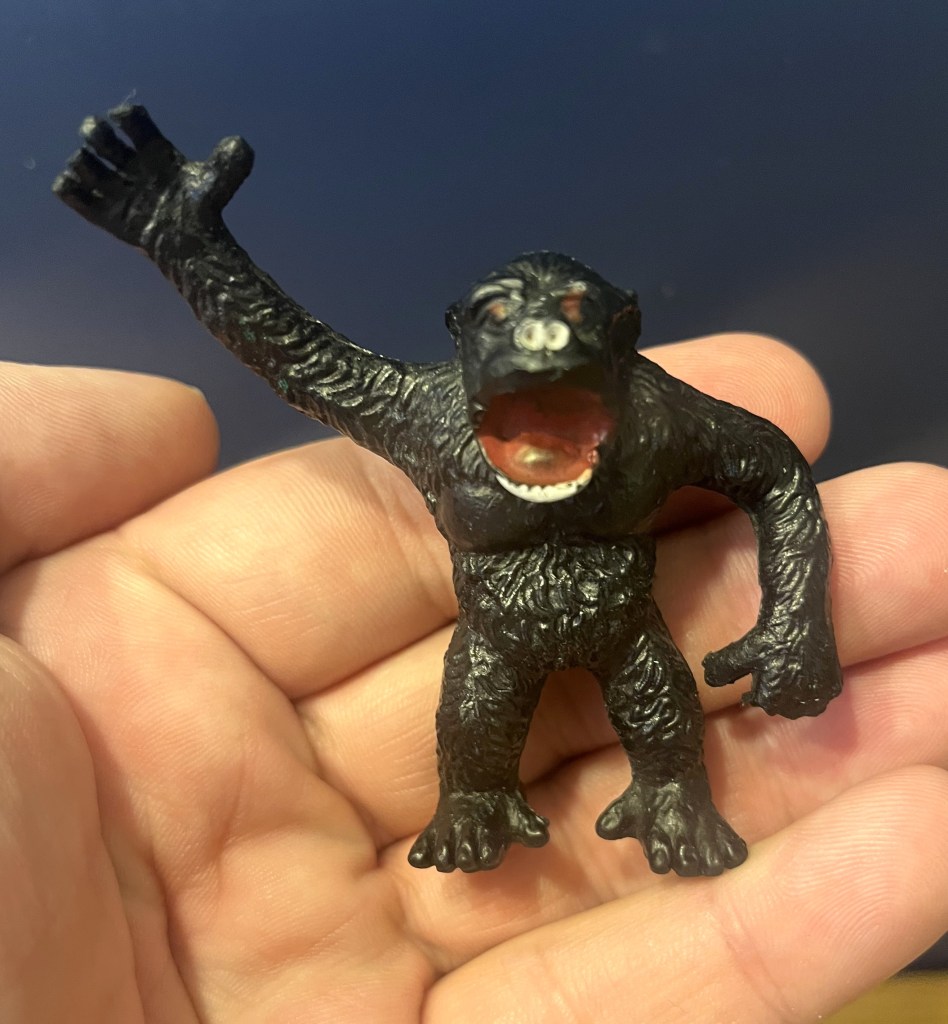
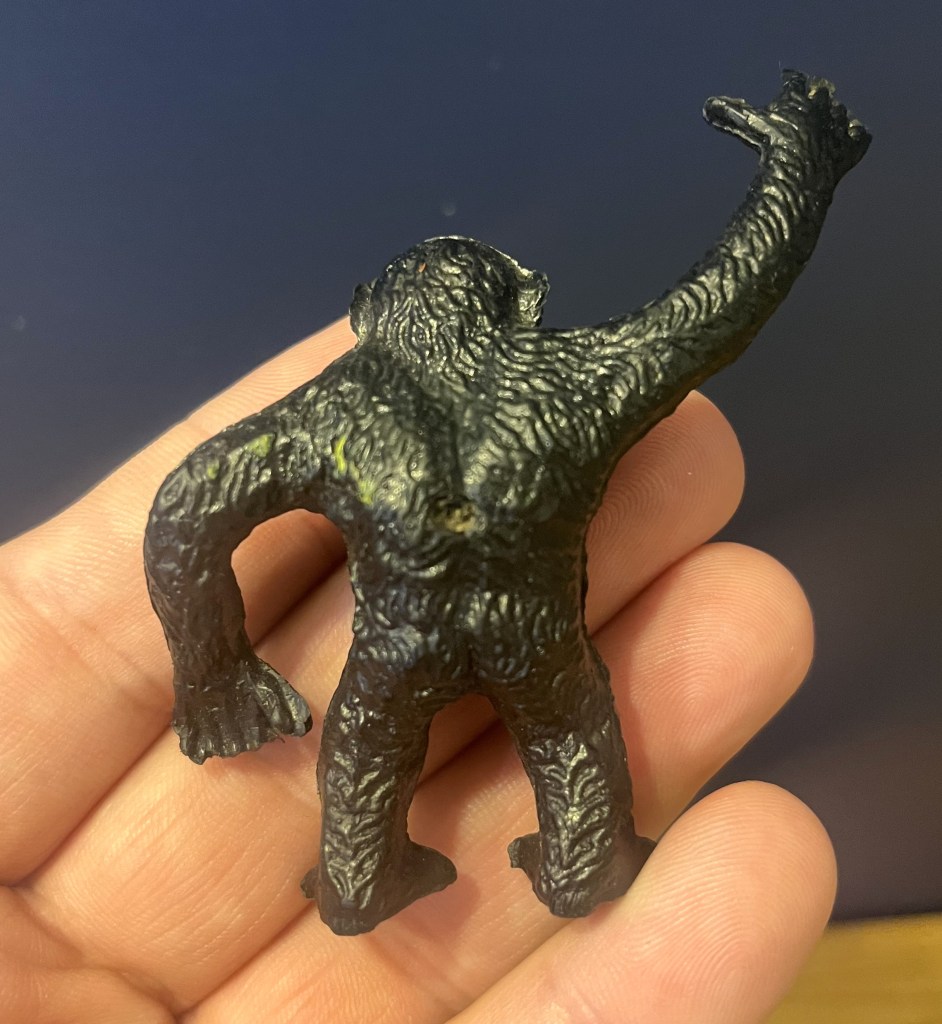
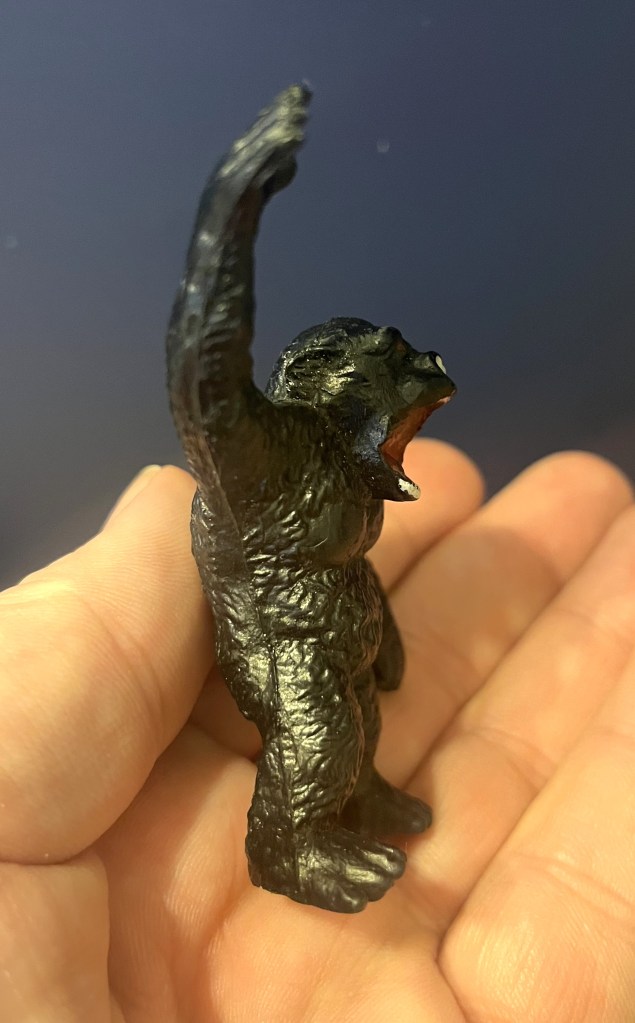
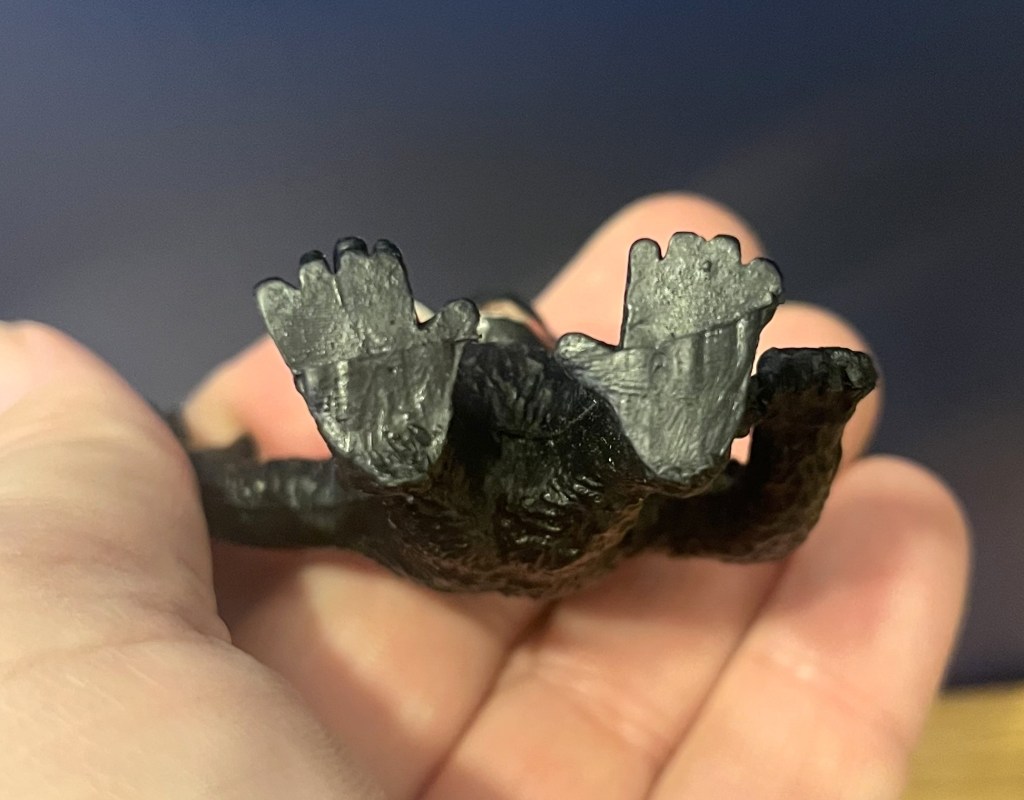
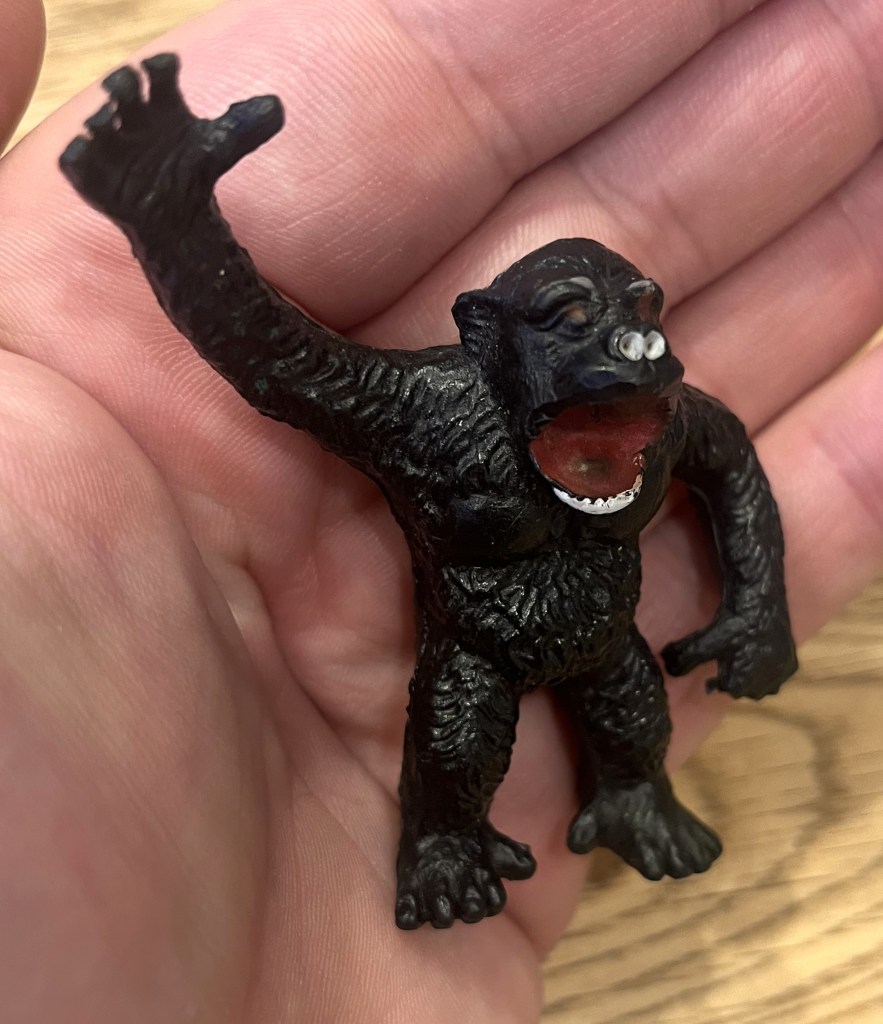
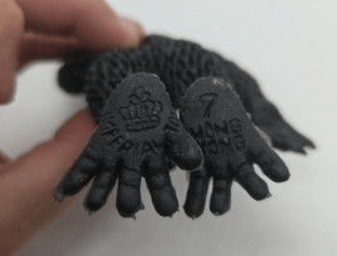
When it arrived, I was pleasantly surprised to see that it had been shipped from a village about 20 minutes drive from Chorzów, and close comparison of it with the one in the photograph, as well as scaling its measurements against some of the other figures in the photograph, allows us to be certain it is another example of the same beast.
It is delightfully handsome ‘in the flesh’, and was produced in a heavy and solid black rubber, stands 73mm. high, and weighs 22g. There is a circular depression in the middle of its back, about 4mm. in diameter, which has rough and torn off rubber inside it – and that must be the point through which the molten rubber entered the mold.
The use of simple brushstrokes in white and red sits these well within bootleg toy production practices in Poland, in particular the Godzillas, kaiju and dinosaurs produced by a northern Polish workshop located not far from Gdansk or nearby Elbląg (on these, see my earlier posts here and here). However, the material here is different to the vulcanised rubber used for those other Polish bootleg monsters. That here lacks the translucent brown quality that can be seen in the northern Polish products where the rubber is thin or if you shine a bright light through their extremities, and I suspect the rubber of the Kong has been dyed black on purpose (rather than was black due to the stabilizing carbon-based elements added to industrial vulcanised rubber in Communist countries). It is also stiffer and harder, and does not yield to the pressure of a finger and thumb as much as that of the northern Polish figures. In fact, it feels exactly like the rubber used in Chorzów to produce the brightly coloured Chinasaur bootlegs noted above, further linking this Kong to those dinos.
⁂
I think we can be certain, that it is (like the Polskasaurs from Chorzów) a bootleg copy of a common and inexpensive Chinese-region toy, with one of the numerous Hong Kong bootlegs its obvious immediate model. A survey of all Kong toys in rubber or plastic, from the 1960s onwards, is beyond the scope of this blog, and quite frankly my knowledge. However, we can say something here of the evolution of the Kong toys with this particular ‘wild ape’ stance.
Before launching into that, we must clear up one common misconception first – a bendy Kong with an internal wire frame was produced in Hong Kong in the 1960s for an unknown company, with the copyright marks “MCMXXXIII” (so the year 1933) and “RKO General” on its back. Of course, these were copyright marks of the original designs of King Kong, NOT the dates and manufacturers of this toy (these marks are asserted by online sellers as the date of production and production company so often by online sellers, without a moment’s thought, that it makes me want to scream – seriously, if you find a bendy toy securely dated to the 1930s, when they were not invented until 20 years after that, and not really popular until the 1960s [see here], I, and a few other people, really really really wanna know about it).
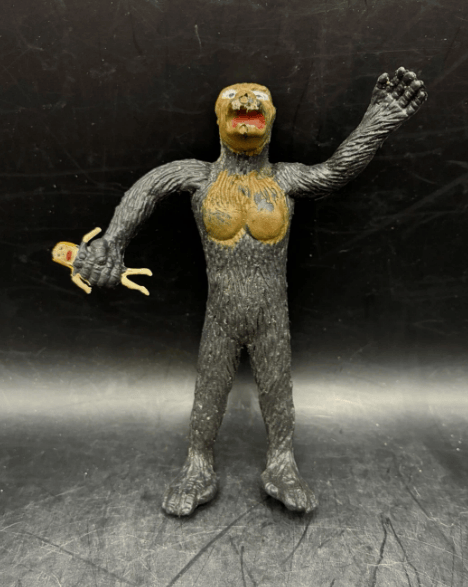
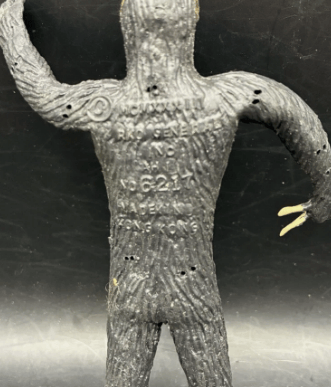
(Image from an online sale listing)
As these are so commonly bent into the shape of one arm raised and the other down (the latter usually the arm holding a tiny Fay Wray) by sellers unconsciously echoing the later ‘wild ape’ pose, these might be seen on first glance as the earliest examples of this Kong design – but the resemblance is just accidental.
Back to our main theme – and another teeth-grinder-moment for me: it is commonly asserted that all the Kong toys with this ‘wild ape’ stance, or some form of it, go back to the poster art of the 1976 film reboot of King Kong:
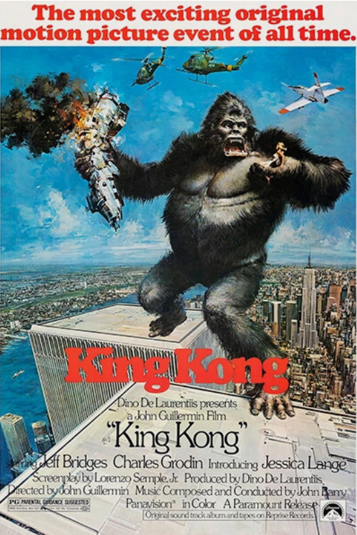
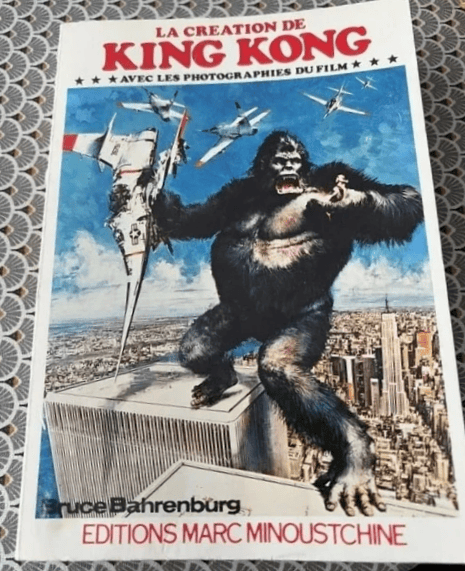
(Images from online sale sites – the first the final version of the poster art, and the second, the earlier version, here preserved on the cover of a French book published in 1976 to promote the film)
I agree, that at the centre of all versions of this poster is the iconic image of a monstrous roaring gorilla standing atop the Twin Towers, with raised arms clasping Fay Wray and crushing a fighter jet/wreckage (famously, the final image did not show a fighter jet in Kong’s hand, but the earliest versions did, until apparently it was thought too unlikely that he could snatch one out of the air, and the film went with easier-to-grab helicopter-gunships as the aggressors instead – so the artist, John Berkey, was instructed to rework his original painting to show only unidentifiable wreckage [see the discussion here]). However, the assumption that this was the origin point of this image of Kong is wrong – this poster art played an important role in the dissemination of the image, but is was far from being the original version of this image.
In fact, the first Kong toy to be given this form appears to have been a little-known rubber ‘jiggler’ produced in 1972 under the somewhat surprising name “Bushman”, by Chemtoy (a Cicero, Illinois-based manufacturer of industrial chemicals, before they pivoted in the 1960s and ‘70s into the inexpensive rack toy market):
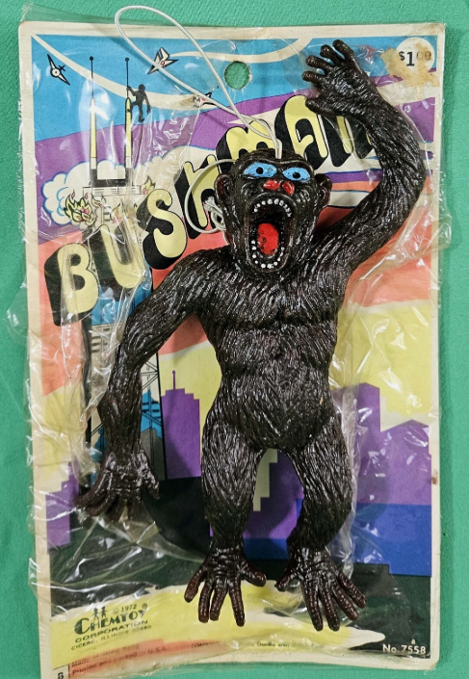

(Images here from an online sale listing; please note the prominent date “1972”; another such toy is documented here in a 1974 Chemtoy catalogue)
If the name “Bushman” was meant to suggest for copyright reasons that this was a hairy wildman or similar, that effort seems to have been rendered irrelevant by the drawing on the card-back, which shows the monster swinging from the top of a tower with fighter jets wheeling around it. Also, whomsoever molded the body of this design seems to have had chimpanzees or other smaller apes in mind, not gorillas.
Then Imperial produced their own version of the Chemtoy design at some point in the 1970s (most probably before the release of King Kong in 1976), sticking to this chimpanzee-like based body design:
(Images from this Worthpoint record of an online sale listing)
The Western world was in the grip of full-blown gorilla-mania in the late 1960s and early 1970s, and there were numerous other models for this ‘wild ape’ image, including a scene in the original 1933 movie where biplanes sweep down on Kong twice as he stands atop the Empire State Building, with one hand up to swipe at them, and the other holding onto the pinnacle of the tower to steady himself. A related image also appears on a lobby card given out during the screening of the 1933 film:
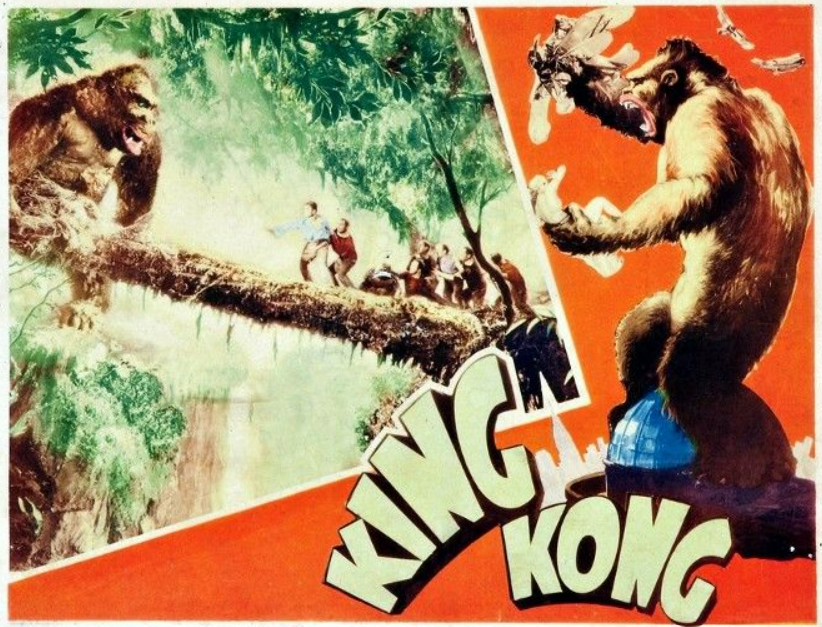
(Image from a pinterest post)
However, the scene in the movie is fleeting, and if you blinked you might miss it, and while the lobby card image is closely related, the angle of Kong to the viewer does not really present us with the iconic image shown in the later toys.
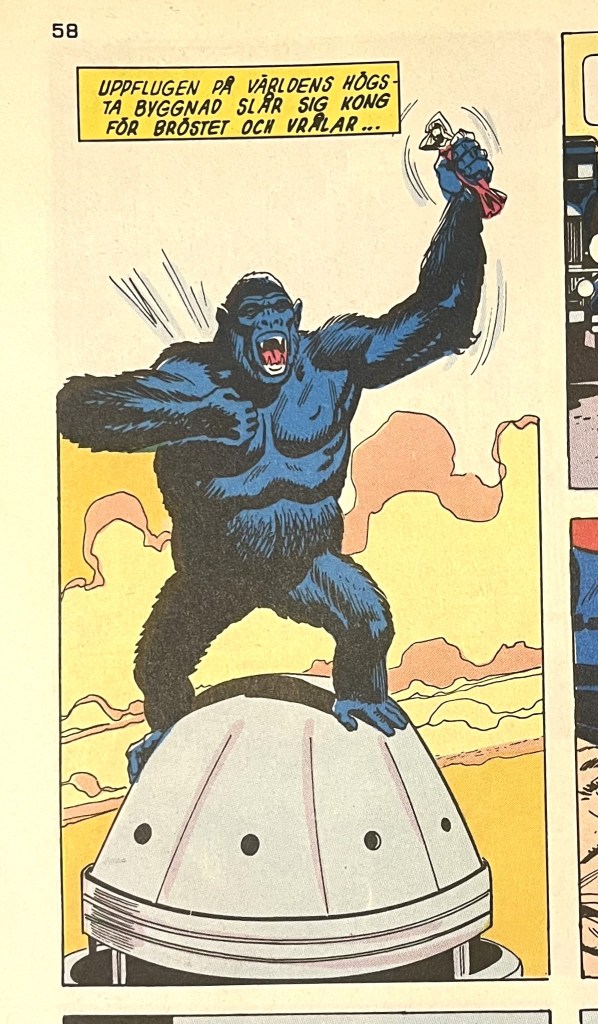
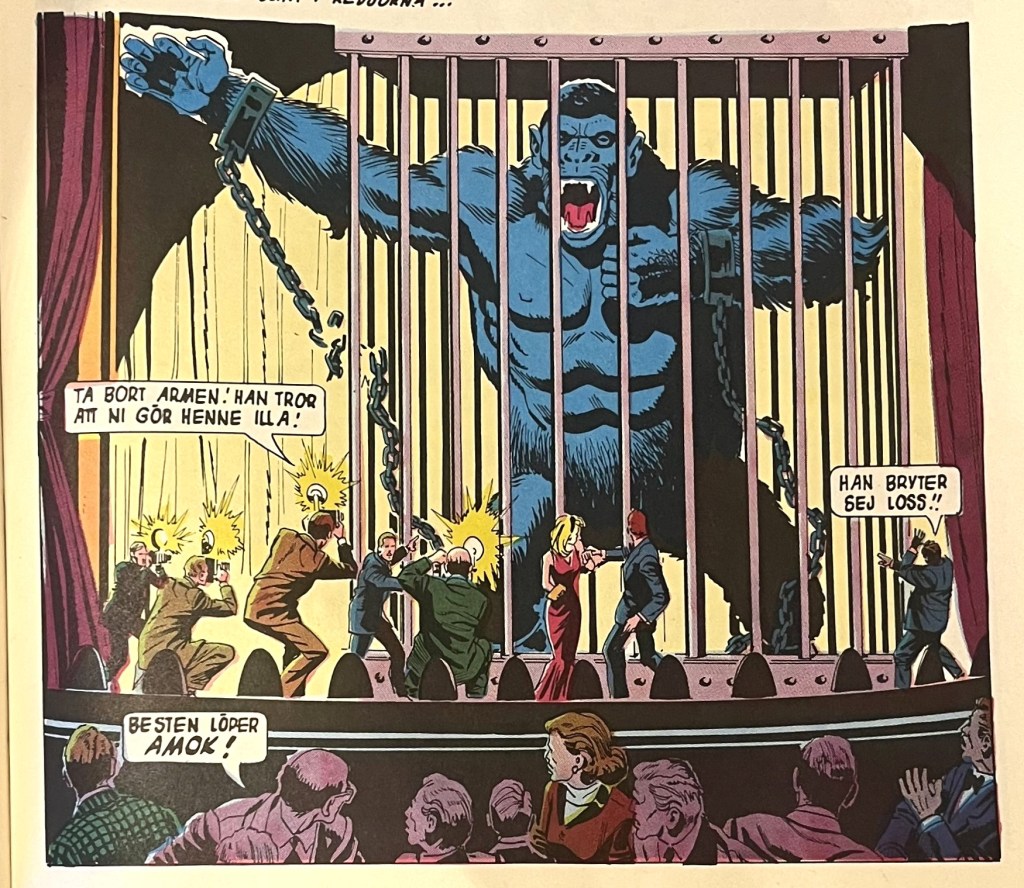
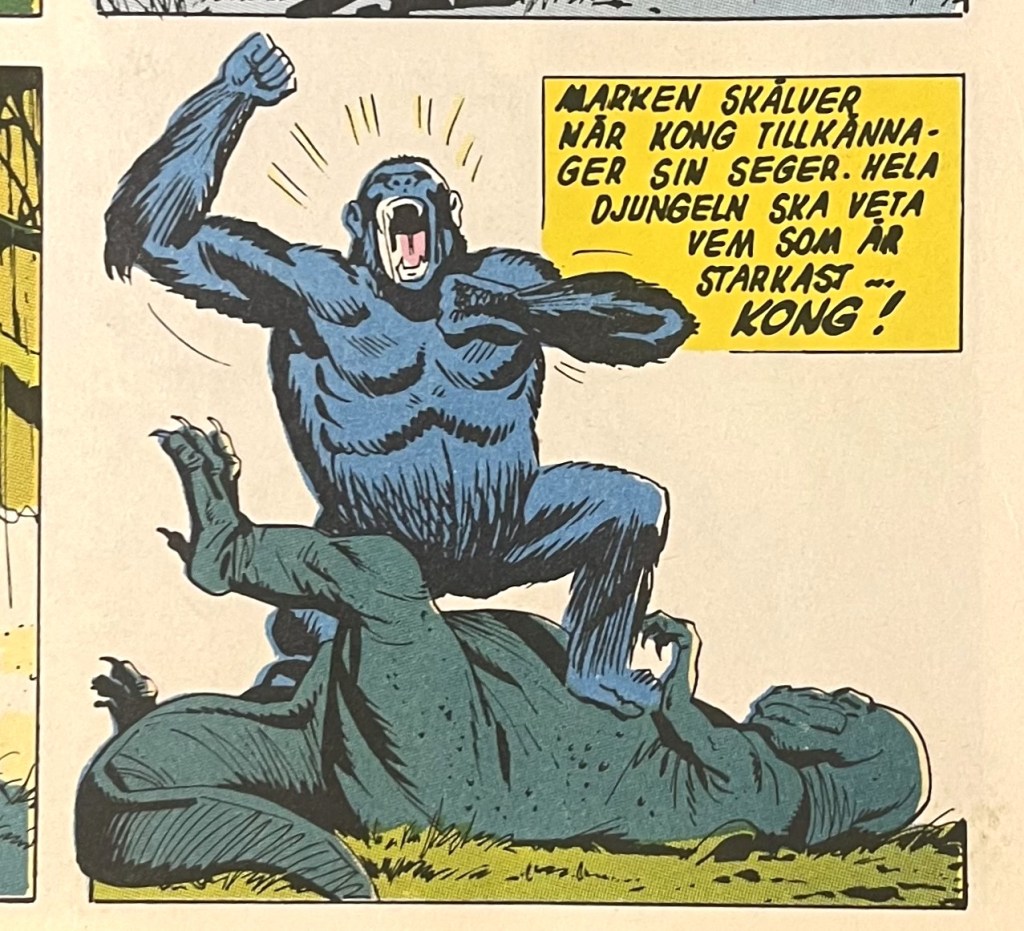
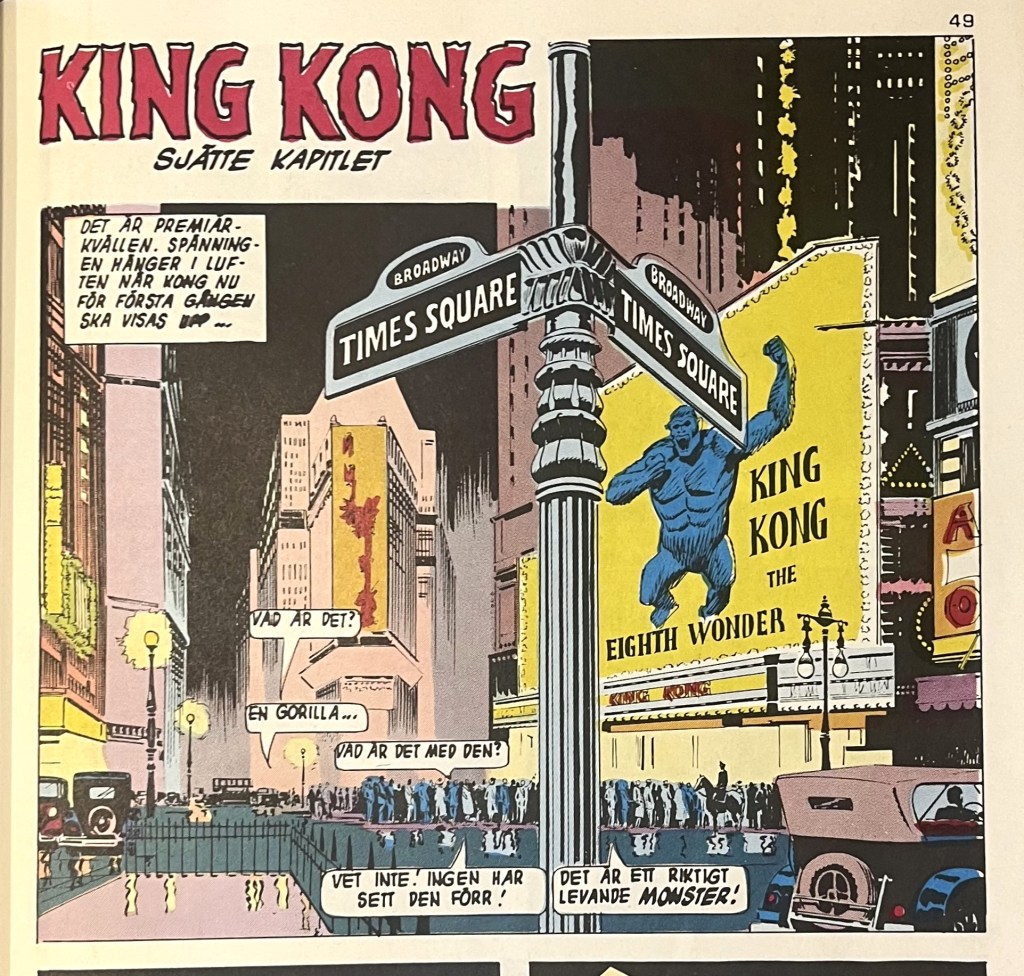
A more likely model for the image shown by these Kong toys can be found in the artwork in a popular Gold Key Comic of 1968:
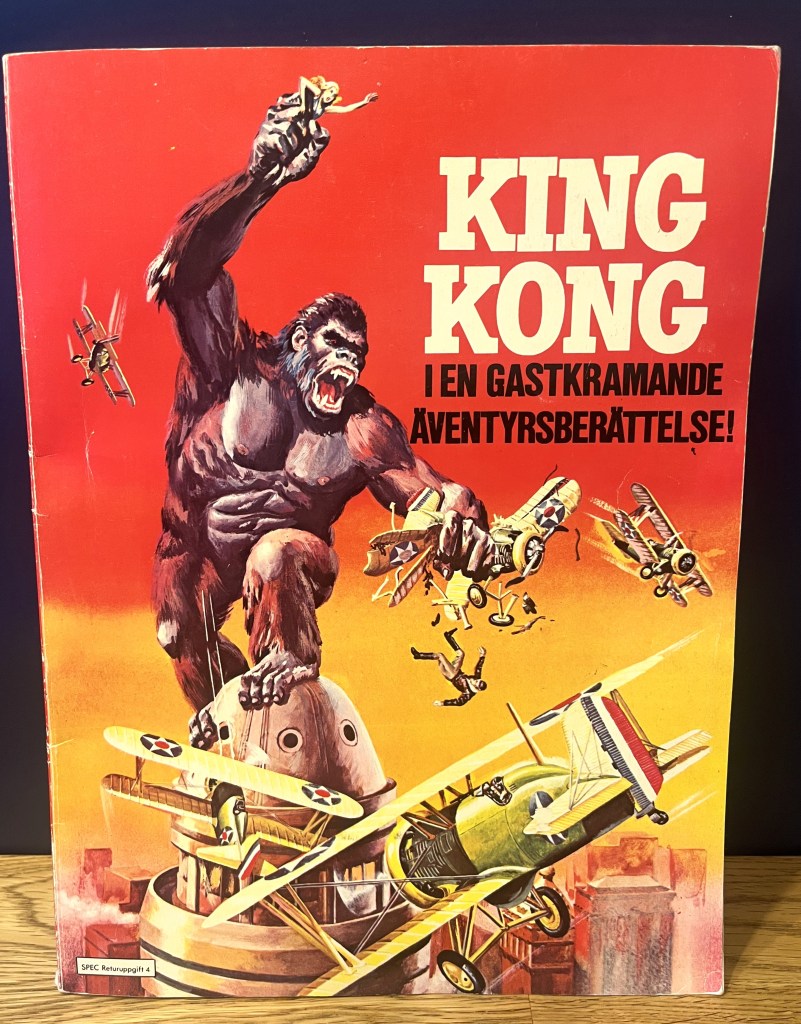
(Here I give the Swedish translation of this comic, published in 1977, but with exactly the same artwork as the 1968 original, because that’s what I have in my collection; see here for examples of the US version)
This comic closely followed the 1933 film, even to its time setting – including biplanes on the cover art (the US military had stopped using biplanes just before WWII, nearly 30 years before the comic was produced), but it also took great artistic license with its images and scenes, and many are not found in the film at all (such as the roaring Kong standing in the ‘wild ape’ pose over the dead Tyrannosaurus Rex, and the poster advertising Kong’s show on Broadway – see below for these). Here, the image of Kong standing on two legs, roaring, with one arm raised and another lowered, occasionally holding a young woman, appears so frequently that it starts to become a ‘brand image’ for Kong – and it even operated within the comic itself as a very real ‘brand image’ on a giant poster advertising Kong’s glitsy P-T. Barnum-like Broadway show.
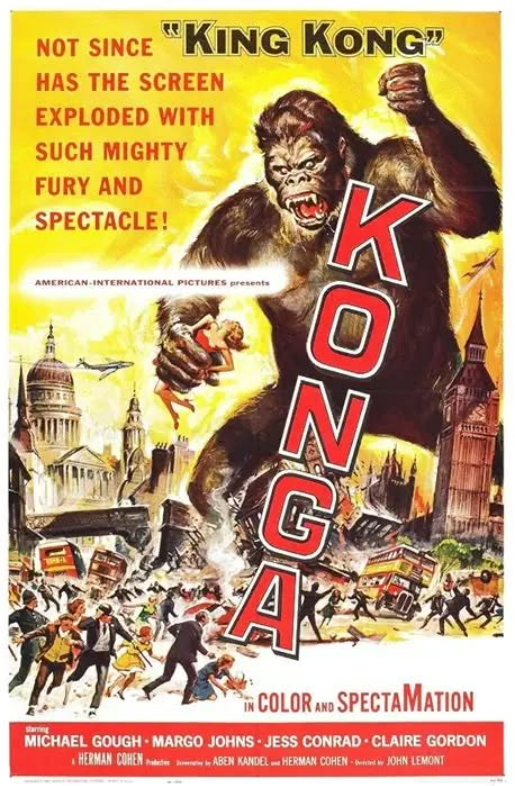
In addition to this, there were other films, such as the 1961 British film Konga, with remarkably similar poster art (the reference to “King Kong” in the blurb makes it clear that this visual echoing was a conscious attempt to claim some of the Kong-fever that was gripping cinema goers):
As well as Kong-related films, there was a steady stream of similar imagery in Tarzan publications and promotional images for the first four ‘Planet of the Apes’ films (Planet of the Apes, 1968; Beneath the Planet of the Apes, 1970; Escape from the Planet of the Apes; 1971; and Conquest of the Planet of the Apes, 1972).
Some of these images must have influenced the Chemtoy design, before the 1976 film and its art was produced – and in turn, those same influences appear to have guided the hand of John Berkey when producing the poster art for the 1976 King Kong film.
As an aside, what catches my eye here, is that while the 1968 comic kept closely to the 1933 film in its use of biplanes to attack Kong, the artist of the Chemtoy card art had the presence of mind to update these to jet fighters (have a good look – they are there in miniature in the background), just as the film makers in 1976 would update these military vehicles to jets and then set those aside for the more practical helicopters. No such planes were used in either of the Japanese films involving Kong before 1976 (King Kong vs. Godzilla, 1962; and King Kong Escapes, 1967), and so those cannot be the model here, and it seems likely that both the artist of the Chemtoy card and the poster for the 1976 film independently made the same modernising updates.
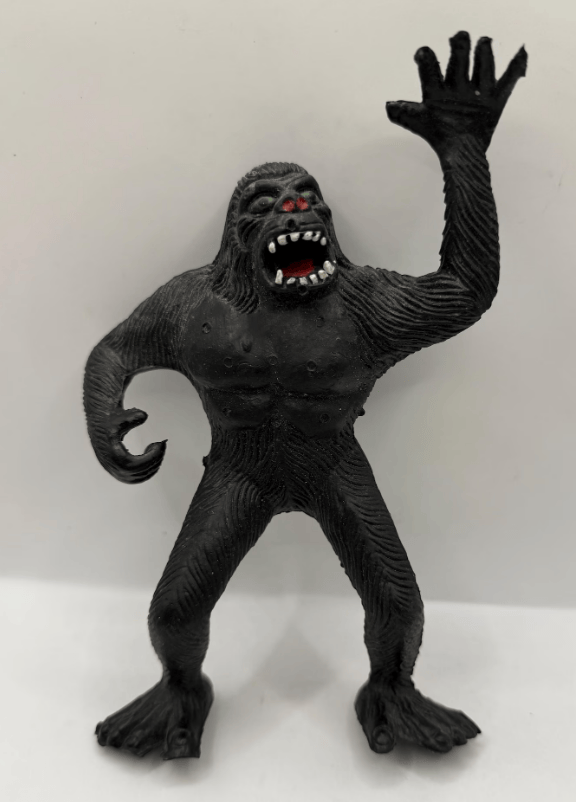
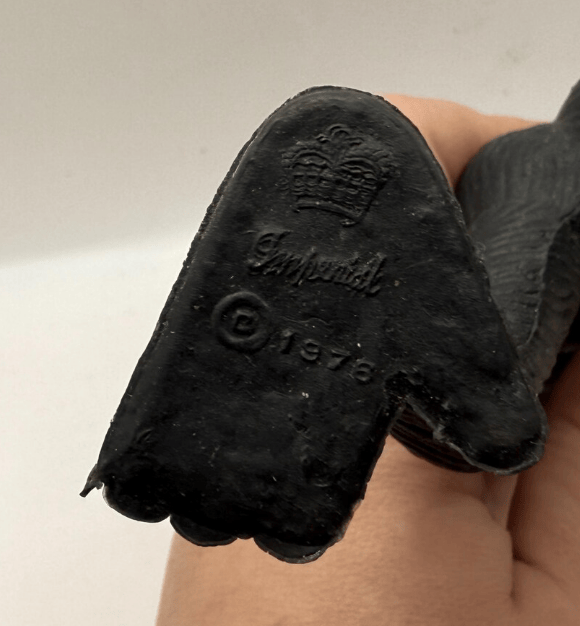
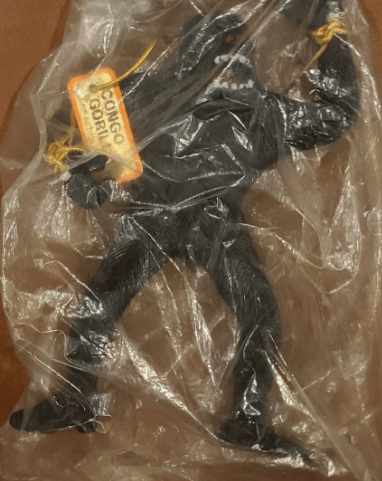
So these images were already known and common when the 1976 film appeared, but the runaway success of that film caused gorilla-mania to explode in popularity. The film was one of the highest-grossing films of 1976, launched Jessica Lange’s career and won her a Golden Globe. That film is among the earliest monster movies I remember from my childhood and I still harbour a passionate love for it today. To cash in on its success, in the same year as the release of the film, Imperial brought out their hard plastic ‘Congo Gorilla’ Kong (that name on the often-lost packaging).
(Images here from online sale listings)
This shifted the design closer to the more realistic body of the Gorilla found in the film, but kept the now-well-established ‘wild ape’ posture.
In the same year, Ben Cooper joined the fray, and produced a similar design to Imperial’s ‘Congo Gorilla’ Kong in their characteristic wobbly ‘jiggler’ rubber, but with both hands raised, one clutching a plane just as in the 1968 comic, but a fighter jet as in earliest versions of the promotional materials for the film and suggested by the card-art of the Chemtoy Kong.
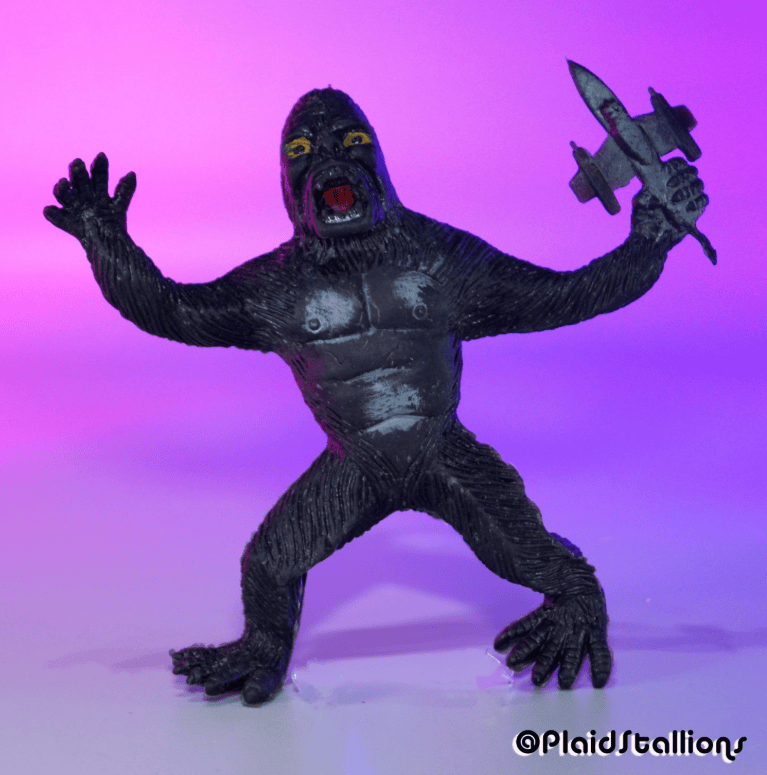
(Image from this excellent online resource, here)
Both of these then inspired a legion of bootlegs, often clutching tiny women, planes and even a snake in their hands (the last harking back to the scene in the 1933 and 1976 films and the comic of 1968, where Kong fights a giant constrictor). On several occasions, the figure was flipped on its vertical axis (so the arrangement of the arms was reversed), leading to a number of mirrored variants approximately equal to those of the original configuration. I have not intensively bought these over the years, just a few good examples, and so the following example from my own collection, and another from the private collection of a US friend of mine will have to stand for all of these.
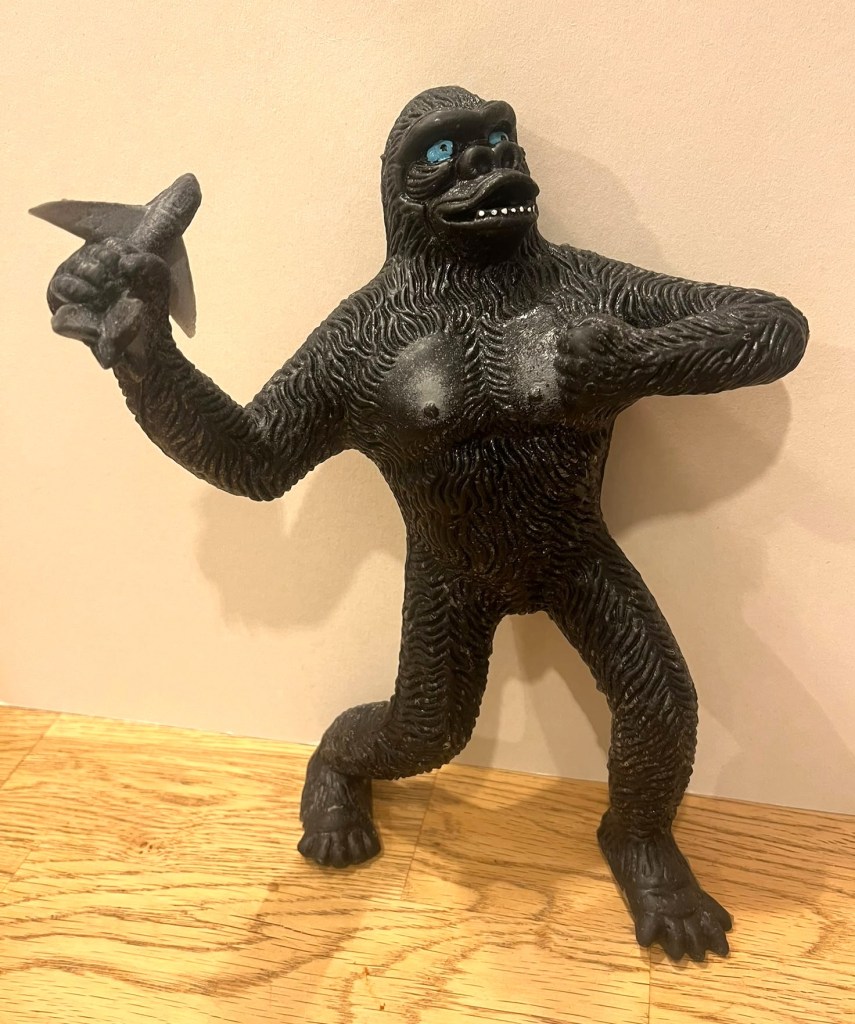
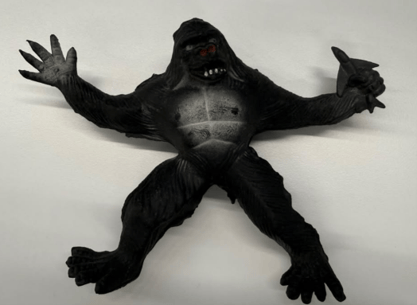
(The second image reproduced here with the kind permission of the owner)
In the rampant hotbed of toy bootlegging in 1970s Hong Kong (and to a smaller extent adjacent China) both the chimp-like Chemtoy/Imperial and gorilla-like Imperial/Ben Cooper designs were copied again and again in successive waves of bootlegging, producing figures mostly without maker’s marks or dates (for a few examples, see this excellent post on Instagram by the grand toy collector, Dich Vin, and this excellent Youtube video. Most of these Hong Kong- and Chinese-Kongs were larger than the present Polish Kong, and given what else we know from my other post on the toys produced at Chorzów (see here) it seems likely that this ‘Chorzów Kong’ was cast in a one-to-one scale from an existing imported toy. (Sharp eyed readers will note that in that previous sentence, with a bit of linguistic fancy footwork, I have narrowly avoided the horrible construction ‘Hong Kong Kongs, or the worse and somewhat sing-songy ‘Hong Kong King Kongs’ – phew!). Thus, it is relevant that numerous smaller models of this Kong-design, from the 1970s and perhaps the 1980s, can be found shrunk down in scale and adapted to reuse as pencil toppers and key rings. Those usually agree closely with the height of the figure in question here, and one of those must have been the direct model for our figure.
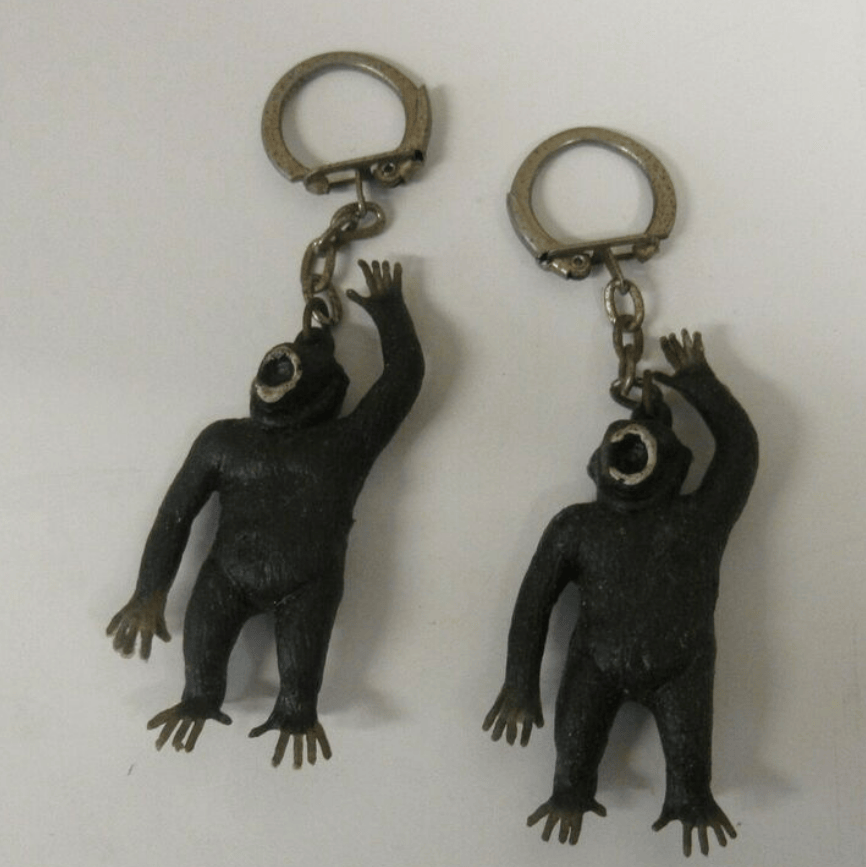
(Images from online sale listings)
⁂⁂⁂
One of the most well-known Polish expressions (even if you did not know the original was Polish) is ‘Nie mój cyrk, nie moje małpy’ (‘Not my circus, not my monkeys’), but quite the opposite is true here – this adorably clumsy Polish Kong is an obscure offshoot of the ‘wild ape’ image of Kong that seems to have emerged as Kong’s ‘brand image’ and was spread across the World from the 1960s onwards. Much of the popularity of that image was owed to the enormous numbers of toys and figures from the frenzied factories of Hong Kong and the global reach of huge companies such as Chemtoy, Imperial and Ben Cooper as well as a myriad of nameless distributors of inexpensive bootlegs. This image of Kong has its own complex and fascinating evolutionary development, flowing from the film of 1933 through to a workshop in or near Chorzów in the years immediately before or just after the fall of Communist rule in Poland. Thus, the Chorzów Kongs are, in fact, very much our monkeys, and their family tree unites all of us.
- 'MUTTON DRESSED AS LAMB': Godzillas and kaiju that look vintage, but are not
- American made Pachi
- BOOTLEG DINOSAURS – a little off topic, but sometimes needed here
- BOOTLEG GODZILLAS
- BOOTLEG KONGS
- BOOTLEG MECHA
- Bootleg Mecha from Europe
- BOOTLEG PRODUCTION MATERIALS – MOLDS ETC.
- Bootleg Tokusatsu from China and its immediate neighbours
- Bootleg Tokusatsu from Europe
- Bootleg Tokusatsu from the Americas
- BOOTLEG TOKUSATSU HEROES
- Central Europe – Godzillas and kaiju from behind the Iron Curtain
- Chinese-region bootleg Godzillas -the plastic tide from the East
- Chinese-region made Pachi
- European made Pachi
- European-made Godzillas
- Japanese-made pachi
- Japanese-made Pachi
- LICENSED GODZILLAS AND KAIJU – deserving honorable mentions despite their official status
- PACHI
- Pachi kaiju
- Pachi kongs
- Pachi superheroes – Ultraman and similar
- The Americas – bootleg Godzillas from the New World
- Uncategorized


Leave a Reply